Used

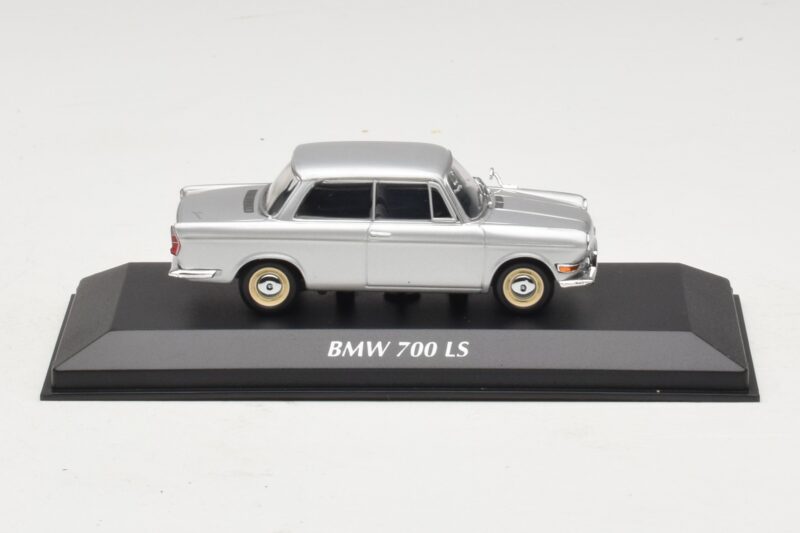
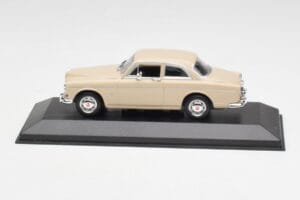
TL;DR: The Maxichamps BMW 700 LS 1:43 is a silver diecast sedan from 1960, representing BMW's small rear-engined 700. It is a sealed one-piece casting, so the compact proportions, trim and paint carry the model, a vintage classics piece with a notable place in BMW's survival story.
Before BMW built sport sedans, it built a small rear-engined car that kept the company solvent. The 700 is that car, and Maxichamps reproduces the LS version at 1:43 in silver. It is a tiny shape with a big story, and it rewards the buyer who likes the history behind the badge.
The BMW 700 arrived at the end of the 1950s with an air-cooled flat-twin engine in the rear, developed from BMW's motorcycle engineering, and a compact body styled by Giovanni Michelotti. It sold in large enough numbers to help BMW through a difficult financial period, which makes it far more significant than its size suggests. On a model, the signatures are the short, rounded body, the upright windshield and the short tail with its rear engine cover. If those read correctly at a glance, the casting has the right character.
Small 1960s sedans have thin window pillars and delicate trim, which stretches what a pressure-cast metal body can hold. Zinc alloy delivers mass and stable geometry, but the thinnest parts come out a little thicker than on cast resin, and edges are slightly softer. At 1:43 this is a fair trade because the scale is small and the structure stays robust. The proportions to check are the glasshouse height against the body and the short overhangs, which give the 700 its distinctive compact stance that a wrong tooling pass would flatten.
This model has no opening parts, so the evaluation is all on the outside. A 1960s car carries bright trim, thin bumpers and small badges that must be printed or applied cleanly to look right. Look for bumper edges that stay slim, trim lines that follow the body without smearing and badge lettering that is legible under magnification. The shut lines on a sealed casting stay a consistent width from front to back, and the glazing should sit flush with clean edges. Because it is a small car, every detail is smaller than a fingernail.
Small cars from 1960 ran narrow tires with tall sidewalls, and the model should reflect that. Check the wheels for fit within the arches and the sidewalls for height. A wide, low look would be wrong for the period, and the overall stance should look light and upright, not squat. Silver on a small body must stay fine in metallic flake, because coarse flake overwhelms the scale. A smooth, even shimmer across the roof and fenders is the sign of careful paint, and it also lets the thin trim read cleanly against the body.
As the earliest BMW in a 1:43 row, the 700 LS is a prologue piece. Place it beside the E12 520 and later sedans to show how the brand grew from small economy cars to executive sport sedans. It also fits a theme of small rear-engine classics alongside other European compacts of the 1960s. It is a car most American hobbyists have never seen in person, which makes it a distinctive pick. At 1:43 a full row of BMW sedans spanning four decades fits one shelf. Keep it out of strong sun, dust it with a soft brush, and lift it by the body.