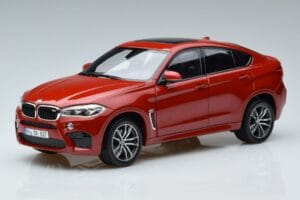
BMW X6M F86 Red Norev 1:18
Price:
94.00 €
This model is currently sold out. Enter your email and we'll let you know when it's back in stock.
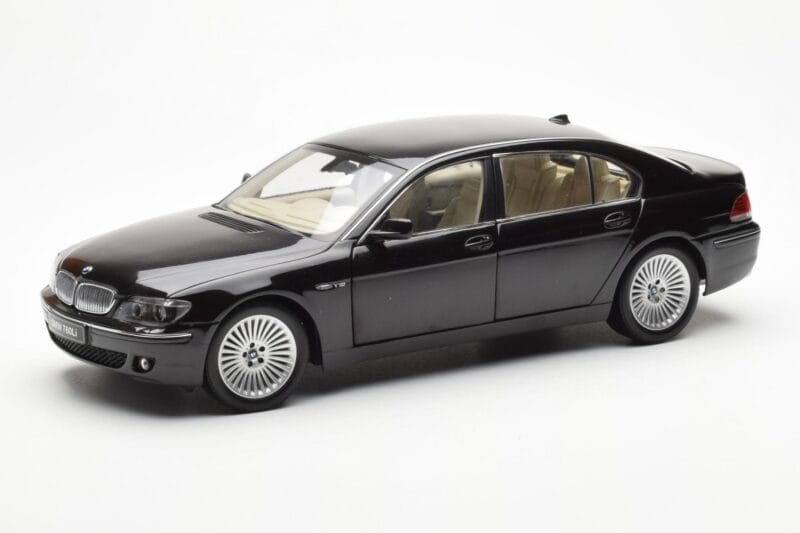
TL;DR: Kyosho's 1:18 diecast BMW 760Li E66 reproduces BMW's V12-powered flagship sedan in the long-wheelbase Li configuration, finished in Black with opening doors, hood, and trunk. It anchors an ultra-luxury German sedan collection alongside contemporary Mercedes S-Class and Audi A8 flagship replicas.
The 760Li sat at the top of BMW's 7 Series range, the V12 flagship built for buyers who wanted the brand's most powerful sedan without stepping outside the roundel. Kyosho's diecast treats that flagship status seriously, in a Black finish that suits the car's boardroom-and-chauffeur reputation.
The 760Li carried BMW's N73, a 6.0-liter V12 built to give the 7 Series flagship a genuine displacement and cylinder-count advantage over the six- and eight-cylinder cars beneath it in the range. That combination also meant the 760Li carried the most extensive standard equipment list in the 7 Series lineup, another quiet flagship signal. The Li suffix marks the extended-wheelbase body, stretched specifically for rear legroom on a car more often driven from the back seat than the front, making it BMW's clearest answer to rival long-wheelbase flagships from Mercedes-Benz and Audi.
BMW's E66-generation 7 Series introduced the iDrive control system and a design language that split opinion in period but has aged into a recognizable, era-defining shape. The 760Li's exterior stays restrained next to the V12 badge that quietly tells the story underneath, a detail Kyosho reproduces on the trunk lid and front fenders. For a flagship sedan collection, the 760Li is the BMW entry that forces the comparison with its German rivals rather than standing apart from them.
Kyosho casts the body in zinc alloy diecast with doors, hood, and trunk all opening on metal hinges, a meaningful feature on a car whose real-world identity is as much about the trunk and rear doors as the engine bay. The extended wheelbase is proportioned correctly rather than simply stretched from a standard-length casting, which matters on a Li-badge model where the extra length is the entire point. Lifting the model from its tray, the weight signals proper diecast construction, and the shut lines around the long rear doors stay tight and consistent.
The cabin carries a mapped dashboard, the iDrive controller molded into the center console, and rear-seat detailing that acknowledges how often this car was driven from the back rather than the front. Kyosho finishes the interior in a contrasting tone from the black exterior, letting the cabin read clearly through the glass rather than disappearing into shadow. It is a mid-tier level of finish, honest about where the detail concentrates, on the panels and proportions a buyer actually inspects rather than on every hidden surface.
The 760Li earns its place next to a Mercedes-Benz S-Class or Audi A8 long-wheelbase model precisely because all three cars were built to answer the same brief: maximum comfort, maximum badge weight, minimum compromise. Displayed together, the three flagships tell a coherent story about how German luxury manufacturers competed on displacement, wheelbase, and quiet detailing rather than outright styling drama. Collectors who value cross-brand comparison over single-marque completism often find flagship sedans like this one are where German engineering philosophy is easiest to compare side by side. At roughly 26 centimeters given the extended body, this model needs slightly more shelf depth than a standard-wheelbase sedan, worth checking against cabinet space before adding it to a row of shorter cars.