Used

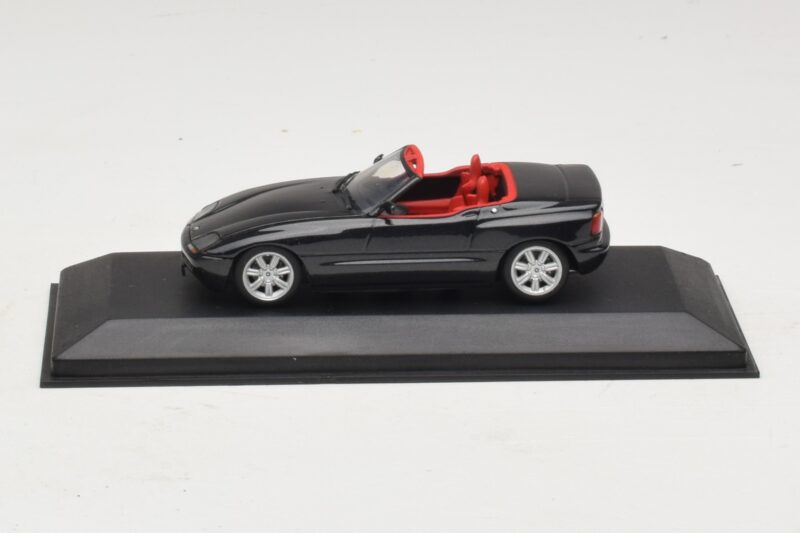
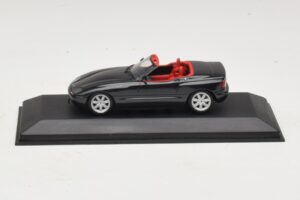
TL;DR: The Minichamps BMW Z1 1:43 in dark green with red interior is a zinc-alloy diecast of the 1991 roadster. This model has opening parts, so it can be examined beyond its exterior. It suits collectors following BMW's experimental road cars, with a color pairing that stands out on a shelf.
The Z1 was a statement more than a volume seller. BMW built a small number of them as an engineering showcase, with design ideas the company had not tried in a road car before. Minichamps carries that spirit into 1:43 with a body that articulates, giving this small roadster more to examine than most.
The listing states that this model has opening parts. Lifted from its packaging, the casting shows the weight of zinc alloy, and the moving panels work with a firm, defined feel rather than flopping loose. That gives a second way to enjoy the piece: you can study how the body sits when closed, then handle it for a different view. The trade-off is that a body built to move needs slightly wider gaps than a sealed shell, so shut lines read a little broader. For a quirky, engineering-led subject like the Z1, many buyers prefer that extra interaction over absolute surface tightness.
The color pairing is the immediate attraction. Dark green is a deep, restrained exterior, and a red interior gives it warmth wherever the cockpit is visible. Under a lamp, the green should show depth rather than looking flat, and the red should stay clean and saturated in the seats and dashboard. On an open-top car, the interior is part of the display, so the quality of that detail matters more than on a closed coupe. Check that the seat shapes, steering wheel, and instrument area read cleanly from above.
The Z in Z1 stands for Zukunft, German for future, and the car was developed by a specialist team inside BMW. It used a 2.5-liter inline-six drawn from the 325i, a rigid underbody, and plastic outer body panels that were attached to the chassis rather than forming the structure. The real car's door arrangement was unconventional and became its best-known feature. Production ran only from 1989 to 1991, and roughly 8,000 were built, so the Z1 is far rarer on the road than any mainstream BMW of its time.
Because the Z1 is so different from the cars around it, it works as a standout on a BMW shelf. It pairs naturally with other Munich roadsters at 1:43, where the contrast in design philosophy is easy to see. For marque-focused collectors, it also marks a point in the late 1980s when BMW was willing to take risks.
Compare the model's proportions and wheel fit against photographs of the real Z1, and examine badge printing for crisp edges. Because the body articulates, handle it gently and avoid forcing parts beyond their natural stop; a soft brush clears dust from panel gaps better than a cloth. Keep dark paint out of strong sun and display it where the interior can be seen from a slight angle above. Order it if you want a small, characterful model with more to explore than a sealed shell.