Last one
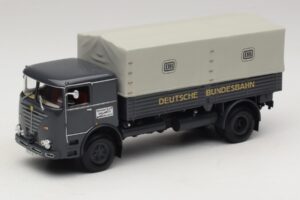
TL;DR: Minichamps' 1:43 diecast Bussing LU reproduces the 1961 German underfloor-engine commercial vehicle in Deutsche Bundesbahn livery, cast as a sealed zinc-alloy body. A specialist pick for collectors tracing postwar German railway and road-transport history rather than a typical passenger-car shelf.
Deutsche Bundesbahn ran far more than trains, operating an extensive network of feeder buses and trucks that carried freight and passengers where rail lines didn't reach. Minichamps' Bussing LU captures one of the working vehicles that kept that whole system reliably connected across rural routes.
Büssing built its reputation in postwar West Germany on underfloor-engine bus and truck designs, mounting the engine beneath the chassis rather than up front or under a rear deck. The LU designation reflects exactly that layout, freeing up floor space for cargo or passengers that a conventional bonneted engine would otherwise occupy. It was a distinctive engineering approach among German commercial vehicle builders of the period, one that gave Büssing vehicles a lower, flatter profile than competitors running more traditional layouts. The company's independent run ended in 1971, when Büssing merged into MAN, folding its underfloor expertise into a larger commercial-vehicle group.
Deutsche Bundesbahn's reach extended well past the rails through its Bahnbus network, a fleet of buses and trucks that connected smaller towns and rural stops to the main rail lines. A vehicle liveried for Bundesbahn service like this one represents that supporting network rather than the trains most collectors associate with the operator's name, a detail that appeals specifically to collectors tracing the full transport picture rather than locomotives alone. For collectors used to buying locomotives and rolling stock, a road vehicle like this one is an unfamiliar category, but Bundesbahn's own operating history makes it a legitimate part of the same collecting story rather than an unrelated curiosity. That legitimacy is worth stating plainly, since commercial-vehicle liveries sometimes get dismissed as filler beside a marquee steam or diesel model.
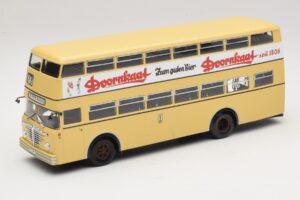
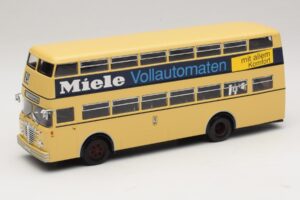
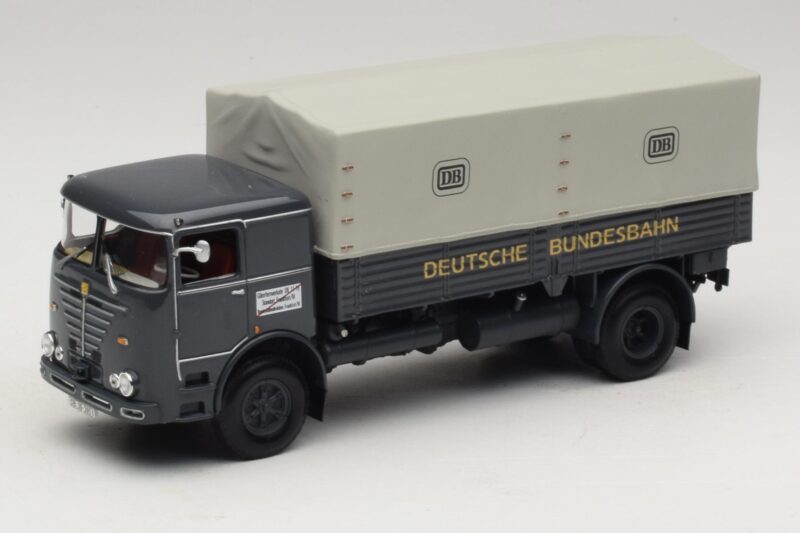
Minichamps casts the Bussing LU as a sealed, one-piece zinc-alloy body, holding the vehicle's low, flat-floored profile as a single continuous shell rather than negotiating hinge gaps across a body already defined by its unusual engine placement. The metal casting carries real heft in the hand, and the Bundesbahn livery's paint sits with genuine depth on that hard shell, the kind of finish that reads clearly under a display lamp despite the vehicle's utilitarian subject matter.
The cab glazing is mapped as a clear insert with window dividers picked out cleanly, and the wheels sit correctly under the body's width, a detail that matters on a commercial vehicle where an incorrect track width reads immediately wrong. The Bundesbahn lettering and livery graphics hold sharp registration against the body color, printed rather than left to a coarse decal that would blur at this scale. Commercial diecast at this scale rarely gets the tampo-printing budget a flagship sports car receives, so seeing crisp lettering here signals that Minichamps treated the subject with the same care it gives its passenger-car range rather than cutting corners on a niche release. That consistency matters most on liveries carrying an operator's name, since a blurred letterform is the fastest way to undercut an otherwise accurate casting. Zinc alloy also means this piece will carry its shape and its printed detail for decades on a shelf, a durability that outlasts the lighter materials sometimes used on cheaper commercial-vehicle miniatures.
Railway collectors who branch into road-transport liveries tend to reach for exactly this kind of subject, a Bundesbahn-liveried commercial vehicle that extends a train-focused collection into the buses and trucks that supported it. At 1:43, the Bussing LU takes up modest shelf space, and its narrow but genuine appeal rewards a collector building a complete picture of postwar German transport rather than chasing a single headline locomotive. It is not a piece that will anchor a display by itself, but set among period rolling stock and other Bahnbus liveries, it fills in a part of the story that pure train collecting leaves out entirely. That completeness is the whole point of chasing a subject this specific. Few other pieces tell it as honestly.