Last one

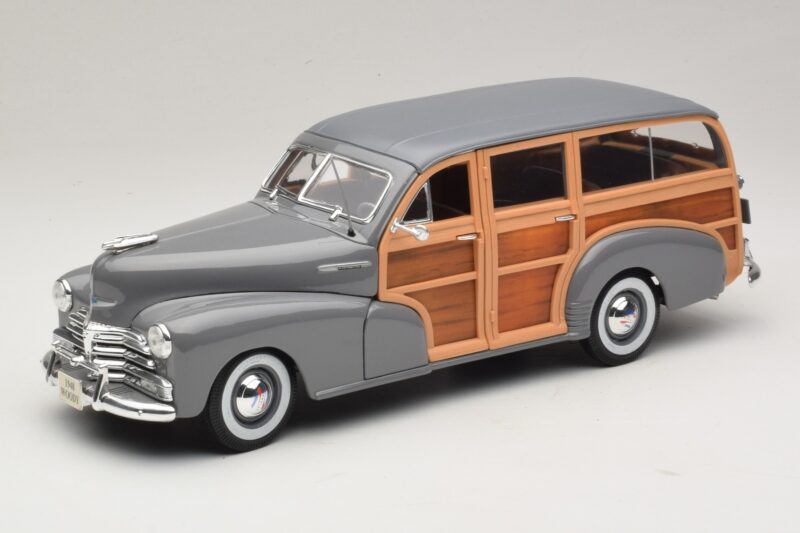
TL;DR: Maisto's 1:18 diecast Chevrolet Fleetmaster Woody reproduces the 1948 wood-paneled station wagon in Grey, with opening doors, hood, and trunk exposing the straight-six engine and bench seating. Built during Chevrolet's first full postwar generation, this casting suits collectors assembling 1940s American wagons or Vintage Classics lineups.
The Fleetmaster wagon belongs to a vanishing category of car, one where the body panels really were wood, structural ash framing filled with mahogany inserts rather than a painted imitation. Chevrolet's first postwar generation carried this construction into 1948, and Maisto's 1:18 casting captures the breed before steel-bodied wagons replaced it entirely.
This Fleetmaster opens at the doors, hood, and rear tailgate, giving access to a straight-six engine bay, a split-bench front seat, and the flat load floor that made these wagons genuinely useful family haulers rather than just handsome shapes. The hood lifts to reveal an inline-six laid out the way Chevrolet built every car in this era, longitudinally with a simple carburetor setup visible on top. The rear tailgate swings down in the correct two-piece arrangement period wagons actually used, a detail that separates a carefully researched casting from a generic station wagon shape.
The real engineering trick on an original Woody was structural ash wood framing holding mahogany panel inserts, a construction method Maisto approximates through a textured, grain-printed finish over the diecast body rather than actual wood. That printed wood-grain pattern needs to read convincingly at arm's length, since it's the single detail that defines this body style, and Maisto keeps the grain direction and panel seams consistent with how real coachbuilders laid out these wagons. The Grey roof and lower body panels frame that wood-toned paneling the way the originals did, giving the casting correct two-tone visual logic rather than a single flat color scheme. Maisto also picks out the chrome front grille and bumper separately from the body color, a small but noticeable finishing touch at this price tier.
Wood body construction predated steel stamping technology that could economically produce large curved panels, so early American wagons used coachbuilt wood bodies mounted on a standard sedan chassis, essentially furniture-grade construction applied to a car. By 1948, steel was already taking over most body panels, but wagons held onto structural wood longer than any other body style because the technique suited their boxy, flat-paneled shape. Chevrolet sourced the wood components from outside coachbuilders, a supply chain that added real cost and explains why wagons carried a premium over standard sedans despite their utilitarian purpose. The Fleetmaster represents one of the last widespread uses of this method before Chevrolet and its competitors moved wagons entirely to steel within a few years.
These wagons were built as practical family vehicles, not style statements, which makes their second life ironic: by the 1960s, aging examples had become cheap and plentiful, and California surfers bought them up as inexpensive, roomy transport for boards and gear. That adoption cemented the Woody wagon as a fixture of surf culture, a connection that still shapes how collectors and the general public perceive this body style today. For a Vintage Classics shelf, the Fleetmaster represents the genuine article behind that later cultural image, an honest family wagon rather than a stylized tribute to it.
At 1:18, the Fleetmaster's wood-and-steel two-tone finish gives it more visual variety than a typical single-color sedan from the same era, a genuine asset on a shelf of 1940s Americana. Opening doors, hood, and tailgate make it an interactive piece worth posing in different configurations, and the mass-market diecast price keeps a specialty body style accessible rather than reserved for high-end resin builds. Collectors assembling a Vintage Classics lineup by body style will find this wagon fills a gap sedans and coupes can't, representing the practical, family-oriented side of postwar American car culture rather than its performance or luxury extremes. Its wood-grain finish also pairs naturally with later woody-styled wagons from the 1950s and 1960s for a themed surf-era display.