Last one
Used
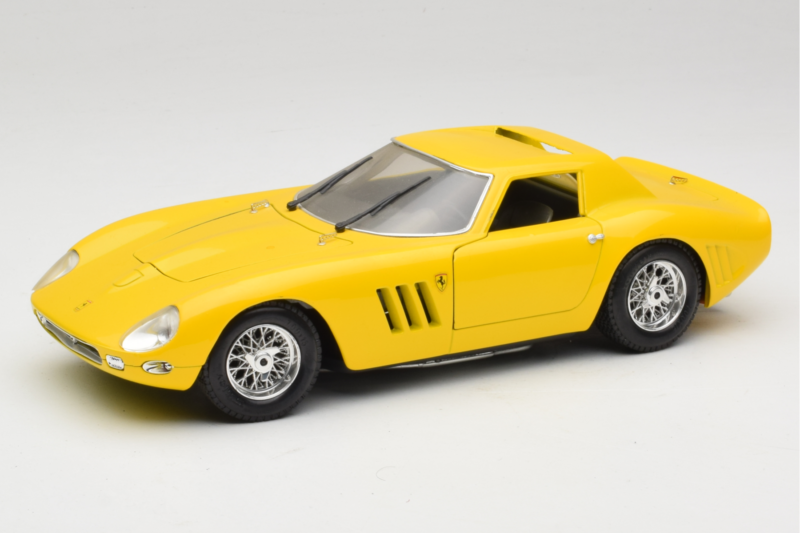
TL;DR: This Guiloy 1:18 diecast Ferrari 250 GTO wears a yellow finish recalling the national racing colors privateer teams used in period. Built from just 36 real cars produced between 1962 and 1964, the GTO won its Le Mans GT class three years running, and this diecast delivers that legend at accessible pricing.
Only 36 Ferrari 250 GTOs were built, and they won their Le Mans class three years in a row. Few subjects in scale model collecting carry that much documented weight, and Guiloy's diecast puts it on a shelf without resin-tier cost.
The 250 GTO paired a Colombo-designed 3.0-liter V12 with a body shaped for aerodynamics as much as beauty, credited to Giotto Bizzarrini's engineering and finished by Scaglietti's coachwork. Yellow was never Ferrari's factory color, it belonged instead to national racing liveries that privateer teams, most famously Belgian squads, applied to their own GTOs when campaigning across Europe. Guiloy's choice of yellow over the expected Rosso Corsa signals a car built for a specific racing identity rather than a factory show piece, and it broadens what a 250 GTO shelf can look like beyond the usual red repeats. With only 36 originals ever built and three straight Le Mans class wins behind them, the GTO holds a benchmark position among competition Ferraris that no later homage has matched.
Guiloy builds this GTO in zinc alloy, and the weight in hand is the first thing that separates it from the sealed resin replicas that dominate the upper end of 250 GTO collecting. Diecast construction typically allows opening doors and a lifting hood, letting the cabin and mid-mounted V12 stay visible for inspection rather than sealed behind glazing alone. The trade-off is honest: panel lines run wider than a hand-built resin body can achieve, and the paint lacks the multi-stage depth specialist resin producers apply. For a collector who wants the 250 GTO's story on the shelf without committing resin-tier money to a single car, this is the sensible entry point, and it leaves room in the budget for other Ferraris from the same competition era.