On sale:
-20%
Last one
Used
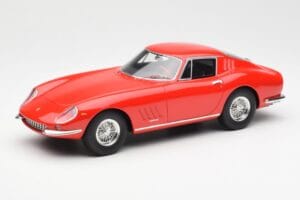
Ferrari 275 GTB Red CMR 1:18
Only 1 left
Sale ends in: 00d 00h 00m
Price:
was
235.00 €
188.00 €
You save 47.00 €
VAT included
You save 6.00 €
Lowest price in the 30 days before the reduction: 38.00 €
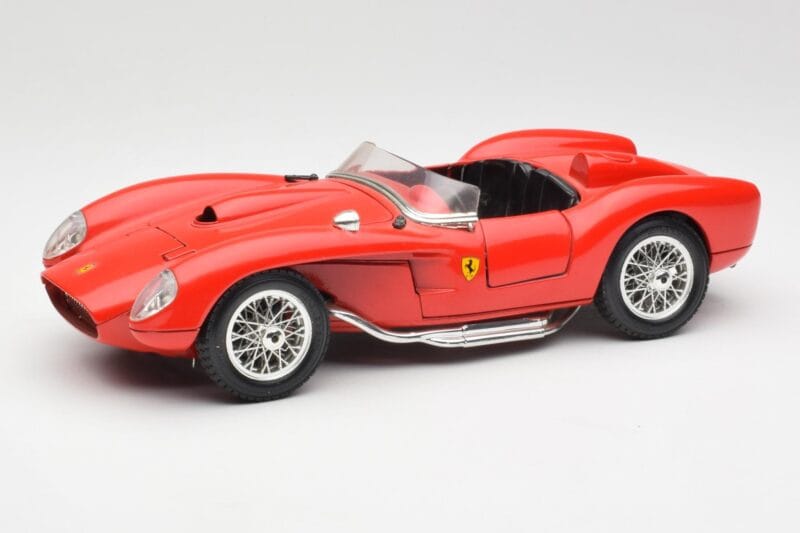
TL;DR: Bburago's 1:18 diecast Ferrari 250 Testa Rossa recreates the open-top 1957 racer in red with functioning doors and hood. This is a used example, and the box shows traces of storage. Entry-tier zinc alloy construction at a mainstream price for a barchetta-era Ferrari icon.
The Testa Rossa's cycle-fender bodywork and pontoon front made it one of Ferrari's most distinctive sports racers, and Bburago's diecast keeps that silhouette recognizable at an accessible price.
This casting is zinc alloy, and the weight in the hand is the first signal of that construction: a density plastic toys never match. The doors and hood open, letting a buyer see the simplified cockpit and engine bay behind the seams, though the tolerances here run wider than a mid-tier build, with visible gaps where the panels meet the body. Paint is applied evenly across the curved fenders, approximating Ferrari's Rosso Corsa rather than matching a factory code, and the chrome trim around the headlamps and grille catches light cleanly for a model at this tier. As a used example, expect handling marks consistent with prior ownership, and the outer box shows traces of storage rather than crisp retail condition; the model itself remains structurally sound. Judged against its own entry-level price point, it delivers a faithful outline of a car whose barchetta shape defined an era of sports-car racing before roll cages and closed cockpits became standard.
The Testa Rossa's open cockpit and low stance make it a strong visual anchor next to closed coupes on a themed shelf, particularly alongside other 1950s and 1960s sports racers where its cycle fenders and narrow track read as period-correct. At 1:18, the model occupies a footprint typical of open-top sports cars, smaller than a modern supercar casting but substantial enough to hold its own under display lighting. Because the doors and hood open, this piece rewards handling more than a sealed body would, letting a collector show off the interior detail during a shelf rotation. It works well as a gateway into pre-1960s Ferrari racing history without the investment a resin or hand-built alternative would require, and its accessible tier makes it a sensible first step for anyone building a chronology of Maranello's early competition cars.
You save 47.00 €

You save 14.00 €
Lowest price in the 30 days before the reduction: 66.00 €
You save 15.00 €
Lowest price in the 30 days before the reduction: 75.00 €

You save 14.00 €
Lowest price in the 30 days before the reduction: 67.00 €

You save 130.00 €
Lowest price in the 30 days before the reduction: 538.00 €

You save 87.00 €
Lowest price in the 30 days before the reduction: 588.00 €

You save 99.00 €
Lowest price in the 30 days before the reduction: 626.00 €

You save 130.00 €
Lowest price in the 30 days before the reduction: 574.00 €

You save 12.00 €
Lowest price in the 30 days before the reduction: 114.00 €

You save 6.00 €
Lowest price in the 30 days before the reduction: 107.00 €

You save 4.00 €

You save 4.00 €
Lowest price in the 30 days before the reduction: 62.00 €
You save 4.00 €
Lowest price in the 30 days before the reduction: 76.00 €

You save 38.00 €
You save 19.00 €
Lowest price in the 30 days before the reduction: 94.00 €