Last one
Used
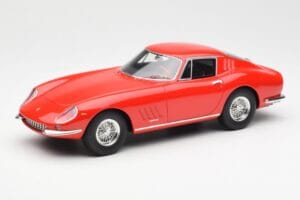
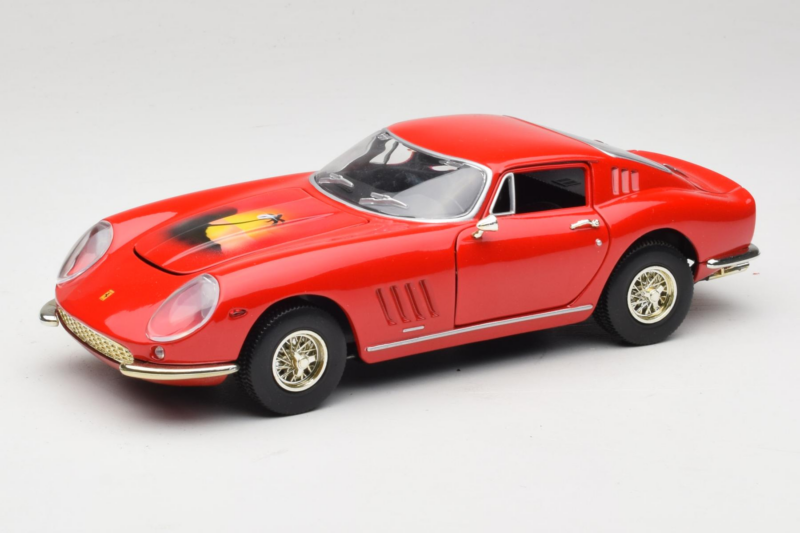
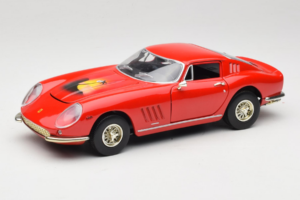
TL;DR: ERTL's 1:18 diecast Ferrari 275 GTB/4 in red carries a distinctive palm graphic on the hood, a novelty take on one of the most respected shapes in Ferrari's 1960s GT lineup. The unusual livery sets it apart from the many stock-color 275 replicas already on the market.
Most 275 GTB/4 replicas play it straight with classic Rosso Corsa or period silver, which makes this palm-graphic hood a genuine outlier worth a second look.
ERTL built its reputation on licensed diecast across a broad range of American and European vehicles rather than specializing narrowly in exotic sports cars, and that generalist diecast approach carries through here: a solid zinc-alloy body, opening doors on straightforward hinges, and a finish aimed at recognizable accuracy rather than showroom-grade paint depth. The red bodywork sets up the palm graphic as the obvious focal point, a decorative choice that turns a familiar Ferrari silhouette into something more playful than a standard catalog color would allow. It reads as a novelty piece first and a fidelity showcase second, which is a fair description of where ERTL's Ferrari diecast generally sits in the market.
The 275 GTB/4, introduced in 1966, added a dual-cam version of Ferrari's V12 to the 275 GTB's long-nose, short-tail body, a shape widely regarded as one of the purest expressions of 1960s Ferrari design language, the work of Pininfarina refined by Scaglietti's coachbuilding. It represented a technical step up from the earlier single-cam 275 GTB, and its combination of proportion and mechanical seriousness helped define what a modern Ferrari GT should look like for years afterward. A novelty livery like this palm-hood variant works precisely because the underlying shape is strong enough to carry an unconventional decoration without losing its identity. Displayed beside more conventionally finished 275s or other 1960s Ferrari GTs, it adds visual variety to a vintage shelf without asking the collector to sacrifice the recognizable proportions that make the 275 worth collecting in the first place.