Last one
Used
Back in stock
This model is currently sold out. Enter your email and we'll let you know when it's back in stock.
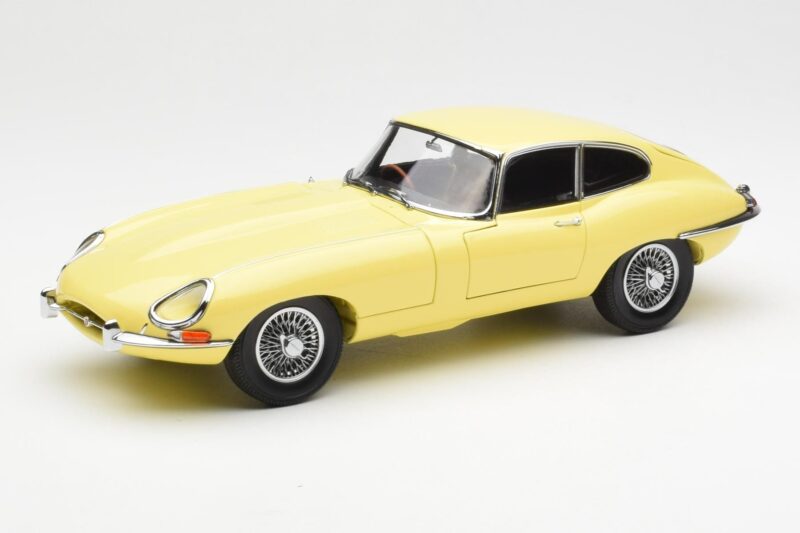
TL;DR: Kyosho's 1:18 diecast Jaguar E-Type 3.8 Series 1 reproduces the 1961 fixed-head coupe in light yellow, a genuinely uncommon factory color against the red, black, and green examples that dominate most Series 1 collections. Covered headlamps, opening doors, and a mapped cockpit sit on zinc alloy construction with clean panel definition.
Yellow was never the obvious choice on a Series 1 E-Type, which is exactly what makes Kyosho's light yellow version worth seeking out. It brightens a shelf that red, black, and green E-Types have already claimed.
The 3.8 Series 1 launched in 1961 with a monocoque body, triple-carburetor straight-six, and the covered headlamp fairings that distinguish every Series 1 from the later cars built after lighting regulations forced their removal. Independent rear suspension, drawing on lessons from Jaguar's D-Type racing program, gave the E-Type handling that immediately outclassed rivals costing significantly more. The long, unbroken bonnet line remains the car's single most photographed feature, and it is the panel every replica, diecast or resin, ultimately gets judged by first.
Red dominated Series 1 sales figures in period, with black and the various greens following as popular secondary choices, and yellow sat well down that list as a comparatively rare factory option. That relative scarcity in period is exactly what makes a yellow Series 1 diecast stand out now: it isn't inventing a rarity that never existed, it's reflecting a genuinely less common original choice rather than a fantasy color dreamed up for the model range.
Light yellow is an unforgiving color to get right in miniature, since pale tones show inconsistency in paint thickness far more readily than red or black would, and Kyosho's finish holds even coverage across the bonnet without patchiness or a chalky flatness creeping in near the panel edges. The bonnet's reflection stays continuous along its full length, the detail that separates a well-executed Series 1 from one where the long curve breaks visually at the shut line.
Chrome window surrounds, bumpers, and wire-style wheels stand out cleanly against the pale body, holding crisp definition rather than washing out the way chrome sometimes can against a light background. Doors and bonnet open on metal hinges typical of Kyosho's diecast construction, revealing a mapped cockpit with toggle switches and wood-effect dashboard detail, and the zinc alloy body carries the same substantial weight as its more common counterparts.
On a shelf already holding a red or black Series 1, yellow does something neither of those colors can: it breaks the visual rhythm and forces a second look at the shape rather than the color. It works particularly well as a bridge piece between a collection's brighter 1960s subjects and its more restrained ones, since light yellow reads as playful without tipping into anything gaudy on a car this classically proportioned. For collectors chasing color variety within one model line, this is the piece that actually earns that variety.