Used

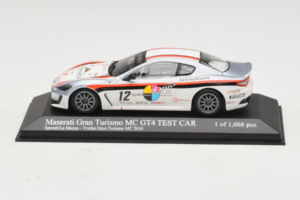
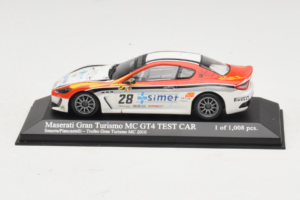
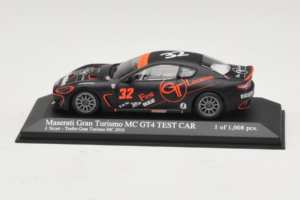
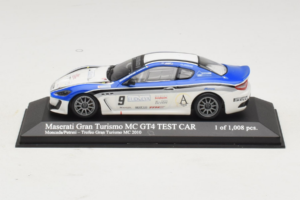
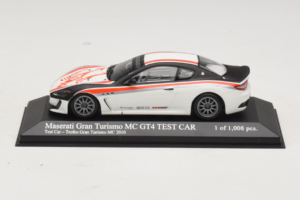
Maserati GranTurismo MC GT4 #6 Goldstein / Sumberg Trofeo GranTurismo 2010 Minichamps 1:43
Only 2 left
Price:
37.00 €
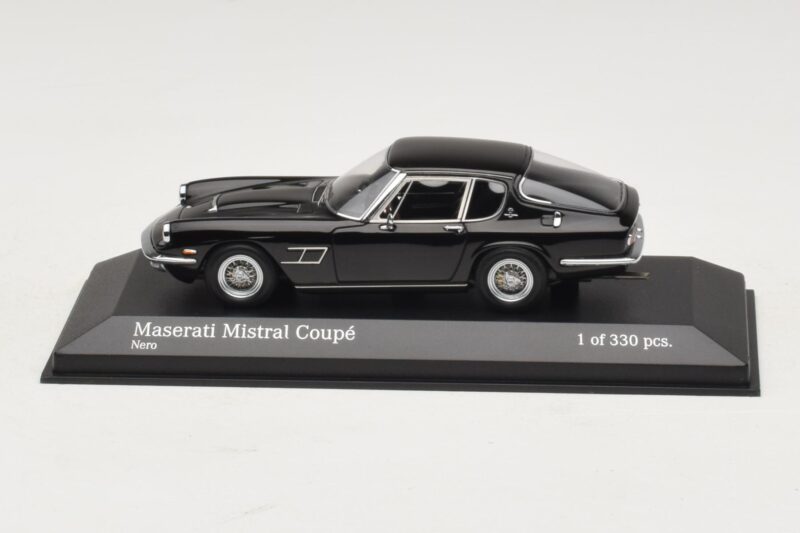
TL;DR: Minichamps' 1:43 diecast Maserati Mistral Coupe reproduces the 1963 Frua-styled grand tourer in black, the closed body that introduced the wind-naming convention Maserati followed for decades. Cast as a sealed one-piece diecast body, the coupe's signature glass tailgate and paint depth carry the model, with no opening panels.
The Mistral coupe came first, before Maserati ever built the Spyder that removed its roof, and it introduced a detail few grand tourers of its era offered: a full glass hatch over the rear luggage area, a genuinely distinctive feature Pietro Frua worked into an otherwise clean, understated shape. Minichamps' 1:43 reproduction wears black, a color that shows off that glass tailgate and the coupe's flowing roofline with real clarity.
Before Maserati built the Spyder variant, the Mistral existed only as this closed coupe, the body Pietro Frua designed first and the one that established the naming convention the factory would repeat with the Ghibli, Bora, and Khamsin in the years that followed. One detail set the coupe apart from most grand tourers of its era: a full glass hatch covering the rear luggage compartment, a feature that gave the car a distinctly modern quality at a time when most competitors used conventional metal trunk lids.
Under that glass and the long hood ahead of it sat a straight-six engine with roots in Maserati's competition programs, giving the Mistral real performance to match its elegant shape. The coupe outsold the Spyder by a wide margin, since a closed grand tourer is simpler to engineer and cheaper to produce than converting the same chassis to an open body without sacrificing rigidity, making the coupe the more commonly found Mistral today.
Black is a demanding color on any car, since it shows every surface imperfection with nowhere to hide, but on the Mistral coupe it does something specific: it throws the glass tailgate into sharp visual contrast against the body, making that signature feature the clear focal point of the rear three-quarter view rather than blending into a lighter-colored surround. Minichamps holds a deep, even gloss across the coupe's long hood and flowing roofline.
The coupe's proportions differ meaningfully from the Spyder's: a higher beltline, a windshield set at a less extreme rake, and the full roof structure running back into that glass hatch, all details a casting has to get right. Minichamps' execution captures that closed-roof geometry correctly, and the black paint makes the glass tailgate's outline easy to trace at a glance. The chrome surrounding that glass panel confirms genuine attention to the coupe's most distinctive feature.
Minichamps casts this Mistral coupe in zinc-alloy diecast as a sealed one-piece body, with no doors, hood, or that glass tailgate opening on this particular model. That construction decision puts the full weight of the reproduction on exterior fidelity: the roofline's sweep, the glass tailgate's outline, and how evenly the black paint sits across a body with genuinely demanding surfacing. Diecast brings real weight to a 1:43 casting, a density signaling metal construction immediately, and that mass comes from casting tolerances somewhat wider than resin allows, an inherent material trade rather than a flaw specific to this piece. A sealed body suits this coupe reasonably well: without hinge clearances to design around, Minichamps holds the roofline's flowing sweep back into the tailgate area without interruption, letting black paint and glass detailing read as one continuous, deliberate shape. Buyers wanting to explore the straight-six or the cabin in detail will need a larger scale or an opening-panel alternative. This is a piece meant for careful shelf placement under direct light, where the black paint and glass tailgate do their best work.
At 1:43, this Mistral coupe pairs naturally with the Spyder from the same generation, and the two together tell the complete story of the model: one shared chassis and straight-six engine, two distinctly different bodies, with this closed coupe representing the more common, more affordable half of that pair to find and collect. Minichamps' diecast execution reflects the coupe's status as the definitive Mistral body, the one that actually introduced Frua's design and Maserati's wind-naming tradition to the world. For a collector starting a Maserati shelf or tracing the marque's design lineage through the 1960s, the coupe is the natural first piece, with the rarer Spyder a logical addition afterward. Between the two, this black coupe is where the story genuinely begins.