Last one
Used
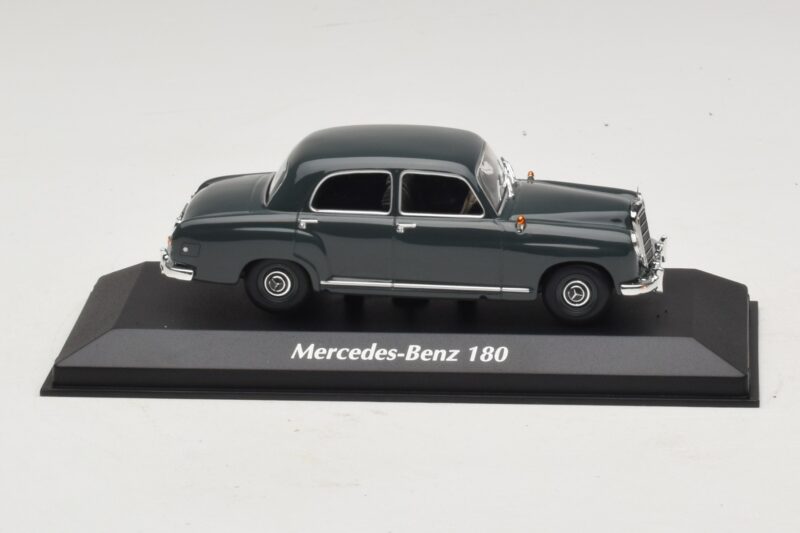
TL;DR: The Maxichamps Mercedes 180 W120 1:43 is a diecast replica of the 1955 Ponton sedan in Grey, with a sealed one-piece body. The 180 was the four-cylinder base of the Ponton range, so the model rewards a close look at proportions and finish rather than ornament. Palm-sized and accessible.
Grey is not a color that calls attention, and the Mercedes 180 never did either. This Maxichamps Mercedes 180 W120 treats that as a strength: a plain sedan, a plain color, and a shape that depends entirely on proportion. In 1:43 it works as the quiet baseline against which fancier Mercedes models of the decade look even better.
With little trim to distract, the 180 depends on the shape being right: a steady beltline, a rounded roof that settles into the rear window without bulges, and wheel arches that frame the tyres evenly. A sealed one-piece body is well suited to this, since the outline reads as one smooth object. Grey exposes surface faults differently than bright colors do; a slightly mottled or dusty finish shows as blotchy shading along the long flat panels. Tilt the model under a lamp and watch how the light travels over the hood and roof, because even travel means even paint.
The zinc-alloy casting gives the 180 more heft than its size suggests, and the body will stay straight over years on a shelf. At this accessible tier, expect printed rather than separately applied trim and moulded window surrounds, with the clear glazing doing most of the visual work. That suits a subject whose own detailing was restrained. Compare bumpers and grille against photographs of the real car first; these are the places where economy diecast most often simplifies, and where a sharp print signals careful tooling.
The 180 (W120) arrived in 1953 as the first Mercedes passenger car with a self-supporting body, and its four-cylinder engine made it the entry point of the Ponton range. Its modest output suited the economy of the early 1950s, and the body shape then carried over into six-cylinder models that added trim and power. The 1955 model year places this replica in the middle of that run, when the design had settled and the family was growing around it. It is a car that explains the ones above it.
A single 180 stands alone as a plain sedan; added to a six-cylinder Ponton, it explains the family. The differences in trim and bright metal show what moving up the range meant in the 1950s. Collectors who like chronology can place it first in a row and let the more elaborate cars follow, with Grey as the neutral starting tone. At 1:43, the whole progression fits on a single shelf, with the compact footprint of each car leaving room for the next addition.
Expect to appreciate this model over time rather than at first glance. Look closely at the four fundamentals: stance, glazing fit, bumper alignment and finish evenness. The sealed body keeps the casting rigid and the shut lines consistent, and it shrugs off handling that would stress a more delicate construction. Display it away from direct light, dust it with a soft brush, and give it a neighbor of a different color, because Grey beside Grey can blur on a crowded shelf. At about ten centimeters long it fits easily into a compact cabinet, and the accessible diecast tier keeps a Ponton family project realistic for buyers watching a budget.