Last one
Used

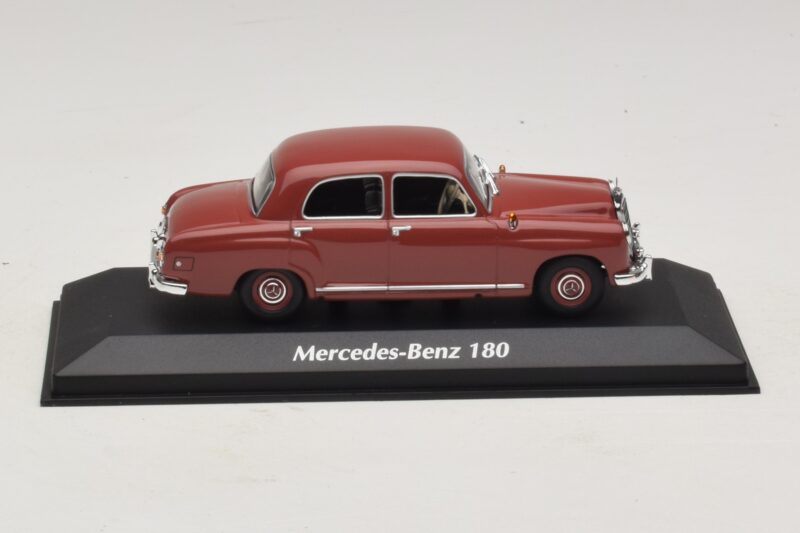
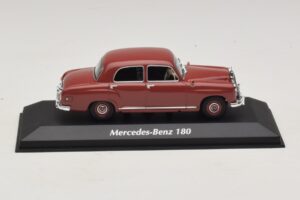
TL;DR: The Maxichamps Mercedes 180 W120 is a 1:43 diecast sedan in red, based on the 1955 four-cylinder Ponton. It is a sealed one-piece casting where proportions, paint, and stance carry the model. A modest, accessible entry point into postwar Mercedes collecting.
Red turns the plain, rounded Ponton 180 into something with more presence than its unassuming engineering suggests. The 180 was the sensible four-cylinder sedan of the family, and it marked Mercedes' move to a self-supporting body. At 1:43, that sensible shape becomes a small, clean piece with a strong color accent for a cabinet of mostly dark and silver cars.
The 180 launched in 1953 as Mercedes' volume sedan, sitting below the six-cylinder 220 in the same rounded body style. Its job was ordinary: carry families and business owners reliably in postwar Germany. That ordinary quality is part of the appeal for collectors. The shape is simple, with a low beltline, a rounded hood, and modest chrome, so a casting has few places to hide errors. Check that the roof curves gently into the rear window and that the trunk lid sits at a believable height.
Solid red is forgiving on one point and harsh on another. It hides dust well, but it exposes uneven coverage along curved panels where light rolls over the surface. A zinc alloy shell gives paint a rigid base, so the gloss tends to look even and deep. The weight is the first impression: noticeably denser than a plastic piece of the same size. Diecast tolerances are wider than cast resin, so panel lines are slightly more visible, but the metal tolerates handling and moving between shelves, which suits a model meant to be enjoyed.
Nothing on this model opens, so judge it as a sculpture of the exterior. Study the stance first: the Ponton sat upright, and the gap between tire and arch should look modest rather than slammed. Then check the glazing, the grille shape, the bumper profiles, and the wheels. A one-piece casting keeps its shut lines uniform and removes the risk of loose or uneven panels over time. That is a real advantage for long-term display.
At 1:43 a mid-size 1950s sedan runs about a hand's width long. A 1:18 version would run roughly two and a half times longer and demand its own shelf. The smaller scale loses some fine detail, such as lettering and interior texture, but it makes a full run of Mercedes sedans practical in one cabinet.
For a collector beginning a postwar Mercedes theme, the 180 is the logical first step: the least flamboyant car of the family, and the one that most people saw in daily use. It sets the baseline against which six-cylinder and later cars can be compared. Choosing red rather than a conservative color gives the shelf a visual anchor and makes the shape easy to read from across a room. This is an accessible diecast, not a hand-built resin showpiece, so judge it on proportion and finish rather than micro detail. If you collect by marque, it earns its place as the plain-spoken start of the story.