Last one
Used

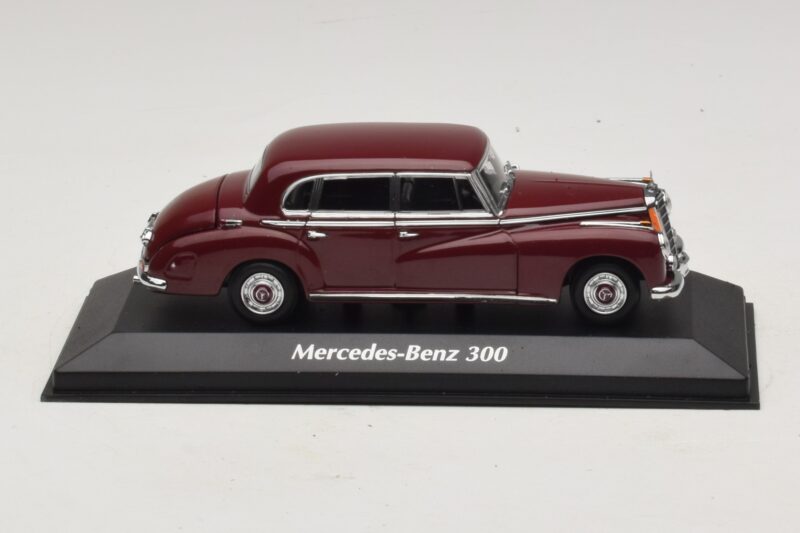
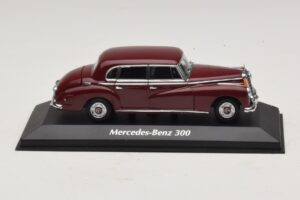
TL;DR: The Maxichamps Mercedes 300 W186 1:43 is a sealed diecast model of the 1951 six-cylinder flagship sedan in Dark Red. Nicknamed the Adenauer, the real car was Mercedes' formal top model of the early 1950s. Collectors judge this replica on its upright profile, chrome and paint depth.
Chancellor Konrad Adenauer rode in a 300, and the nickname stuck for good. The W186 was Mercedes' statement that postwar Germany could build a flagship again. This Maxichamps Mercedes 300 W186 in Dark Red carries that formality down to 1:43, with an upright stance and a color suited to the car's official bearing.
The 300 stands taller and more formal than the sedans below it in the range: a steep roofline, deep side windows and a long, upright grille. On a sealed casting, those proportions are the whole story, so check how the roof meets the pillars and whether the glazing sits flush. Dark Red suits the model. It deepens in shadow and picks up highlights along the wings and hood line, so shelf lighting changes how the car looks from hour to hour. Place it where a lamp rakes across the flank and the paint depth becomes obvious.
A flagship of the period carried a lot of bright metal, and at 1:43 that trim is printed or moulded rather than fitted separately. Bumpers, grille and window surrounds are where an accessible-tier diecast either holds its edges or goes soft, so inspect them first. The zinc-alloy body gives the car a stable, weighty feel, and the casting stays straight over years. What it cannot do is match the fine chrome of a resin or multi-part model, and at this tier no one should expect it to. The reward is durability and a fair price.
Mercedes launched the 300 in 1951 with a 3.0-litre inline six, bringing the brand back to the luxury class its prewar models had occupied. Its body was a traditional body-on-frame design rather than the Ponton shape of the lower-line cars, which is why it looks more upright and formal. Later revisions kept the 300 in the lineup through the decade. The 1951 date on this replica points to the original launch year, when the car stood as the clearest sign of the company's recovery.
Stood next to a Ponton 180 or 220 S, the 300 shows the gap between mainstream and flagship at a glance. It is taller, more upright and more heavily trimmed. A shelf that runs the whole range tells the story of Mercedes rebuilding in a single row, with Dark Red marking the top of the ladder. Because every car in the group shares the 1:43 scale, comparisons of height and length are direct, with no mental adjustment required.
As the biggest car in a 1:43 Mercedes row, the 300 sets the upper scale reference, at about eleven or twelve centimeters long. Use it as a bookend, and give it room so the profile can be read. Dark Red benefits from warm, indirect light; avoid sun, which fades painted surfaces over time. Handle by the base rather than pressing on the glazing. At the accessible diecast tier, it suits collectors who prefer a broader 1950s lineup over a single hero piece, and anyone ready to order it receives a stable casting that rewards close inspection of proportions rather than hidden detail.