Last one
Used
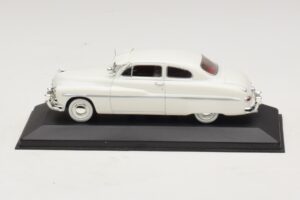
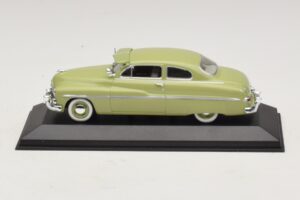
TL;DR: Minichamps' 1:43 Mercury Monterey reproduces the 1950 hardtop coupe in light green, cast as a sealed one-piece body with the rounded postwar styling that defined Mercury's mid-tier position between Ford and Lincoln. A compact, detail-focused piece for an early-1950s American lineup.
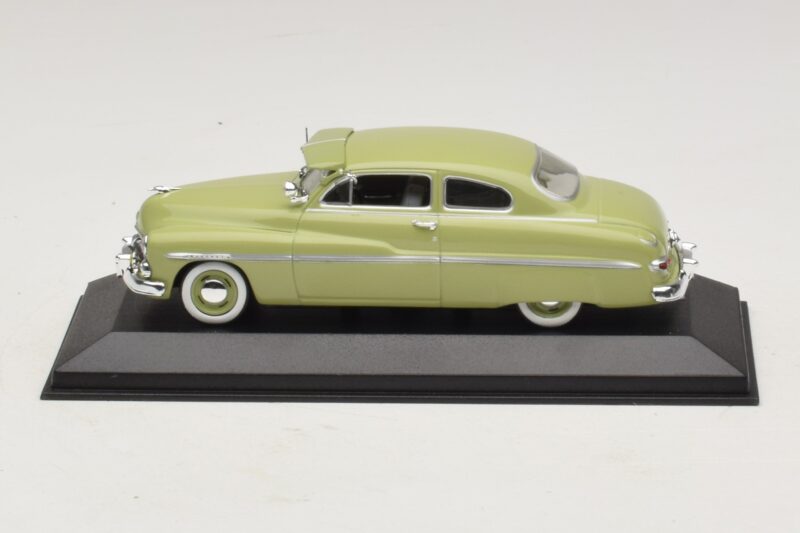
Mercury spent the postwar years carving out a niche above Ford and below Lincoln, and the Monterey name sat at the top of that lineup when it debuted for 1950 as one of the earliest hardtop coupe body styles the brand offered. Minichamps renders the shape in light green, true to the rounded, fender-integrated styling of the period.
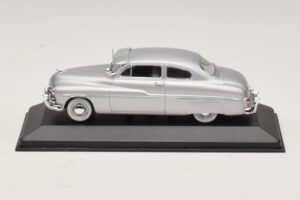
This Monterey comes as a fixed, single-piece casting with no doors or hood that open, which at this scale keeps the tooling's attention on the body's surfacing rather than hinge mechanisms. The early 1950s Mercury shape is built around full fender integration, with the front and rear wheel arches flowing into the body rather than standing proud of it, a transitional look between prewar separate-fender design and the slab-sided cars that followed later in the decade. The hardtop roofline, distinctive for lacking a B-pillar between the front and rear windows, is a detail easy to blur at 1:43 and holds its shape cleanly here.
The light green paint covers those long, curved surfaces evenly, and the chrome grille bars and bumper work are picked out with enough separation from the body color to read clearly rather than disappearing into a wash of brightwork, a common risk on cars from this era that carried a lot of chrome. Wheel covers follow the period's simpler hubcap pattern rather than the ornate styling Mercury adopted later in the decade. For a car whose main interest lies in its transitional shape rather than any mechanical quirk, getting the fender lines and roofline right is the whole job, and this casting handles it without the waviness that can creep into budget small-scale tooling.
Ford created the Mercury brand to fill the price gap between its own mass-market cars and Lincoln's luxury offerings, and by 1950 that middle position had become one of the more competitive segments in the American market, contested by Oldsmobile, Buick, and DeSoto. The Monterey name arrived as a top-of-line trim that year, applied first to hardtop and convertible body styles aimed at buyers who wanted more style and standard equipment than a base Mercury offered without stepping up to Lincoln pricing.
That middle-market positioning is part of what makes early Mercurys an interesting collecting niche: they carried genuine style and engineering improvements over their Ford siblings, without the production numbers or name recognition that keep the flashiest Cadillacs and Lincolns of the era in the spotlight. A 1950 Monterey represents the brand near the start of a decade in which Mercury would go on to build some of its most recognizable postwar designs. Its styling cues, rounded fenders, a simple grille, and a clean hardtop roofline, previewed the direction mainstream American design would take through the rest of the 1950s.
At 1:43, this Monterey occupies a modest footprint that pairs comfortably with other early postwar American cars without needing dedicated display space. Its sealed body puts the focus squarely on the fender lines and paint finish rather than interior detail, which suits a design defined by exterior surfacing rather than mechanical novelty. For collectors assembling a lineup that spans Ford, Mercury, and Lincoln rather than stopping at the flagship names, the Monterey fills the middle rung with genuine period accuracy, a quieter purchase than a finned Cadillac but an honest addition to a broader early-1950s American collection.