Last one
Used
Back in stock
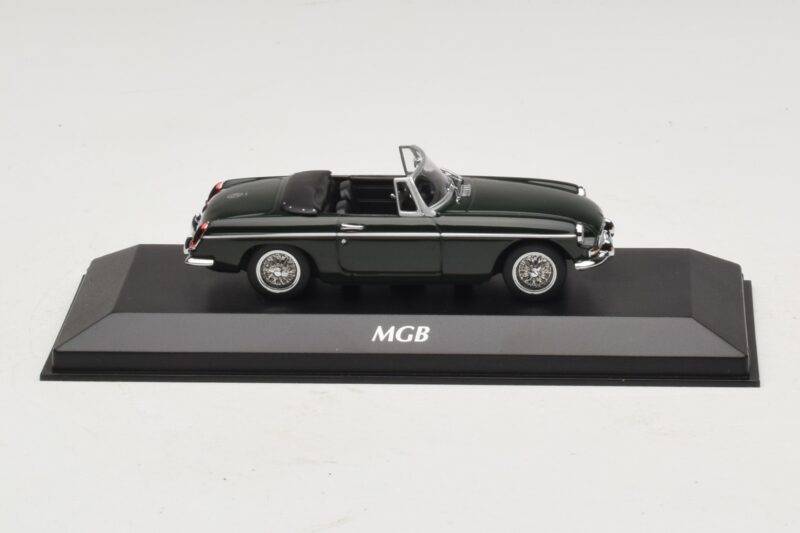
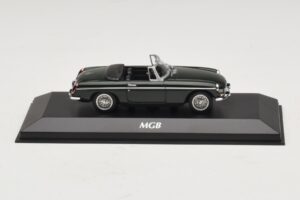
TL;DR: The Maxichamps MG MGB Mk1 1:43 is a diecast replica of the 1962 British roadster, finished in Green. The body is a sealed one-piece casting, so the appeal sits in the open-top profile, the paint and the stance. It suits collectors building a compact 1960s sports car lineup.
Small roadsters live or die by their profile, and the MGB is a case study. Low scuttle, a shallow windshield and a tidy tail give it a shape that reads instantly from the side. At 1:43, that outline is the whole story, and the Maxichamps casting lives or dies by it.
This model has no opening parts. Every panel is fixed, and the body is one casting. That is a normal construction choice at 1:43, and it shifts the evaluation to the exterior. Run a fingernail along the door line and it tracks a single continuous groove, with no hinge tolerance to widen the gap. Diecast zinc alloy also gives the piece real heft for its size; lift it from the tray and the mass is the first thing you register. Metal holds its geometry across years of shelf life, which matters on a long, low roadster body where a sagging or warped line would show at once.
The listing calls the color Green, and on a roadster a single color does heavy lifting. With no roof to interrupt the silhouette, paint runs unbroken from the nose over the scuttle and down the tail, so any unevenness shows. Judge a sealed open-top by that surface: even gloss, tidy edges where body color meets bright trim, and a windshield frame with a crisp outline. The cockpit is open to the sky, so whatever interior molding the casting carries is visible from above without any handling. Place a lamp slightly above shelf height and the curves of the wings pick up a soft highlight.
MG launched the MGB in 1962 at its Abingdon factory, replacing the MGA with a unitary body in place of a separate chassis and adding wind-up windows, a real gain in everyday comfort. Power came from the 1.8-liter B-series four-cylinder, a durable engine that built the car's reputation for being easy to live with. The Mk1 label covers the earliest cars, before the Mk2 arrived in 1967, and they carry the slim chrome bumpers and uncluttered nose that a 1:43 casting has to get right to look period-correct. That clean front end is where a small-scale model either convinces or does not.
A 1:43 MGB makes sense beside other British open two-seaters of its decade. The Triumph TR6 from the same Maxichamps street-model range makes the obvious contrast: the MGB is the lighter four-cylinder car, the TR6 the broader, six-cylinder one. Collectors who organize by marque rather than by manufacturer will treat MG as a core name on any British sports-car shelf. Because the body is sealed, comparing it against other 1:43 roadsters comes down to proportion, stance and paint rather than a count of features, which keeps side-by-side judging straightforward and honest.
Judge a 1:43 roadster from three positions: side-on for the length of the hood and the height of the scuttle, from the front for the grille and headlamp symmetry, and from above for the cockpit opening. Keep it out of direct sun, since any paint fades slowly under sustained light, and remember that dust settles into an open cockpit faster than into a closed one; a soft brush clears it. A glass-fronted cabinet or an acrylic case solves both problems. Anyone who wants to buy a Maxichamps MGB Mk1 as the first piece of a British roadster row will find the small footprint forgiving, since several cars fit on one shelf. It is a mass-produced diecast at an accessible price point, not a hand-finished showpiece, and it should be judged on those terms.