Last one
Used

This model is currently sold out. Enter your email and we'll let you know when it's back in stock.
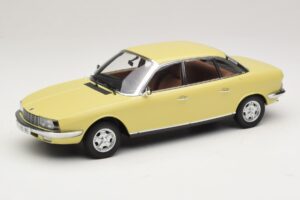
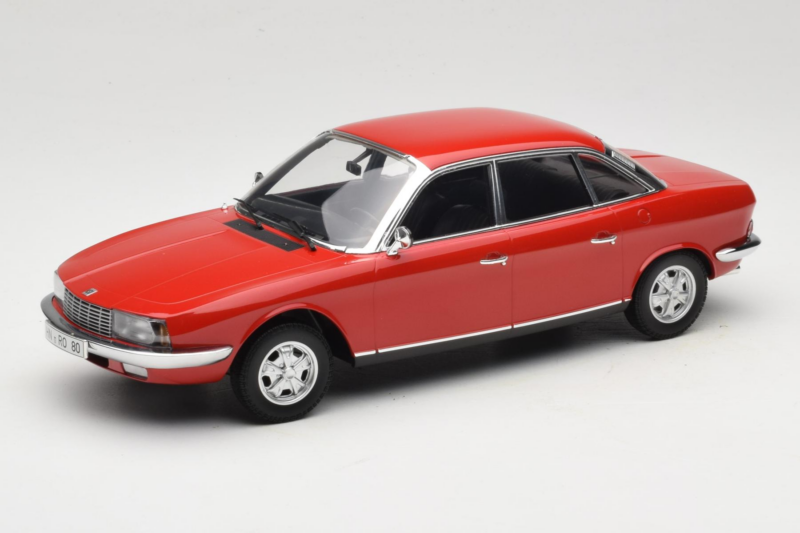
TL;DR: Minichamps' 1:18 diecast NSU Ro80 in red reproduces the rotary-engined sedan whose aerodynamic, low-drag design anticipated decades of sedan styling to come. The Wankel-powered original's ambitious engineering, combined with its striking silhouette, is captured in diecast detail for a modern classics display.
The Ro80's shape still looks contemporary in ways few other early-1970s sedans manage, a testament to how far ahead of its time NSU's engineering team was willing to push both aerodynamics and an unconventional rotary powertrain.
NSU built the Ro80 around a twin-rotor Wankel engine wrapped in genuinely aerodynamic bodywork that predicted the smooth, low-drag sedan shapes most manufacturers wouldn't adopt until the 1980s. The rotary engine's reliability problems, particularly rotor tip seal wear, became so costly under warranty that the resulting financial strain contributed directly to NSU's merger into what eventually became part of Audi's corporate structure. That combination, a genuinely visionary design paired with an engine that ultimately doomed the company that built it, gives the Ro80 a bittersweet significance in German automotive history that few other sedans of its era can claim.
The Ro80's smooth, unbroken surfaces and low, aerodynamic nose leave little ornamentation to hide behind, putting real emphasis on Minichamps' ability to capture the car's subtle curves rather than a boxier, more forgiving 1970s silhouette. The red finish is applied evenly across those large, uninterrupted panels, and opening doors and hood follow the manufacturer's standard diecast construction. At roughly 24cm, it holds genuine visual distinction next to more conventional 1970s German sedans on the same shelf, a design-forward subject that rewards a collector interested in engineering ambition as much as finished results.