Last one
Used
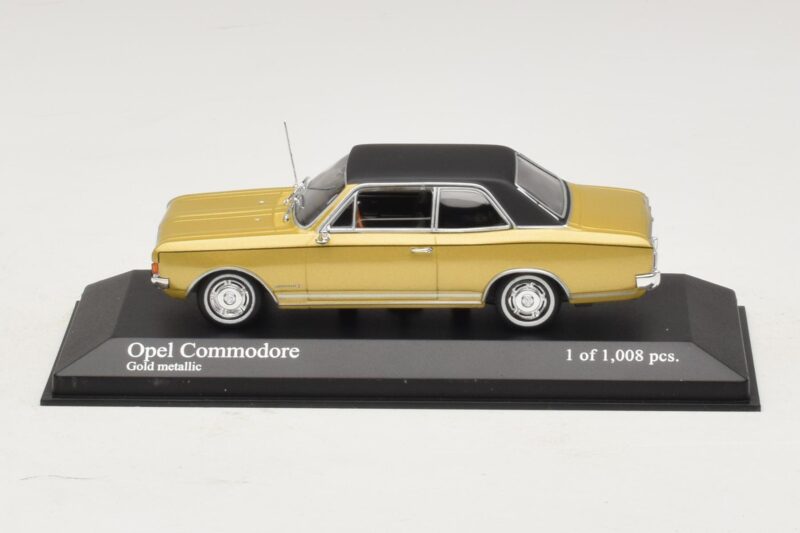
TL;DR: Minichamps' 1:43 Opel Commodore A in gold metallic reproduces the six-cylinder sedan Opel positioned above the Rekord from 1966. Cast as a sealed one-piece diecast body, it carries correct period trim, chrome brightwork and proportions rather than opening doors or hood, with the detail held entirely on the outside of the shell.
Opel built a genuine hierarchy into its 1960s lineup, and the Commodore A sat clearly above the everyday Rekord it shared a body with. The six-cylinder engine and extra brightwork told buyers this was the aspirational choice, and this gold metallic casting keeps that upscale intent visible even in miniature.
The Commodore A used the same basic bodyshell as Opel's mainstream Rekord but stepped up with a six-cylinder engine and additional trim, positioning it as the aspirational choice within a shared platform strategy. That distinction mattered to period buyers choosing between practical family transport and a slightly more prestigious sedan, and it is a useful reference point for anyone assembling a 1960s Opel range: the Commodore represents the upper tier of ordinary, not the halo model, but clearly a step above the base car. Minichamps' gold metallic finish suits that positioning, a color choice that reads confident rather than flashy.
With the body cast as a single sealed shell, the Commodore's chrome window surrounds, grille and bumper trim are molded and finished as part of the casting rather than fitted as separate opening pieces. That keeps the shut lines around the doors and trunk consistent in width across the whole car, a detail that matters on a sedan whose trim placement is one of the few visual markers separating it from the plainer Rekord. The proportions hold correctly from the front three-quarter view, where the extended trim and slightly different grille treatment are most visible.
At 1:43, this casting carries real weight in the hand, the zinc alloy construction Minichamps uses across its diecast range giving the piece a density that lighter materials cannot match at this size. The gold metallic paint sits on a hard metal shell, so the gloss reads even and holds its depth under a display lamp rather than dulling over time. That combination of mass and finish is part of what separates a mid-tier diecast release from a toy-grade one, even without opening doors to demonstrate mechanical complexity: the judgment happens entirely on the surface, in how tightly the shut lines run and how cleanly the paint sits.
For a sealed-body sedan like this, the details worth checking first are the ones a fixed casting can still get wrong: wheel offset within the arches, glazing that sits flush rather than proud, and grille detail that reads correctly rather than as a flat stamped approximation. Minichamps' Commodore holds its stance correctly at ride height, and the chrome trim separates cleanly from the body color without bleeding at the edges. Those are the fidelity markers that matter more than opening panels on a subject where the original car's own trim, not its mechanicals, is the visual story.
This Commodore A works well paired with a Rekord from the same period, letting the shared platform and the trim differences that separated the two tell their own story on the shelf. At 1:43, both fit comfortably in the footprint a standard Vitrine shelf allows, which makes building out a small 1960s Opel range a realistic project rather than a space problem. Buyers comparing this against contemporary German executive sedans from other marques will notice the Commodore sits at a more modest scale of ambition, accurate to how Opel positioned it at the time.