Last one

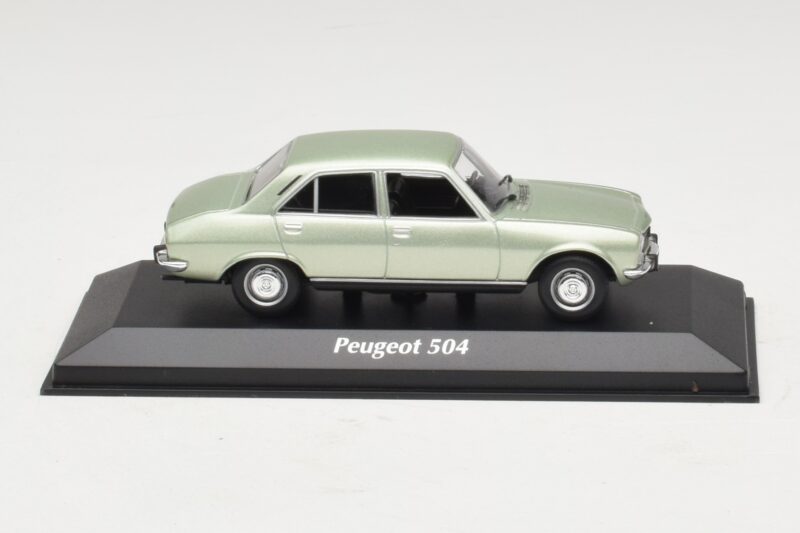
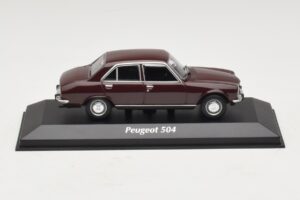
TL;DR: Maxichamps' 1:43 diecast Peugeot 504 wears a light green metallic finish rarely seen on this Pininfarina-styled 1970 sedan, its sealed one-piece body holding tight shut lines along the doors and trunk. The 504's reputation for rugged, decades-long durability runs deeper than its understated styling suggests.
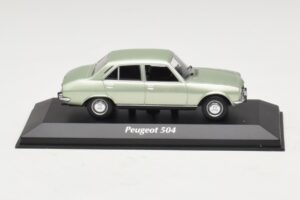
Metallic paint was less common on family sedans of the 504's era than it is today, reserved more often for upmarket trims or export markets than for the bread-and-butter colors most buyers chose. This light green metallic example stands out for exactly that reason, catching light across its flat door panels in a way a solid color simply cannot.
The sealed, one-piece diecast body carries this metallic green finish the way it would any solid color, but the flake catches light differently across the 504's long, flat door panels and trunk lid, areas where a shimmer reads more clearly than it would on a curved sports coupe. No doors, hood or trunk open on this release, standard construction at this scale and tier, and the fixed shell is exactly what lets Maxichamps hold a tight, consistent shut line running the full length of the sedan's doors. Under a display lamp, the metallic flake gives the otherwise understated 504 a bit of visual interest a flat paint job would not provide.
Chrome window surrounds, bumpers and door handles are picked out separately from the green body color, a detail that keeps the trim reading crisp rather than blending into the paint. The grille's horizontal slats hold their definition at this compact scale, and the Peugeot lion badge on the hood is legible despite its size. Panel gaps around the trunk and doors stay even, a sign of careful mold alignment rather than a shortcut taken to save tooling cost. The stance sits level, matching the 504's practical ride height rather than any sporting pretension.
Pininfarina's design for the 504 favored restraint: clean surfaces, a tall and practical greenhouse, and proportions meant to age gracefully rather than chase a passing trend. That restraint is part of why the 504 still looks coherent more than five decades later, where flashier contemporaries from the same era now read as dated. The metallic green finish on this example was one of several colors Peugeot offered across export markets, a reminder that the 504's reach extended well beyond its home market in France from the start.
Peugeot built the 504 in France into the early 1980s, but the car's real longevity played out elsewhere. Licensed and locally assembled production continued in Nigeria, Argentina and other markets for decades after European output ended, turning the 504 into a workhorse recognized on roads where few other European sedans of its generation survived daily use. That dual identity, dignified at home and tough abroad, gives the 504 a collecting story broader than most sedans of its size and era.
At 1:43, this 504 takes up modest shelf space, leaving room to build out a run of period European sedans without crowding a display case. Set next to the dark red or other solid-colored 504 releases, the metallic green example stands apart immediately, giving a themed Peugeot shelf some visual variety without sacrificing the shared accuracy of the casting underneath. Maxichamps' accessible pricing and sealed-body construction keep the entry cost reasonable for collectors building a broader 1970s European lineup. Pair it with a 404 or a contemporary Renault or Citroen sedan to tell the wider story of French family cars built for substance over flash.