Used
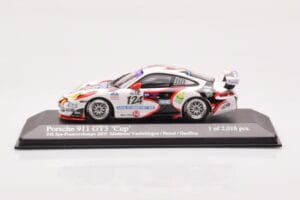
Porsche 911 997 GT3 Cup #124 Mattheus / Geoffroy / Vanbellingen / Fumal 24 Hours of Spa 2005 Minichamps 1:43
Only 3 left
Price:
33.00 €
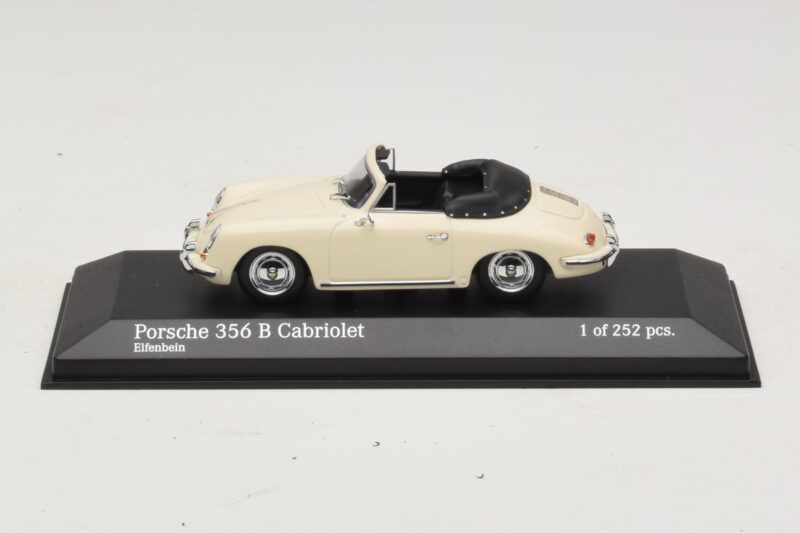
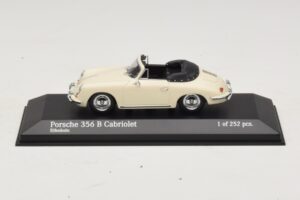
TL;DR: Minichamps' 1:43 diecast Porsche 356B Cabriolet in ivory white reproduces the 1960 facelift body, taller bumpers and higher headlamps distinguishing it from the earlier 356A, as a sealed one-piece casting with correctly folded soft-top detail for collectors starting an early Porsche cabriolet lineage.
Before the 911 existed, the 356 was Porsche's entire road-car identity, and the cabriolet body gave buyers an open-air version of that identity. The B revision brought a visible facelift in 1960, sitting between the original A and the later C, and Minichamps captures that transitional shape in a 1:43 ivory white diecast built for a close look.
Porsche introduced the B series in 1959 for the 1960 model year, raising the headlamps roughly two inches and fitting taller, more substantial bumpers than the low-slung A that preceded it. Those changes were partly cosmetic and partly practical, addressing US bumper-height rules while giving the car a slightly more upright, modern face. The cabriolet body carried the same wheelbase and flowing fenders that made the 356 recognizable from its 1948 origins, but the B's proportions read noticeably different from an A parked beside it. Minichamps' casting picks up that raised headlamp position and the deeper front bumper accurately, details that matter to anyone who can tell 356 generations apart at a glance.
The cabriolet's soft top is molded closed and folded down behind the rear seats, the pose most collectors want for a car defined by open-air driving. Because the body is a sealed, one-piece shell rather than an articulated casting, the top's accordion folds and the tonneau cover line are cast as continuous surface detail rather than separate moving parts. That approach lets Minichamps hold sharper fold lines and a cleaner beltline than a hinged mechanism could manage at this scale, and it keeps the silhouette consistent no matter how the piece gets handled on a shelf. The chrome windshield frame and hood trim add the bright detailing a 356 cabriolet depends on for its identity.
Ivory white was a genuine period color for the 356, and Minichamps applies it with an even, slightly warm tone rather than a stark, modern white that would look anachronistic against chrome trim. The paint sits on a zinc alloy body, which is why the gloss reads deep and consistent under direct light rather than thin or plastic-looking. That metal shell also gives the model real heft leaving its case, a small but immediate signal of build quality that a lighter resin or plastic casting cannot replicate at this price point. The whitewall-style tires and correctly dished steel wheels round out a period-accurate stance.
Door and trunk lines are shallow but continuous, tracing the body's actual contours rather than sitting as an afterthought. Chrome window surrounds, door handles, and bumper trim are picked out cleanly against the ivory paint, and the Porsche crest on the nose is sized and placed correctly rather than oversized for visibility. At 1:43 there is only so much separate part fitting a manufacturer can justify at this price tier, and Minichamps spends its effort on the details a collector actually inspects first, the headlamp bezels, the bumper guards, and the fender line where the front wheel arch meets the door.
The 356B sits at a useful middle point for anyone assembling a 356 collection by generation, bridging the rounded A body and the disc-braked C that closed out production in 1965. At 1:43, three or four 356 variants fit comfortably on a single shelf tier, letting a collector show the model's visual evolution without dedicating a full cabinet to one marque era. Ivory white is a flexible base color that reads well next to darker 911s from later decades, making this a natural corner piece for a broader Porsche timeline rather than a standalone purchase. For a collector new to pre-911 Porsche, this is a reasonable, well-detailed starting point before chasing pricier early A models or the rarer Speedster body.