Used
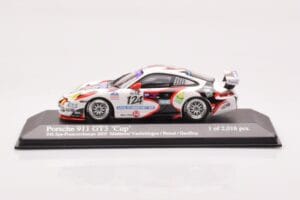
Porsche 911 997 GT3 Cup #124 Mattheus / Geoffroy / Vanbellingen / Fumal 24 Hours of Spa 2005 Minichamps 1:43
Only 2 left
Price:
33.00 €
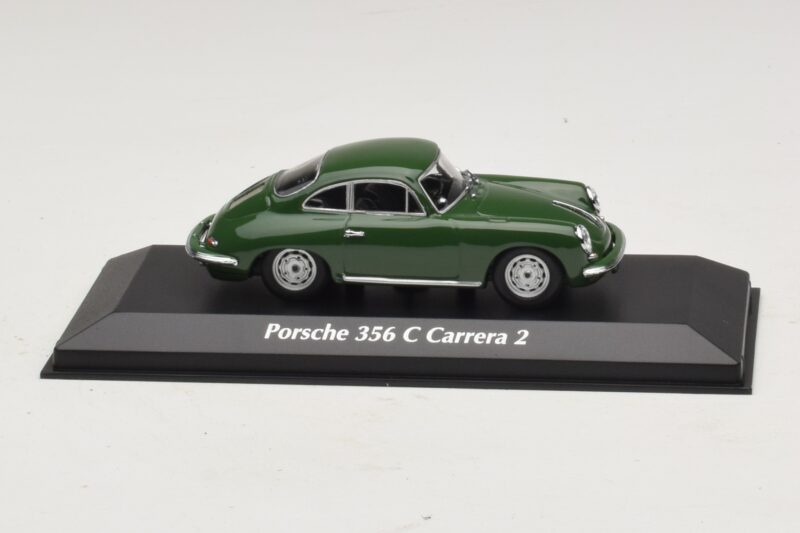
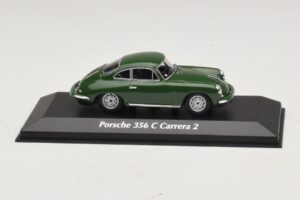
TL;DR: The Maxichamps Porsche 356C Carrera 2 1:43 in dark green is a diecast replica of the 1963 coupe that topped the final 356 series. The body is a sealed one-piece casting with no opening parts, so paint depth, bumper and trim detail and wheel faces carry the model. It suits collectors tracing Porsche road cars before the 911.
The 356C is where Porsche's first production series reached its most refined form, and the Carrera 2 sat at the very top of it. This Maxichamps Porsche 356C Carrera 2 in dark green asks a collector to appreciate restraint: a rounded steel-bodied coupe, small bright details, and a finish that rewards patient looking rather than quick glances.
Dark colors are unforgiving. A deep green shows reflections as long, clean lines across the curved panels, and any ripple or uneven surface bends those lines at once. That makes it a useful color for judging a casting honestly. The diecast body is a single sealed shell with no opening parts, so the roof, hood and decklid curves flow without interruptions, and the metal gives the car a satisfying weight for its small size. Tilt the model under a lamp and follow the highlight from the front fender over the roof to the tail. A smooth, unbroken line is the sign of a well-prepared body.
The 356 shape is mostly curves, with little for a casting to hide behind. Check the way the roofline meets the rear window, the shape of the headlamp pods and the thin bumpers with their small guards. Glazing should sit flush in a slim frame, and the wheels should show a clear hub cap face rather than a blank disc. At this scale the car is compact enough that bright trim is printed or finely cast rather than fitted separately, so look for clean edges rather than smeared silver. Seen from three-quarter front, the stance should look low and balanced, with the nose sitting just above the wheels.
The 356C arrived in 1963 with disc brakes and was the last series of the 356. The Carrera 2 name marked the highest-performance variant, powered by a two-liter four-cam flat-four, an engine line that traced its roots to Porsche's racing Spyder. The Carrera name itself honored Porsche's success in road racing. That heritage matters to collectors because it explains why a car that looks gentle on the street carried genuine competition engineering underneath. The model's sealed body shows none of this directly, but knowing it changes how the quiet, rounded shape reads on the shelf.
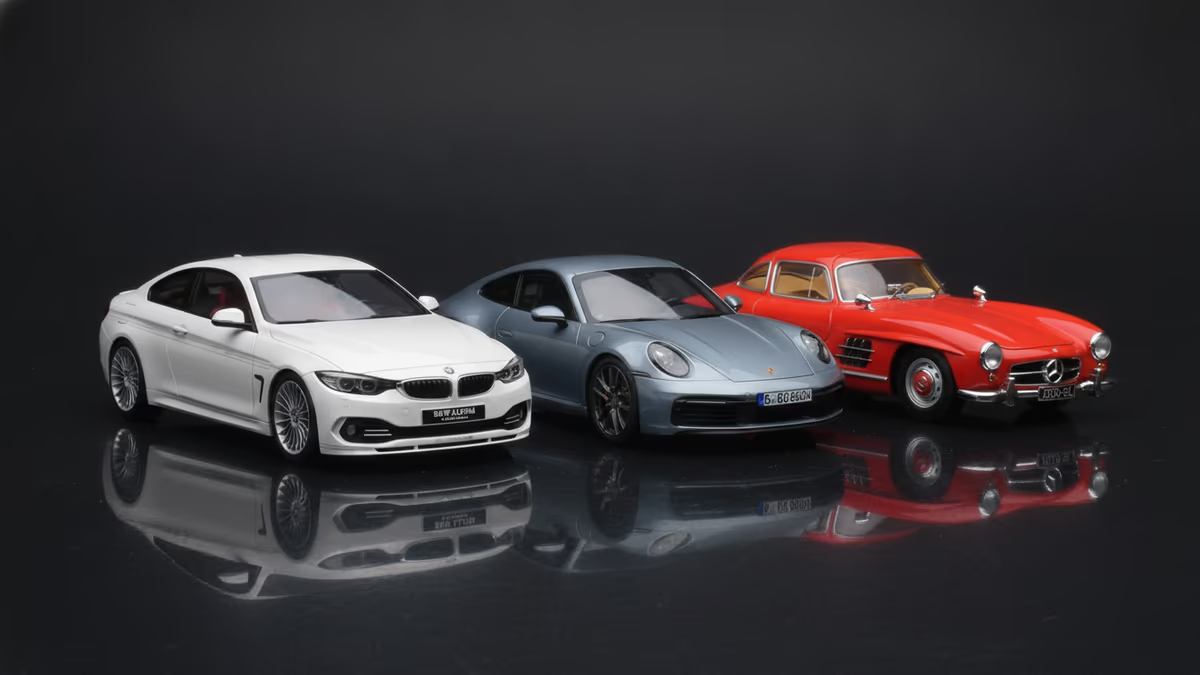
The 356C also stands at a handover. The 911 appeared as the 356C was in production and took over the line within a couple of years, so this body style represents the end of one Porsche philosophy and the beginning of another. For a collector, that makes the 356C a natural bookend: place it beside a 911 of any generation at the same scale and the shift in proportions is obvious, from round to crisp, from a tucked tail to a longer roofline. It is one of the easiest ways to show Porsche's early development in a single display.
In 1:43, a 356C takes very little room, so a run of early Porsche coupes and roadsters fits comfortably in one case. Dark green also separates well from the red and silver cars that dominate most Porsche shelves, giving the display visual variety. This is a sealed diecast, so the buyer is choosing exterior accuracy and durability over mechanical access, which suits a car whose appeal is its form. Compare stance, glazing and wheel faces against period photographs before deciding. Collectors who want to buy a single 356 that stands out for its finish will find the dark green a distinctive choice.