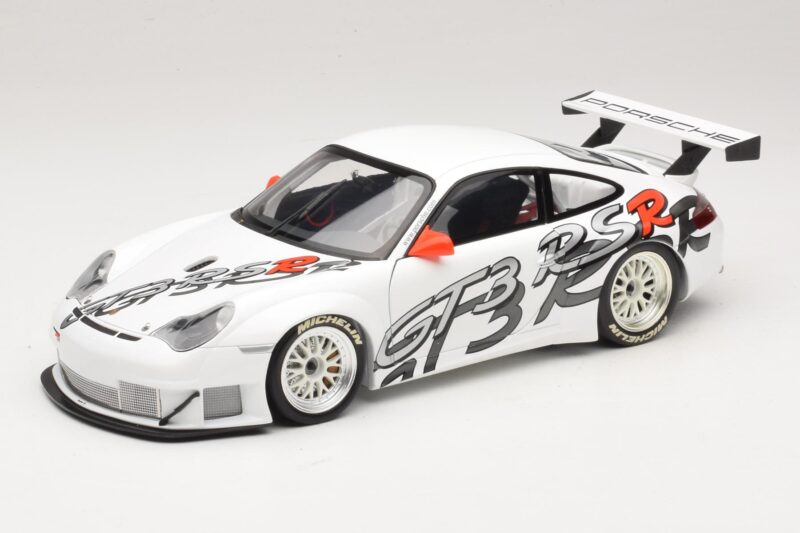
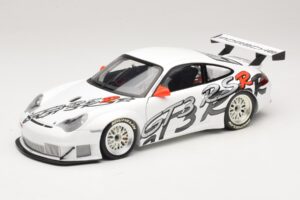
Porsche 911 996 GT3 RSR White 2005 Minichamps 1:18
1
/
8
Minichamps' 1:18 diecast Porsche 996 GT3 RSR reproduces Porsche's factory-backed GT customer racer in base white livery, worn before any team applied sponsor colors across the American Le Mans Series and international GT championships. The model features genuine opening panels, revealing the stripped racing cabin and roll cage beneath fenders widened well past the road-going GT3 it resembles. At roughly 23 to 24 centimeters, it anchors a GT racing shelf as the uncluttered foundation piece for comparing liveried sister cars.
1 / 8
[{"index":0,"id":"1658990","thumb":"https:\/\/models118.com\/wp-content\/uploads\/2026\/08\/porsche-911-996-gt3-rsr-white-2005-minichamps-1-18-wap02160215-1-1-300x200.jpg","medium":"https:\/\/models118.com\/wp-content\/uploads\/2026\/08\/porsche-911-996-gt3-rsr-white-2005-minichamps-1-18-wap02160215-1-1-800x533.jpg","full":"https:\/\/models118.com\/wp-content\/uploads\/2026\/08\/porsche-911-996-gt3-rsr-white-2005-minichamps-1-18-wap02160215-1-1.jpg","srcset":"https:\/\/models118.com\/wp-content\/uploads\/2026\/08\/porsche-911-996-gt3-rsr-white-2005-minichamps-1-18-wap02160215-1-1-800x533.jpg 800w, https:\/\/models118.com\/wp-content\/uploads\/2026\/08\/porsche-911-996-gt3-rsr-white-2005-minichamps-1-18-wap02160215-1-1-300x200.jpg 300w, https:\/\/models118.com\/wp-content\/uploads\/2026\/08\/porsche-911-996-gt3-rsr-white-2005-minichamps-1-18-wap02160215-1-1-64x43.jpg 64w, https:\/\/models118.com\/wp-content\/uploads\/2026\/08\/porsche-911-996-gt3-rsr-white-2005-minichamps-1-18-wap02160215-1-1-480x320.jpg 480w, https:\/\/models118.com\/wp-content\/uploads\/2026\/08\/porsche-911-996-gt3-rsr-white-2005-minichamps-1-18-wap02160215-1-1.jpg 1800w","sizes":"(max-width: 1023px) 400px, 640px","srcsetAvif":"https:\/\/models118.com\/wp-content\/uploads\/2026\/08\/porsche-911-996-gt3-rsr-white-2005-minichamps-1-18-wap02160215-1-1-800x533.jpg.avif 800w, https:\/\/models118.com\/wp-content\/uploads\/2026\/08\/porsche-911-996-gt3-rsr-white-2005-minichamps-1-18-wap02160215-1-1-300x200.jpg.avif 300w, https:\/\/models118.com\/wp-content\/uploads\/2026\/08\/porsche-911-996-gt3-rsr-white-2005-minichamps-1-18-wap02160215-1-1-64x43.jpg.avif 64w, https:\/\/models118.com\/wp-content\/uploads\/2026\/08\/porsche-911-996-gt3-rsr-white-2005-minichamps-1-18-wap02160215-1-1-480x320.jpg.avif 480w, https:\/\/models118.com\/wp-content\/uploads\/2026\/08\/porsche-911-996-gt3-rsr-white-2005-minichamps-1-18-wap02160215-1-1.jpg.avif 1800w","srcsetWebp":"https:\/\/models118.com\/wp-content\/uploads\/2026\/08\/porsche-911-996-gt3-rsr-white-2005-minichamps-1-18-wap02160215-1-1-800x533.jpg.webp 800w, https:\/\/models118.com\/wp-content\/uploads\/2026\/08\/porsche-911-996-gt3-rsr-white-2005-minichamps-1-18-wap02160215-1-1-300x200.jpg.webp 300w, https:\/\/models118.com\/wp-content\/uploads\/2026\/08\/porsche-911-996-gt3-rsr-white-2005-minichamps-1-18-wap02160215-1-1-64x43.jpg.webp 64w, https:\/\/models118.com\/wp-content\/uploads\/2026\/08\/porsche-911-996-gt3-rsr-white-2005-minichamps-1-18-wap02160215-1-1-480x320.jpg.webp 480w, https:\/\/models118.com\/wp-content\/uploads\/2026\/08\/porsche-911-996-gt3-rsr-white-2005-minichamps-1-18-wap02160215-1-1.jpg.webp 1800w","alt":"Porsche 911 996 GT3 RSR White 2005 Minichamps 1:18 WAP02160215 Diecast"},{"index":1,"id":1658991,"thumb":"https:\/\/models118.com\/wp-content\/uploads\/2026\/08\/porsche-911-996-gt3-rsr-white-2005-minichamps-1-18-wap02160215-1-300x200.jpg","medium":"https:\/\/models118.com\/wp-content\/uploads\/2026\/08\/porsche-911-996-gt3-rsr-white-2005-minichamps-1-18-wap02160215-1-800x533.jpg","full":"https:\/\/models118.com\/wp-content\/uploads\/2026\/08\/porsche-911-996-gt3-rsr-white-2005-minichamps-1-18-wap02160215-1.jpg","srcset":"https:\/\/models118.com\/wp-content\/uploads\/2026\/08\/porsche-911-996-gt3-rsr-white-2005-minichamps-1-18-wap02160215-1-800x533.jpg 800w, https:\/\/models118.com\/wp-content\/uploads\/2026\/08\/porsche-911-996-gt3-rsr-white-2005-minichamps-1-18-wap02160215-1-300x200.jpg 300w, https:\/\/models118.com\/wp-content\/uploads\/2026\/08\/porsche-911-996-gt3-rsr-white-2005-minichamps-1-18-wap02160215-1-64x43.jpg 64w, https:\/\/models118.com\/wp-content\/uploads\/2026\/08\/porsche-911-996-gt3-rsr-white-2005-minichamps-1-18-wap02160215-1.jpg 1800w","sizes":"(max-width: 1023px) 400px, 640px","srcsetAvif":"https:\/\/models118.com\/wp-content\/uploads\/2026\/08\/porsche-911-996-gt3-rsr-white-2005-minichamps-1-18-wap02160215-1-800x533.jpg.avif 800w, https:\/\/models118.com\/wp-content\/uploads\/2026\/08\/porsche-911-996-gt3-rsr-white-2005-minichamps-1-18-wap02160215-1-300x200.jpg.avif 300w, https:\/\/models118.com\/wp-content\/uploads\/2026\/08\/porsche-911-996-gt3-rsr-white-2005-minichamps-1-18-wap02160215-1-64x43.jpg.avif 64w, https:\/\/models118.com\/wp-content\/uploads\/2026\/08\/porsche-911-996-gt3-rsr-white-2005-minichamps-1-18-wap02160215-1.jpg.avif 1800w","srcsetWebp":"https:\/\/models118.com\/wp-content\/uploads\/2026\/08\/porsche-911-996-gt3-rsr-white-2005-minichamps-1-18-wap02160215-1-800x533.jpg.webp 800w, https:\/\/models118.com\/wp-content\/uploads\/2026\/08\/porsche-911-996-gt3-rsr-white-2005-minichamps-1-18-wap02160215-1-300x200.jpg.webp 300w, https:\/\/models118.com\/wp-content\/uploads\/2026\/08\/porsche-911-996-gt3-rsr-white-2005-minichamps-1-18-wap02160215-1-64x43.jpg.webp 64w, https:\/\/models118.com\/wp-content\/uploads\/2026\/08\/porsche-911-996-gt3-rsr-white-2005-minichamps-1-18-wap02160215-1.jpg.webp 1800w","alt":"Porsche 911 996 GT3 RSR White 2005 Minichamps 1:18 WAP02160215 Diecast - image 2 of 8"},{"index":2,"id":1658992,"thumb":"https:\/\/models118.com\/wp-content\/uploads\/2026\/08\/porsche-911-996-gt3-rsr-white-2005-minichamps-1-18-wap02160215-2-300x200.jpg","medium":"https:\/\/models118.com\/wp-content\/uploads\/2026\/08\/porsche-911-996-gt3-rsr-white-2005-minichamps-1-18-wap02160215-2-800x533.jpg","full":"https:\/\/models118.com\/wp-content\/uploads\/2026\/08\/porsche-911-996-gt3-rsr-white-2005-minichamps-1-18-wap02160215-2.jpg","srcset":"https:\/\/models118.com\/wp-content\/uploads\/2026\/08\/porsche-911-996-gt3-rsr-white-2005-minichamps-1-18-wap02160215-2-800x533.jpg 800w, https:\/\/models118.com\/wp-content\/uploads\/2026\/08\/porsche-911-996-gt3-rsr-white-2005-minichamps-1-18-wap02160215-2-300x200.jpg 300w, https:\/\/models118.com\/wp-content\/uploads\/2026\/08\/porsche-911-996-gt3-rsr-white-2005-minichamps-1-18-wap02160215-2-64x43.jpg 64w, https:\/\/models118.com\/wp-content\/uploads\/2026\/08\/porsche-911-996-gt3-rsr-white-2005-minichamps-1-18-wap02160215-2.jpg 1800w","sizes":"(max-width: 1023px) 400px, 640px","srcsetAvif":"https:\/\/models118.com\/wp-content\/uploads\/2026\/08\/porsche-911-996-gt3-rsr-white-2005-minichamps-1-18-wap02160215-2-800x533.jpg.avif 800w, https:\/\/models118.com\/wp-content\/uploads\/2026\/08\/porsche-911-996-gt3-rsr-white-2005-minichamps-1-18-wap02160215-2-300x200.jpg.avif 300w, https:\/\/models118.com\/wp-content\/uploads\/2026\/08\/porsche-911-996-gt3-rsr-white-2005-minichamps-1-18-wap02160215-2-64x43.jpg.avif 64w, https:\/\/models118.com\/wp-content\/uploads\/2026\/08\/porsche-911-996-gt3-rsr-white-2005-minichamps-1-18-wap02160215-2.jpg.avif 1800w","srcsetWebp":"https:\/\/models118.com\/wp-content\/uploads\/2026\/08\/porsche-911-996-gt3-rsr-white-2005-minichamps-1-18-wap02160215-2-800x533.jpg.webp 800w, https:\/\/models118.com\/wp-content\/uploads\/2026\/08\/porsche-911-996-gt3-rsr-white-2005-minichamps-1-18-wap02160215-2-300x200.jpg.webp 300w, https:\/\/models118.com\/wp-content\/uploads\/2026\/08\/porsche-911-996-gt3-rsr-white-2005-minichamps-1-18-wap02160215-2-64x43.jpg.webp 64w, https:\/\/models118.com\/wp-content\/uploads\/2026\/08\/porsche-911-996-gt3-rsr-white-2005-minichamps-1-18-wap02160215-2.jpg.webp 1800w","alt":"Porsche 911 996 GT3 RSR White 2005 Minichamps 1:18 WAP02160215 Diecast - image 3 of 8"},{"index":3,"id":1658998,"thumb":"https:\/\/models118.com\/wp-content\/uploads\/2026\/08\/porsche-911-996-gt3-rsr-white-2005-minichamps-1-18-wap02160215-3-300x200.jpg","medium":"https:\/\/models118.com\/wp-content\/uploads\/2026\/08\/porsche-911-996-gt3-rsr-white-2005-minichamps-1-18-wap02160215-3-800x533.jpg","full":"https:\/\/models118.com\/wp-content\/uploads\/2026\/08\/porsche-911-996-gt3-rsr-white-2005-minichamps-1-18-wap02160215-3.jpg","srcset":"https:\/\/models118.com\/wp-content\/uploads\/2026\/08\/porsche-911-996-gt3-rsr-white-2005-minichamps-1-18-wap02160215-3-800x533.jpg 800w, https:\/\/models118.com\/wp-content\/uploads\/2026\/08\/porsche-911-996-gt3-rsr-white-2005-minichamps-1-18-wap02160215-3-300x200.jpg 300w, https:\/\/models118.com\/wp-content\/uploads\/2026\/08\/porsche-911-996-gt3-rsr-white-2005-minichamps-1-18-wap02160215-3-64x43.jpg 64w, https:\/\/models118.com\/wp-content\/uploads\/2026\/08\/porsche-911-996-gt3-rsr-white-2005-minichamps-1-18-wap02160215-3.jpg 1800w","sizes":"(max-width: 1023px) 400px, 640px","srcsetAvif":"https:\/\/models118.com\/wp-content\/uploads\/2026\/08\/porsche-911-996-gt3-rsr-white-2005-minichamps-1-18-wap02160215-3-800x533.jpg.avif 800w, https:\/\/models118.com\/wp-content\/uploads\/2026\/08\/porsche-911-996-gt3-rsr-white-2005-minichamps-1-18-wap02160215-3-300x200.jpg.avif 300w, https:\/\/models118.com\/wp-content\/uploads\/2026\/08\/porsche-911-996-gt3-rsr-white-2005-minichamps-1-18-wap02160215-3-64x43.jpg.avif 64w, https:\/\/models118.com\/wp-content\/uploads\/2026\/08\/porsche-911-996-gt3-rsr-white-2005-minichamps-1-18-wap02160215-3.jpg.avif 1800w","srcsetWebp":"https:\/\/models118.com\/wp-content\/uploads\/2026\/08\/porsche-911-996-gt3-rsr-white-2005-minichamps-1-18-wap02160215-3-800x533.jpg.webp 800w, https:\/\/models118.com\/wp-content\/uploads\/2026\/08\/porsche-911-996-gt3-rsr-white-2005-minichamps-1-18-wap02160215-3-300x200.jpg.webp 300w, https:\/\/models118.com\/wp-content\/uploads\/2026\/08\/porsche-911-996-gt3-rsr-white-2005-minichamps-1-18-wap02160215-3-64x43.jpg.webp 64w, https:\/\/models118.com\/wp-content\/uploads\/2026\/08\/porsche-911-996-gt3-rsr-white-2005-minichamps-1-18-wap02160215-3.jpg.webp 1800w","alt":"Porsche 911 996 GT3 RSR White 2005 Minichamps 1:18 WAP02160215 Diecast - image 4 of 8"},{"index":4,"id":1659001,"thumb":"https:\/\/models118.com\/wp-content\/uploads\/2026\/08\/porsche-911-996-gt3-rsr-white-2005-minichamps-1-18-wap02160215-4-300x200.jpg","medium":"https:\/\/models118.com\/wp-content\/uploads\/2026\/08\/porsche-911-996-gt3-rsr-white-2005-minichamps-1-18-wap02160215-4-800x533.jpg","full":"https:\/\/models118.com\/wp-content\/uploads\/2026\/08\/porsche-911-996-gt3-rsr-white-2005-minichamps-1-18-wap02160215-4.jpg","srcset":"https:\/\/models118.com\/wp-content\/uploads\/2026\/08\/porsche-911-996-gt3-rsr-white-2005-minichamps-1-18-wap02160215-4-800x533.jpg 800w, https:\/\/models118.com\/wp-content\/uploads\/2026\/08\/porsche-911-996-gt3-rsr-white-2005-minichamps-1-18-wap02160215-4-300x200.jpg 300w, https:\/\/models118.com\/wp-content\/uploads\/2026\/08\/porsche-911-996-gt3-rsr-white-2005-minichamps-1-18-wap02160215-4-64x43.jpg 64w, https:\/\/models118.com\/wp-content\/uploads\/2026\/08\/porsche-911-996-gt3-rsr-white-2005-minichamps-1-18-wap02160215-4.jpg 1800w","sizes":"(max-width: 1023px) 400px, 640px","srcsetAvif":"https:\/\/models118.com\/wp-content\/uploads\/2026\/08\/porsche-911-996-gt3-rsr-white-2005-minichamps-1-18-wap02160215-4-800x533.jpg.avif 800w, https:\/\/models118.com\/wp-content\/uploads\/2026\/08\/porsche-911-996-gt3-rsr-white-2005-minichamps-1-18-wap02160215-4-300x200.jpg.avif 300w, https:\/\/models118.com\/wp-content\/uploads\/2026\/08\/porsche-911-996-gt3-rsr-white-2005-minichamps-1-18-wap02160215-4-64x43.jpg.avif 64w, https:\/\/models118.com\/wp-content\/uploads\/2026\/08\/porsche-911-996-gt3-rsr-white-2005-minichamps-1-18-wap02160215-4.jpg.avif 1800w","srcsetWebp":"https:\/\/models118.com\/wp-content\/uploads\/2026\/08\/porsche-911-996-gt3-rsr-white-2005-minichamps-1-18-wap02160215-4-800x533.jpg.webp 800w, https:\/\/models118.com\/wp-content\/uploads\/2026\/08\/porsche-911-996-gt3-rsr-white-2005-minichamps-1-18-wap02160215-4-300x200.jpg.webp 300w, https:\/\/models118.com\/wp-content\/uploads\/2026\/08\/porsche-911-996-gt3-rsr-white-2005-minichamps-1-18-wap02160215-4-64x43.jpg.webp 64w, https:\/\/models118.com\/wp-content\/uploads\/2026\/08\/porsche-911-996-gt3-rsr-white-2005-minichamps-1-18-wap02160215-4.jpg.webp 1800w","alt":"Porsche 911 996 GT3 RSR White 2005 Minichamps 1:18 WAP02160215 Diecast - image 5 of 8"},{"index":5,"id":1659003,"thumb":"https:\/\/models118.com\/wp-content\/uploads\/2026\/08\/porsche-911-996-gt3-rsr-white-2005-minichamps-1-18-wap02160215-5-300x200.jpg","medium":"https:\/\/models118.com\/wp-content\/uploads\/2026\/08\/porsche-911-996-gt3-rsr-white-2005-minichamps-1-18-wap02160215-5-800x533.jpg","full":"https:\/\/models118.com\/wp-content\/uploads\/2026\/08\/porsche-911-996-gt3-rsr-white-2005-minichamps-1-18-wap02160215-5.jpg","srcset":"https:\/\/models118.com\/wp-content\/uploads\/2026\/08\/porsche-911-996-gt3-rsr-white-2005-minichamps-1-18-wap02160215-5-800x533.jpg 800w, https:\/\/models118.com\/wp-content\/uploads\/2026\/08\/porsche-911-996-gt3-rsr-white-2005-minichamps-1-18-wap02160215-5-300x200.jpg 300w, https:\/\/models118.com\/wp-content\/uploads\/2026\/08\/porsche-911-996-gt3-rsr-white-2005-minichamps-1-18-wap02160215-5-64x43.jpg 64w, https:\/\/models118.com\/wp-content\/uploads\/2026\/08\/porsche-911-996-gt3-rsr-white-2005-minichamps-1-18-wap02160215-5.jpg 1800w","sizes":"(max-width: 1023px) 400px, 640px","srcsetAvif":"https:\/\/models118.com\/wp-content\/uploads\/2026\/08\/porsche-911-996-gt3-rsr-white-2005-minichamps-1-18-wap02160215-5-800x533.jpg.avif 800w, https:\/\/models118.com\/wp-content\/uploads\/2026\/08\/porsche-911-996-gt3-rsr-white-2005-minichamps-1-18-wap02160215-5-300x200.jpg.avif 300w, https:\/\/models118.com\/wp-content\/uploads\/2026\/08\/porsche-911-996-gt3-rsr-white-2005-minichamps-1-18-wap02160215-5-64x43.jpg.avif 64w, https:\/\/models118.com\/wp-content\/uploads\/2026\/08\/porsche-911-996-gt3-rsr-white-2005-minichamps-1-18-wap02160215-5.jpg.avif 1800w","srcsetWebp":"https:\/\/models118.com\/wp-content\/uploads\/2026\/08\/porsche-911-996-gt3-rsr-white-2005-minichamps-1-18-wap02160215-5-800x533.jpg.webp 800w, https:\/\/models118.com\/wp-content\/uploads\/2026\/08\/porsche-911-996-gt3-rsr-white-2005-minichamps-1-18-wap02160215-5-300x200.jpg.webp 300w, https:\/\/models118.com\/wp-content\/uploads\/2026\/08\/porsche-911-996-gt3-rsr-white-2005-minichamps-1-18-wap02160215-5-64x43.jpg.webp 64w, https:\/\/models118.com\/wp-content\/uploads\/2026\/08\/porsche-911-996-gt3-rsr-white-2005-minichamps-1-18-wap02160215-5.jpg.webp 1800w","alt":"Porsche 911 996 GT3 RSR White 2005 Minichamps 1:18 WAP02160215 Diecast - image 6 of 8"},{"index":6,"id":1659004,"thumb":"https:\/\/models118.com\/wp-content\/uploads\/2026\/08\/porsche-911-996-gt3-rsr-white-2005-minichamps-1-18-wap02160215-6-300x200.jpg","medium":"https:\/\/models118.com\/wp-content\/uploads\/2026\/08\/porsche-911-996-gt3-rsr-white-2005-minichamps-1-18-wap02160215-6-800x533.jpg","full":"https:\/\/models118.com\/wp-content\/uploads\/2026\/08\/porsche-911-996-gt3-rsr-white-2005-minichamps-1-18-wap02160215-6.jpg","srcset":"https:\/\/models118.com\/wp-content\/uploads\/2026\/08\/porsche-911-996-gt3-rsr-white-2005-minichamps-1-18-wap02160215-6-800x533.jpg 800w, https:\/\/models118.com\/wp-content\/uploads\/2026\/08\/porsche-911-996-gt3-rsr-white-2005-minichamps-1-18-wap02160215-6-300x200.jpg 300w, https:\/\/models118.com\/wp-content\/uploads\/2026\/08\/porsche-911-996-gt3-rsr-white-2005-minichamps-1-18-wap02160215-6-64x43.jpg 64w, https:\/\/models118.com\/wp-content\/uploads\/2026\/08\/porsche-911-996-gt3-rsr-white-2005-minichamps-1-18-wap02160215-6.jpg 1800w","sizes":"(max-width: 1023px) 400px, 640px","srcsetAvif":"https:\/\/models118.com\/wp-content\/uploads\/2026\/08\/porsche-911-996-gt3-rsr-white-2005-minichamps-1-18-wap02160215-6-800x533.jpg.avif 800w, https:\/\/models118.com\/wp-content\/uploads\/2026\/08\/porsche-911-996-gt3-rsr-white-2005-minichamps-1-18-wap02160215-6-300x200.jpg.avif 300w, https:\/\/models118.com\/wp-content\/uploads\/2026\/08\/porsche-911-996-gt3-rsr-white-2005-minichamps-1-18-wap02160215-6-64x43.jpg.avif 64w, https:\/\/models118.com\/wp-content\/uploads\/2026\/08\/porsche-911-996-gt3-rsr-white-2005-minichamps-1-18-wap02160215-6.jpg.avif 1800w","srcsetWebp":"https:\/\/models118.com\/wp-content\/uploads\/2026\/08\/porsche-911-996-gt3-rsr-white-2005-minichamps-1-18-wap02160215-6-800x533.jpg.webp 800w, https:\/\/models118.com\/wp-content\/uploads\/2026\/08\/porsche-911-996-gt3-rsr-white-2005-minichamps-1-18-wap02160215-6-300x200.jpg.webp 300w, https:\/\/models118.com\/wp-content\/uploads\/2026\/08\/porsche-911-996-gt3-rsr-white-2005-minichamps-1-18-wap02160215-6-64x43.jpg.webp 64w, https:\/\/models118.com\/wp-content\/uploads\/2026\/08\/porsche-911-996-gt3-rsr-white-2005-minichamps-1-18-wap02160215-6.jpg.webp 1800w","alt":"Porsche 911 996 GT3 RSR White 2005 Minichamps 1:18 WAP02160215 Diecast - image 7 of 8"},{"index":7,"id":1659005,"thumb":"https:\/\/models118.com\/wp-content\/uploads\/2026\/08\/porsche-911-996-gt3-rsr-white-2005-minichamps-1-18-wap02160215-7-300x200.jpg","medium":"https:\/\/models118.com\/wp-content\/uploads\/2026\/08\/porsche-911-996-gt3-rsr-white-2005-minichamps-1-18-wap02160215-7-800x533.jpg","full":"https:\/\/models118.com\/wp-content\/uploads\/2026\/08\/porsche-911-996-gt3-rsr-white-2005-minichamps-1-18-wap02160215-7.jpg","srcset":"https:\/\/models118.com\/wp-content\/uploads\/2026\/08\/porsche-911-996-gt3-rsr-white-2005-minichamps-1-18-wap02160215-7-800x533.jpg 800w, https:\/\/models118.com\/wp-content\/uploads\/2026\/08\/porsche-911-996-gt3-rsr-white-2005-minichamps-1-18-wap02160215-7-300x200.jpg 300w, https:\/\/models118.com\/wp-content\/uploads\/2026\/08\/porsche-911-996-gt3-rsr-white-2005-minichamps-1-18-wap02160215-7-64x43.jpg 64w, https:\/\/models118.com\/wp-content\/uploads\/2026\/08\/porsche-911-996-gt3-rsr-white-2005-minichamps-1-18-wap02160215-7.jpg 1800w","sizes":"(max-width: 1023px) 400px, 640px","srcsetAvif":"https:\/\/models118.com\/wp-content\/uploads\/2026\/08\/porsche-911-996-gt3-rsr-white-2005-minichamps-1-18-wap02160215-7-800x533.jpg.avif 800w, https:\/\/models118.com\/wp-content\/uploads\/2026\/08\/porsche-911-996-gt3-rsr-white-2005-minichamps-1-18-wap02160215-7-300x200.jpg.avif 300w, https:\/\/models118.com\/wp-content\/uploads\/2026\/08\/porsche-911-996-gt3-rsr-white-2005-minichamps-1-18-wap02160215-7-64x43.jpg.avif 64w, https:\/\/models118.com\/wp-content\/uploads\/2026\/08\/porsche-911-996-gt3-rsr-white-2005-minichamps-1-18-wap02160215-7.jpg.avif 1800w","srcsetWebp":"https:\/\/models118.com\/wp-content\/uploads\/2026\/08\/porsche-911-996-gt3-rsr-white-2005-minichamps-1-18-wap02160215-7-800x533.jpg.webp 800w, https:\/\/models118.com\/wp-content\/uploads\/2026\/08\/porsche-911-996-gt3-rsr-white-2005-minichamps-1-18-wap02160215-7-300x200.jpg.webp 300w, https:\/\/models118.com\/wp-content\/uploads\/2026\/08\/porsche-911-996-gt3-rsr-white-2005-minichamps-1-18-wap02160215-7-64x43.jpg.webp 64w, https:\/\/models118.com\/wp-content\/uploads\/2026\/08\/porsche-911-996-gt3-rsr-white-2005-minichamps-1-18-wap02160215-7.jpg.webp 1800w","alt":"Porsche 911 996 GT3 RSR White 2005 Minichamps 1:18 WAP02160215 Diecast - image 8 of 8"}]
Porsche 911 996 GT3 RSR White 2005 Minichamps 1:18
Current price:
142.00 €
Only 2 units left
Estimated delivery: Oct 29 – Nov 3, 2026
Shipping rates by country
5% discount on your first order — create a free account
Shipping to 79 countries
Worldwide delivery
Prices incl. 23% VAT
No hidden costs
Shipping rates by country
Tracked & insured
Pay in EUR €
Local currency
Specifications
- Brand
- Porsche
- Manufacturer
- Minichamps
- Scale
- 1:18
- Material
- Diecast
- Model Condition
- Used Model
- SKU
- WAP02160215
- Year
- 2005
- Era
- 2000s
- Body Type
- GT Models
- Vehicle Class
- Historic GT & GTE
- Openable Parts
- Yes
- Packaging Condition
- Traces of Storage
- Model Type
- Race Models
- EAN / GTIN
- —
100% authentic
5-layer carton
Foam-filled interior
Easy returns
14 days, no questions asked
Secure payment
256-bit SSL encryption
About the Porsche 911 996 GT3 RSR White 2005 Minichamps 1:18
TL;DR: Minichamps' 1:18 diecast Porsche 996 GT3 RSR reproduces Porsche's factory-backed GT customer racer in white, the base livery many teams wore before applying sponsor colors across the American Le Mans Series and international GT championships. This casting opens to reveal the racing interior beneath bodywork widened well past the road-going GT3 it visually echoes.
By the mid-2000s, the GT3 RSR had become Porsche's standard answer to GT-class endurance racing, running everywhere from the American Le Mans Series to Le Mans itself against factory efforts from Ferrari and Corvette. Minichamps' white example represents that base specification, widened fenders and aggressive aero intact, before a customer team applied its own sponsor livery. The diecast body opens to show the stripped racing cabin most fans never see.
Porsche's Factory-Backed GT Racing Program
From Road GT3 to Widened RSR Bodywork
The RSR designation marks the most extreme evolution of Porsche's customer GT racing 911, built specifically for teams competing in international GT2 and GT-class categories rather than as a road car derivative sold to the public. Compared to the road-going GT3 it visually resembles, the RSR wears substantially widened fenders to cover a wider racing track, a larger fixed rear wing, and aerodynamic addenda tuned in a wind tunnel rather than styled for showroom appeal. Underneath, Porsche fitted a sequential racing transmission and a naturally aspirated flat-six tuned specifically for endurance reliability at sustained high revs, prioritizing consistency across a 24-hour race over the outright peak power a shorter sprint might reward.
Competing Across the American Le Mans Series and Beyond
Through the mid-2000s, the 996-based GT3 RSR became Porsche's primary weapon in GT2-class endurance racing, contesting the American Le Mans Series alongside international GT championships and the Le Mans 24 Hours itself, where it ran against factory-backed efforts from Ferrari and Chevrolet's Corvette program. Customer teams purchased the car directly from Porsche's motorsport division, meaning the RSR represented factory-level engineering available to any team with the budget rather than a car reserved for Porsche's own works effort. That customer-racing model, common across GT categories, let smaller teams compete on genuinely equal mechanical footing with better-funded rivals, with driver skill and team execution deciding races as much as the hardware itself did.
Minichamps' Opening Diecast in Base White Livery
Minichamps casts this GT3 RSR in diecast with genuine opening panels, letting a collector lift the bodywork to see the stripped racing cabin and roll cage that sit behind the widened fenders, details a sealed casting could never reveal. White base livery, worn here before any team applied sponsor colors, is a demanding finish on a race car this aggressively shaped, since every panel gap and aero seam shows clearly against a plain background with none of the visual distraction a busy sponsor livery provides. That transparency makes white liveries a genuine test of a manufacturer's casting precision, and it is where Minichamps' decades of Porsche motorsport experience shows most clearly, in the correct fender flare width, the rear wing mounting geometry, and the depth of the front splitter compared to the road-going GT3's more modest aero. That level of scrutiny is exactly what separates a serious GT racing reproduction from one built only to look right from three feet away.
Scale, Wider Stance and Building a GT Racing Shelf
At 1:18, the GT3 RSR's widened body comes out to a model around 23 to 24 centimeters long but noticeably wider in track than a road GT3 at the same scale, a stance that should read immediately even before checking any livery detail. Because the panels open, display options include showing the racing cabin alongside a road-going GT3 from the same generation, illustrating exactly how far Porsche pushes a customer racing car beyond its street-legal starting point. For a collector building a GT-class endurance racing theme, the RSR pairs naturally with contemporary Ferrari and Corvette GT racers from the same American Le Mans Series seasons, showing how differently three manufacturers solved the same regulatory box. This white base example works as a foundation piece for that kind of comparison, uncluttered by any single team's colors. Setting it beside the GT3 Cup from the same manufacturer also shows the gap between one-make spec racing and full international GT competition.
An Endurance Racing Anchor in Base Livery
The GT3 RSR earned its place in GT racing history through consistent results across multiple international series rather than a single headline victory, and that steady competitiveness is exactly what customer racing programs are built to deliver. Minichamps' white diecast, opened to reveal the stripped cabin beneath the widened bodywork, presents that story without the visual noise of any particular team's livery, making it a natural foundation for a broader GT racing collection. For a collector tracking Porsche's motorsport programs across generations, or simply building out an American Le Mans Series display, this RSR fills the customer-racing chapter that factory-only collections tend to overlook. Positioned beside the road-going GT3 it descended from, the pair makes Porsche's translation from showroom car to competitive racer immediately visible.
From the same collection
Last one
Used
Last one
Back in stock
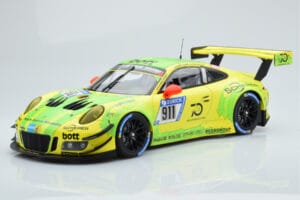
Porsche 911 GT3 R Manthey Racing #911 F. Scherer / K. Estre / R. Dumas / L. Vanthoor / E. Bamber 24 Hours of Nurburgring 2018 Minichamps 1:18
Only 1 left
Price:
137.00 €
Last one
Back in stock
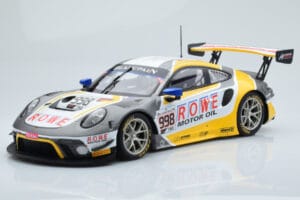
Porsche 911 GT3 R Rowe Racing #998 F. Makowiecki / A. Pilet / N. Tandy 2nd Place 24 Hours of Spa-Francorchamps 2019 Minichamps 1:18
Only 1 left
Price:
108.00 €
Last one
Used
Back in stock
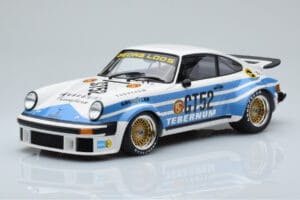
Porsche 911 934 Tebernum Racing Team #52 T. Schenken Nurburgring 300km 1976 Minichamps 1:18
Only 1 left
Price:
147.00 €
Last one
Used
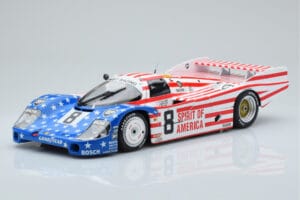
Porsche 956L Spirit of America #8 G. Follmer / J. Morton / K. Miller 24 Hours of Le Mans 1986 Minichamps 1:18
Only 1 left
Price:
119.00 €
Collectors also bought
Browse all 1:18
Used

Used
Last one
Used
Back in stock
Used

Ford Fiesta RS WRC Ford Abu Dhabi #3 M. Hirvonen / J. Lehtinen Winner Rally Australia 2011 Minichamps 1:18
Only 2 left
Price:
123.00 €
Last one
Used
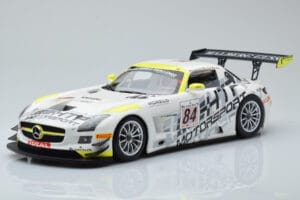
Mercedes SLS AMG GT3 HTP Motorsport Persson #84 B. Schneider / M. Buhk / M. Gotz Winners 24 Hours of Spa-Francorchamps 2013 Minichamps 1:18
Only 1 left
Price:
110.00 €
Last one
Back in stock
BMW M6 GT3 Rowe Racing #98 A. Graf / R. Westbrook / N. Catsburg / N. Paltalla 24 Hours of Nurburgring 2016 Minichamps 1:18
Only 1 left
Price:
169.00 €
Last one
Back in stock
Opel Commodore A Steinmetz #8 Tuerlinx / T. Pilette 24 Hours of Spa 1972 Minichamps 1:18
Only 1 left
Price:
128.00 €
Used
Back in stock
Recently viewed
{"id":1657151,"name":"Porsche 911 996 GT3 RSR White 2005 Minichamps 1:18","price":"142.00 €<\/span><\/bdi><\/span>","image":"https:\/\/models118.com\/wp-content\/uploads\/2026\/08\/porsche-911-996-gt3-rsr-white-2005-minichamps-1-18-wap02160215-1-1-400x400.jpg","permalink":"https:\/\/models118.com\/porsche-911-996-gt3-rsr-white-2005-minichamps-1-18-wap02160215\/","brand":"Porsche"}