Used
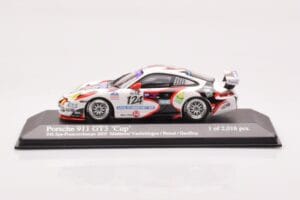
Porsche 911 997 GT3 Cup #124 Mattheus / Geoffroy / Vanbellingen / Fumal 24 Hours of Spa 2005 Minichamps 1:43
Only 2 left
Price:
33.00 €
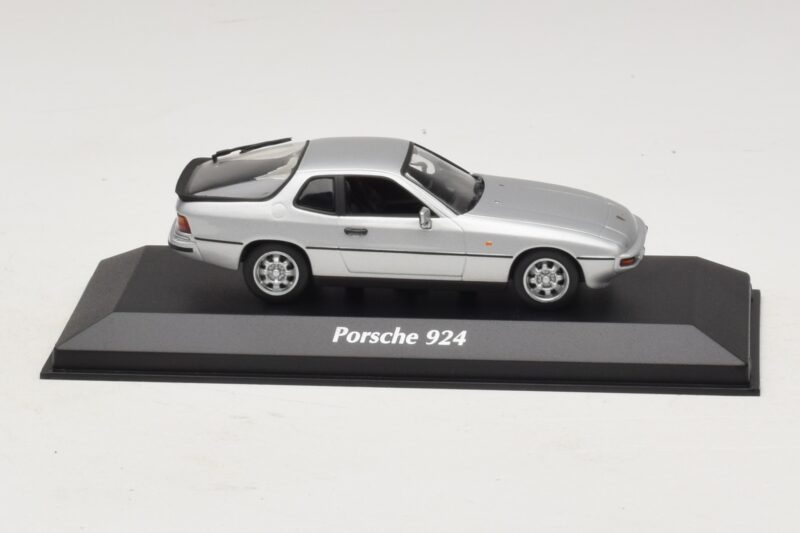
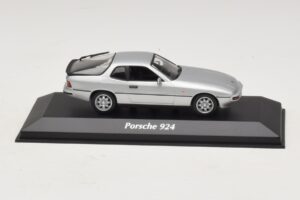
TL;DR: The Maxichamps Porsche 924 1:43 in Silver is a diecast replica of the 1984 front-engine, transaxle coupe, built as a one-piece body with fixed panels. The wedge profile and glass hatch are carried on the exterior, making it an approachable entry for collectors building a Porsche lineage beyond the rear-engine 911.
The 924 asks a Porsche collector to look past the badge on the nose and the engine in the wrong place. Maxichamps models the 1984 coupe at 1:43 in Silver, a color that lets the wedge shape do the talking. The Maxichamps Porsche 924 1:43 is a sealed casting, so everything it offers sits on the outside.
Porsche's 924 started life as a project for Volkswagen, and Porsche took the design over when VW changed course; it reached showrooms in 1976. The engine sits at the front and drives a transaxle at the rear, which gives the car close to even weight distribution, the layout's whole purpose. The water-cooled four-cylinder came from the Audi and VW parts bin, and the cars were assembled at Neckarsulm. Purists scoffed at the humble origins, yet the 924 showed that a Porsche did not need a rear-mounted flat-six to handle well, and that story is part of why collectors now look at it again.
The 924 body is a low wedge with a large glass rear hatch, and pop-up headlights give the nose a clean, flat look when they are lowered. By 1984 the car had been on sale for years, and its shape had settled into the confident, unfussy form collectors recognize. On a replica, judge that wedge by its proportions: a long, level hood, a steeply raked windshield and a tail that tucks neatly under the glass. Silver emphasizes surface changes, so a good casting shows crisp creases rather than soft transitions, and reflections should run cleanly along the roof when the paint is smooth.
This model is a sealed one-piece diecast body, so the work is all on the surface. Zinc alloy gives it noticeable weight for its size and the dimensional stability to hold a straight roofline for years. Without hinged panels, the shut lines can run narrow and consistent, which suits a car whose design depended on clean, simple surfaces. Collectors choosing this model trade interior access for a sturdier casting and tighter exterior tolerances, a sensible exchange at 1:43, where interior detail is tiny anyway.
At just under 10 cm, the 924 is easy to compare against photographs of the real coupe. Look at wheel design and ride height first, since the stance of a 924 is low and level. Then check the glazing for a flush fit, the badge and grille printing for sharpness, and the outline of the rear hatch. A silver finish is forgiving about dust but not about rough casting, so inspect the model under a lamp when it arrives and turn it slowly to follow the highlights.
The 924 fills a gap that 911 collections often leave. A shelf of rear-engine cars tells one story; adding a front-engine transaxle coupe tells a second, and at 1:43 the cost in space is small. It sits well beside other 1980s sports coupes, and its restrained silver gives a row some calm. Keep it out of direct sun, brush dust off gently, and handle it by the base. For a buyer who wants to buy an approachable Porsche that still teaches something about the marque's history, this casting does the job without fuss. It also makes a sensible first purchase for anyone testing whether 1:43 suits their shelf.