Volkswagen Golf GTI Mk8 Blue Norev 1:18
Price:
115.00 €
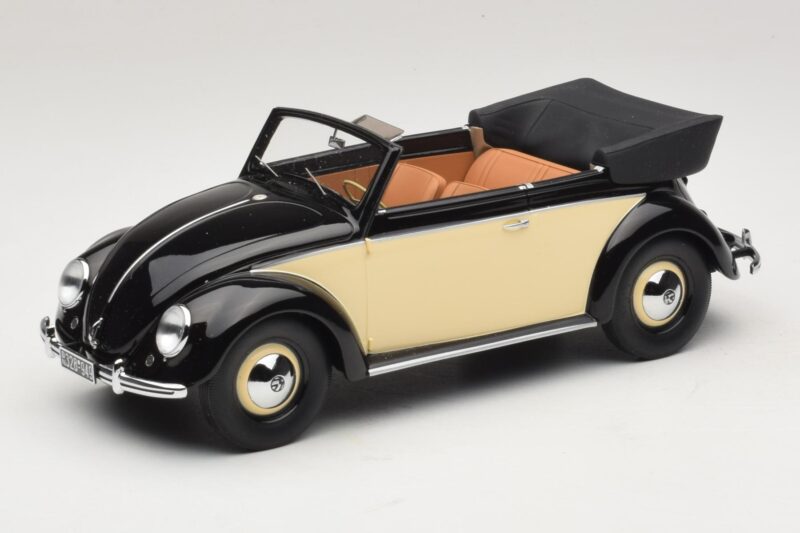
TL;DR: Minichamps' 1:18 resin Volkswagen Beetle Convertible marks 1949, the year the first Beetles reached American shores, finished in a black-and-cream two-tone with the split-window era's rounded, cast-as-one body. Sealed construction keeps the focus on the fabric-look top and chrome trim rather than opening doors.
Volkswagen's American story starts in 1949, when Dutch importer Ben Pon brought the first Beetle to US shores and reportedly sold exactly two that year, a slow start to what became one of the best-selling nameplates in automotive history. This convertible, finished in black and cream, captures the split-window Beetle at the very beginning of that long American arc.
The car that would eventually outsell nearly everything else in its class arrived on US soil almost apologetically. Ben Pon, a Dutch Volkswagen distributor, is credited with bringing the first Beetle to America in 1949, hoping to interest US dealers in the small, rear-engined German car. The reception was lukewarm at best, a reasonable response given how thoroughly American tastes of the era ran toward large, chrome-heavy sedans rather than a compact economy car with an unfamiliar silhouette. What looked like a false start turned out to be the opening chapter of one of the great slow-burn success stories in postwar automotive history, and this convertible captures the car exactly as it looked at that moment.
The earliest Beetles carried a distinctively rounded, bulbous shape, with a split rear window and curves that a resin casting reproduces more convincingly than a metal die typically can. Cast resin holds tighter tolerances on compound curves, letting Minichamps capture the Beetle's rounded fenders and sloping hood without the slightly flattened look pressure-cast diecast sometimes leaves on heavily curved bodywork. This body is a sealed one-piece casting with no opening doors, standard practice for resin at this scale, which puts the full weight of the model's success on getting that famous silhouette and the convertible's proportions correct rather than on interior articulation.
The black-and-cream combination is a classic period pairing, and getting the color separation clean between the cream body and the black soft top is one of the harder finishing challenges on a convertible casting. The fabric-look texture molded into the top reads as cloth rather than as painted plastic, a small detail that matters more than it should on an open-top model since the top is the single largest visual element besides the body color itself. Chrome bumpers, hubcaps, and the split rear window trim all separate cleanly from the cream paintwork, giving the piece the crisp two-tone look period photographs of early Beetles consistently show.
With no doors to open, every bit of casting attention goes into the exterior: the split rear window's distinctive divider, the narrow chrome trim strips, and the rounded fender lines that define the earliest Beetles before later revisions smoothed them out. That focus suits a subject this historically specific, since the appeal of a 1949 Beetle isn't mechanical complexity but instant visual recognition of a shape that would barely change for decades afterward. Judge this piece on how faithfully it captures that early silhouette and the two-tone paint execution, not on opening panels a car this simple never really needed.
For US collectors building a display around early European imports, a 1949 Beetle convertible is about as significant a starting point as the hobby offers, marking the literal first year the nameplate touched American soil. It pairs naturally with later Beetle variants to show the model's design evolution, or stands alone as a single, historically loaded piece anchoring a broader postwar imports theme. Resin at this scale and tier delivers the compound-curve accuracy this early body shape depends on, and the sealed construction keeps the attention on the two-tone finish and top detail rather than mechanical features. Few subjects in the hobby carry this specific a historical marker, and that context is worth as much as the casting quality itself.