Volkswagen Golf GTI Mk8 Blue Norev 1:18
Price:
115.00 €
This model is currently sold out. Enter your email and we'll let you know when it's back in stock.
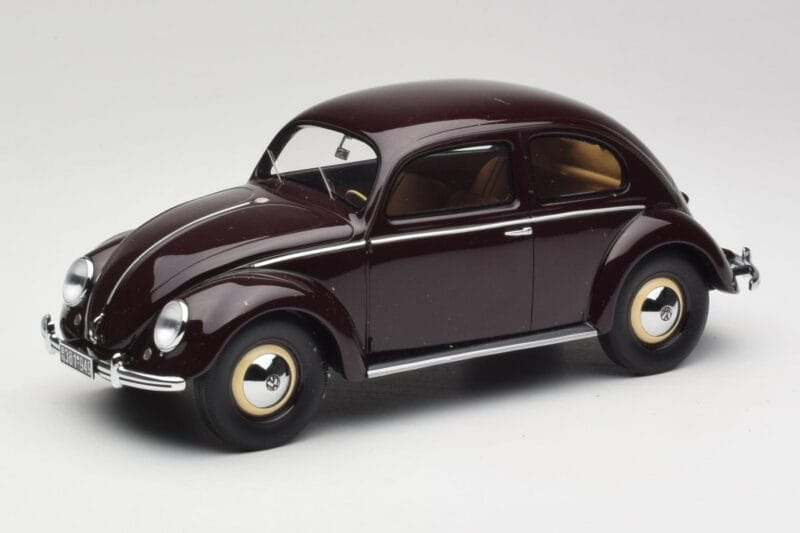
TL;DR: Minichamps' 1:18 sealed resin Volkswagen Beetle recreates the 1949 split-window sedan in vivid Ruby Red, a factory-finished piece with no opening panels but sharper body lines than the diecast version. A bold color choice for a car usually pictured in muted, practical shades.
Ruby Red is not a color most people associate with the humble Beetle, which makes this resin sedan worth a second look on a crowded shelf. Minichamps swaps the usual muted postwar palette for something with real showroom presence, applied to the same humble 1949 shape that started an automotive legend.
Resin construction seals the body permanently, no doors, hood, or engine lid to open, and that trade-off pays off on a shape built almost entirely from compound curves. Without hinge lines to accommodate, Minichamps can hold the door surrounds and window channels tighter than diecast tooling allows, and the roofline flows into the rear deck without the slight step that opening panels sometimes leave. Held in hand, the model feels noticeably lighter than the diecast sedan in this same range, a difference collectors notice immediately and one that flows directly from the material rather than any shortcut in quality.
Most surviving 1949 Beetles wore black, grey, or dark green, the practical colors of a car built for a rebuilding economy. Ruby Red was a later, more optimistic addition to Volkswagen's palette, and applying it to the earliest split-window body creates a deliberate anachronism that works well on a shelf. The metallic depth reads strongly under direct light, catching highlights along the fender crowns in a way flat colors cannot.
The two-pane rear window disappeared in 1953, replaced by a single oval glass as Volkswagen refined the car for a growing export market. That short window of split-window production, running from the car's earliest post-war years, is exactly why these early examples now draw dedicated collector interest distinct from the far more common oval-window and later Beetles. This 1949 sedan sits right at that origin point, built while the plant at Wolfsburg was still finding its footing after wartime destruction and years of British-administered restart under officer Ivan Hirst. Values among original split-window survivors reflect that rarity today, a scarcity this replica lets far more people appreciate at a fraction of the cost of chasing the real thing.
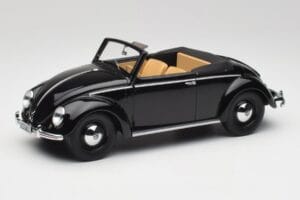
Minichamps offers this same 1949 sedan in diecast black as well, and the two pieces make a useful comparison for anyone deciding between materials. The diecast version invites handling, with opening doors and a lift-up engine lid; this resin Ruby Red version rewards looking rather than touching, its sealed body holding a level of surface precision the diecast cannot quite match around the door shuts. When judging fidelity between the two, check the wheel wells and running board seams first: sealed resin lets Minichamps carve a crisper line there than the diecast tooling, usually the first difference an experienced eye catches from across a table. Choose diecast for interaction and a lower price point, or this resin piece for display precision and a color that stands out in a lineup dominated by muted postwar tones. At roughly 20 centimeters, it displays comfortably alongside the sedan, the Cabriolet, and the rarer Hebmüller variant in the same range, letting a Vintage Classics collection tell the fuller story of one very consequential little car.