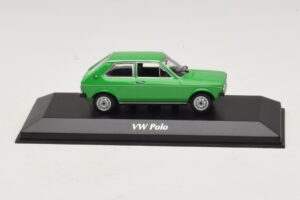
Used
TL;DR: The Maxichamps Volkswagen Polo Mk1 1:43 in green is a diecast model of the 1979 hatchback. The body is a sealed casting with no opening panels, so paint, stance and shut lines carry the detail. It is a compact shelf piece for fans of 1970s Volkswagen small cars.
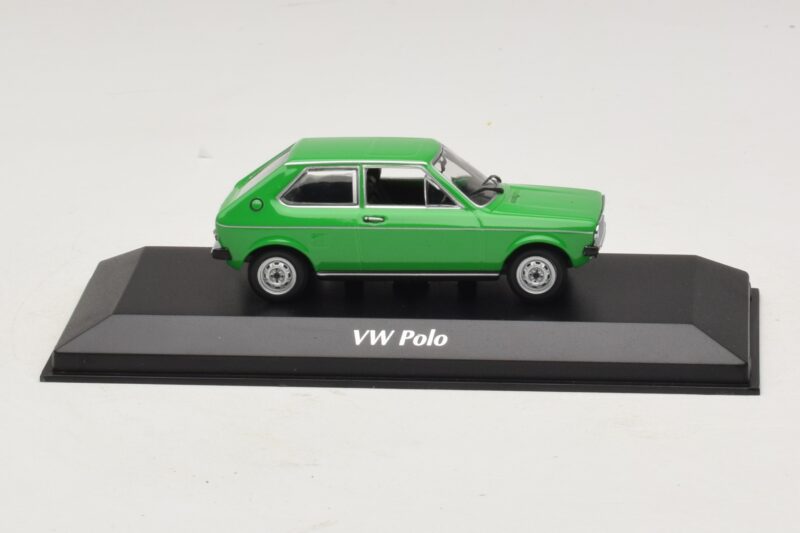
The first Polo was a small, practical car from a decade of practical cars, and green was a natural color for it. Maxichamps casts the 1979 hatchback at 1:43, around 8 cm long, as a sealed diecast body, so the model's value lies in how the finish and the shape come together.
Volkswagen launched the first Polo in 1975, built on the same basic design as the Audi 50, with a front engine and front-wheel drive. By 1979 it was a familiar sight on European roads: a boxy, upright hatchback made for city streets and family errands. It never built a competition reputation, and that is part of its charm today. Models of ordinary cars like this one recall the daily traffic of the decade, a subject that interests collectors who prefer street life to racing stories.
Solid greens are forgiving about tone but not about evenness. On the Polo's flat hood and roof, any thin spots or ripples in the paint show up under a lamp as breaks in the reflection. Tilt the model and follow the highlight along the beltline: an unbroken streak means the surface is clean. A hard zinc-alloy shell lets gloss sit deep and hold up over years on a shelf. Check the grille, lamp surrounds and badges against photographs of the real car, since small details separate careful tooling from rough work.
This Polo has no opening panels. Body, glazing and chassis form one fixed unit, a normal choice at 1:43 that keeps the evaluation on the outside. With no hinges to allow for, door lines read as consistent grooves, and the Polo's plain flat sides make that tightness easy to see. The metal also gives the small model a dense, steady feel when you lift it, and a sealed shell is sturdy enough to move between displays without worrying about delicate parts.
At 1:43 the Polo is about 8 cm long, so many period hatchbacks and sedans fit along one shelf and form a street scene. That breadth is the scale's strength. The limit is fine detail: wipers, mirror arms and door handles are cast or printed, so judge them by outline and placement. Next to a 1:18 model, the footprint is far smaller, which lets you collect widely. For a decade theme built from everyday cars, breadth usually beats depth.
Green blends into a 1970s lineup in a way brighter colors do not, which makes this Polo a good fit for an authentic street-scene shelf of earth tones. A red version of the same casting is a separate listing, and some shoppers buy both to see how color changes a simple shape. Keep the model out of direct sun, dust it with a soft brush and avoid touching the paint. The trade-off is clear: a small, sealed casting with no opening parts, valued for shape and finish. As an accessible way to add Volkswagen to a period collection, it works well.