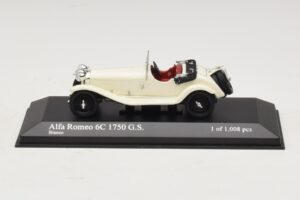
Last one
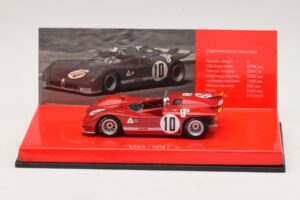
Alfa Romeo T33/3 #10 R. Stommelen / N. Galli ADAC 1000km Nurburgring 1971 Minichamps 1:43
Only 1 left
Price:
66.00 €
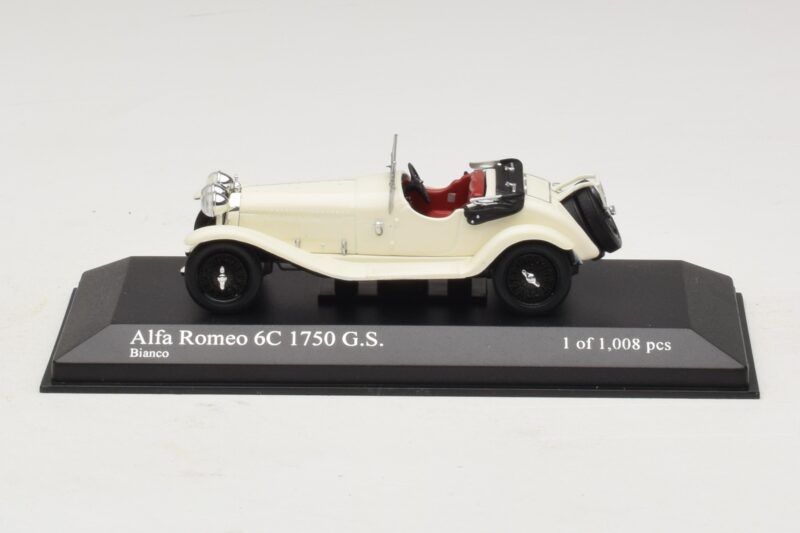
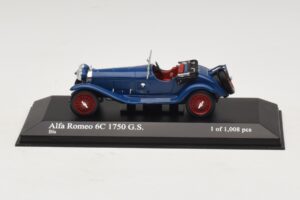
TL;DR: Minichamps' 1:43 Alfa Romeo 6C 1750 G.S. reproduces the 1930 open-top sports car in white, a sealed one-piece diecast of the Vittorio Jano-designed chassis that carried Tazio Nuvolari to a famous Mille Miglia victory. A foundational pre-war Alfa Romeo for a vintage sports-car shelf.
Before Alfa Romeo built the cars that would define its racing legend through the 1930s, the 6C 1750 Gran Sport laid the groundwork, a lightweight open-top sports car good enough to win Italy's most grueling road race outright. Minichamps brings that pre-war shape to 1:43 in white, the color most associated with the factory's competition cars of the era.
This 6C 1750 comes as a fixed, one-piece casting, with no hood, doors, or trunk that open on the model, consistent with how most pre-war open-top cars are reproduced at this scale. The construction suits the subject well: an open cockpit, cycle fenders, and a long, slim hood leave very little bodywork to hide a hinge line in anyway, so a sealed casting loses little compared to how the real car actually presents itself.
The white paint runs cleanly over the car's narrow, swept-back proportions, with the exposed chassis rails, louvered hood panels, and wire wheels standing out as the details that define a Gran Sport-era Alfa visually. Minichamps tools its 1:43 line to hold the fine spoke detail that wire wheels demand, a feature that separates a convincing pre-war sports car from a generic small-scale stand-in. Because the cockpit sits open on the real car, the casting's interior detailing, the bucket seats, the exposed gear lever, and the simple dashboard, is visible without needing any panel to open.
The 6C 1750 was engineered under Vittorio Jano, the designer most responsible for turning Alfa Romeo into a serious racing marque during the late 1920s and 1930s, and the Gran Sport variant represented the sportiest, most race-ready version of the chassis the factory offered to private and works drivers alike. Its six-cylinder engine and light construction made it genuinely competitive against larger, more powerful machinery from rival manufacturers of the period.
The car's defining moment came at the 1930 Mille Miglia, the thousand-mile road race run on open Italian public roads, where Tazio Nuvolari drove a 6C 1750 Gran Sport to victory in a finish that has become part of motorsport folklore: trailing his rival through the night, Nuvolari reportedly switched off his headlights to close the gap undetected before passing for the lead near the finish. That win cemented both Nuvolari's reputation and the 6C 1750's standing as a genuinely capable competition car.
At 1:43, the 6C 1750's narrow, open-top body sits well within a standard shelf footprint, its slim proportions a visual contrast to the larger American and British cars that often dominate a general vintage collection. The sealed body suits the subject honestly, since the real car's open cockpit leaves little to hide behind panel lines anyway. For a collector building a timeline of Alfa Romeo's competition history, this model represents the chassis that came before the more celebrated 8C era, a foundational piece rather than a footnote worth seeking out early.