Last one
Used
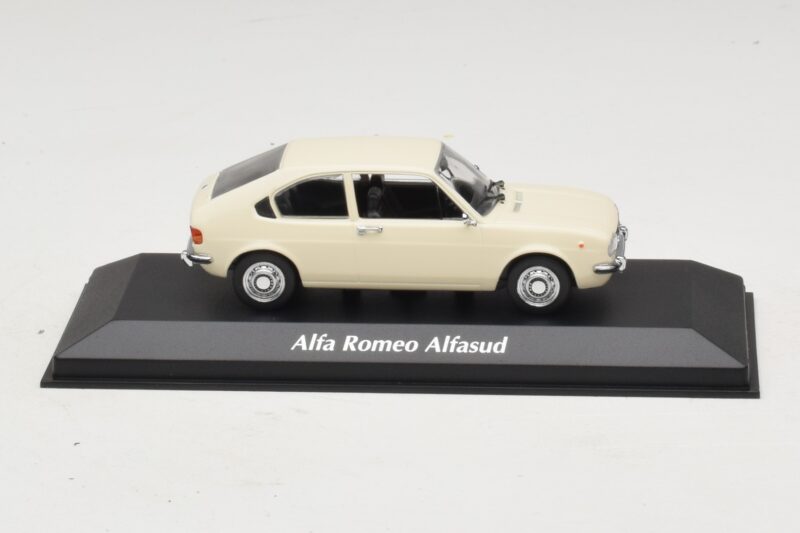
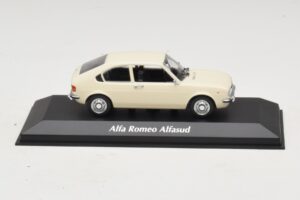
TL;DR: The Maxichamps Alfa Romeo Alfasud 1:43 in White is a sealed diecast replica of the 1972 Italian compact sedan, styled by Giorgetto Giugiaro and powered by a front-wheel-drive boxer four. The one-piece body highlights its crisp lines and clean white paint on a compact shelf footprint.
Alfa Romeo built the Alfasud in Pomigliano d'Arco, near Naples, to bring Alfa handling to a compact front-wheel-drive car. It worked: the chassis earned praise far beyond its size. Maxichamps reproduces the 1972 sedan at 1:43 in white diecast, about 9 cm long, a clean canvas for Giugiaro's tidy lines.
The Alfasud was a deliberate departure for Alfa Romeo: a small front-wheel-drive car with a flat-four boxer engine, built at a new factory in the south of Italy. Giorgetto Giugiaro's design gave it a clean, uncluttered body with a low beltline and large glass area, a shape that still looks fresh next to more ornamented cars of the period. Production year 1972 puts the model at the start of a long run. For a model buyer, the appeal is the combination: sporting reputation, compact size and a body shape that rewards close inspection of its proportions.
This Alfasud is a one-piece diecast body with fixed panels, so everything the model has to say appears on its exterior. White is an unforgiving color: it shows every flaw in surface shape, so smooth, consistent panels are the first sign of a good casting. Shut lines should be thin and continuous, which a sealed shell holds easily, and glazing should sit flush with clean borders. Diecast gives weight well beyond what a 9 cm car suggests, and the metal shell supports a durable finish. Check the trim and badges for crisp edges; at this scale a macro photo shows quality quickly.
The Alfasud's design depends on proportion. From the side, the low beltline and large glasshouse should read as a light, open shape, with the roof thin and the windows large. The wheels should sit squarely in the arches with an even gap, and the overall stance should look planted rather than perched. Check the front and rear from directly ahead and behind: the body should sit symmetrically, with straight, even lines. These simple checks tell you more than a spec list does. Because the shape is so clean, a casting that gets proportions right looks convincing even without elaborate detail, and one that misses looks wrong instantly.
White paint is easy to live with if handled correctly. Fingerprints and dust show clearly, so handle the model by its body sides and clean it with a soft brush. Keep it away from strong direct sunlight, which is hard on paint and plastic parts alike, and store it in an enclosed cabinet. Solid white reflects light evenly, so a single lamp from above shows the body's surfaces clearly without harsh glare. Over many years, a good diecast shell holds its shape and a well-applied finish stays bright. The simple, sealed construction has no moving parts to wear, which suits long-term display.
Many Alfa Romeo shelves lean toward spiders and coupes, so a compact sedan adds a different chapter: the everyday Alfa. Placed beside a 1970s coupe, the Alfasud shows how the brand's identity extended into small family cars. It also belongs in a broader theme of 1970s Italian compacts. The real car had a reputation for rust, which is part of its story among enthusiasts, but the diecast model has no such issue and will keep its finish if kept dry and dust-free. At 1:43, a row of period cars takes little space, and the sealed body trades articulation for clean, lasting lines.