New arrival
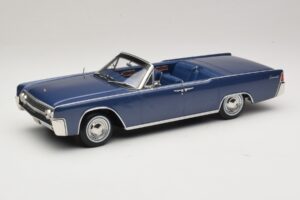
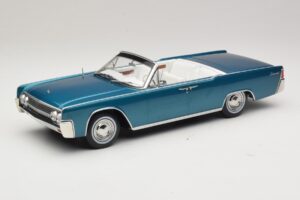
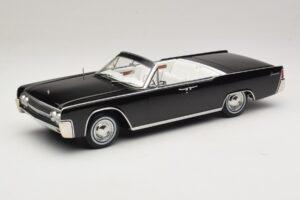
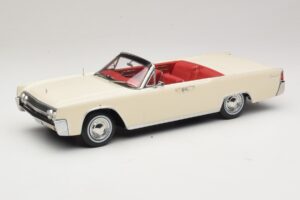
Lincoln Continental Convertible Blue Metallic The Lincoln Lawyer KK-Scale 1:18
Only 2 left
Price:
85.00 €
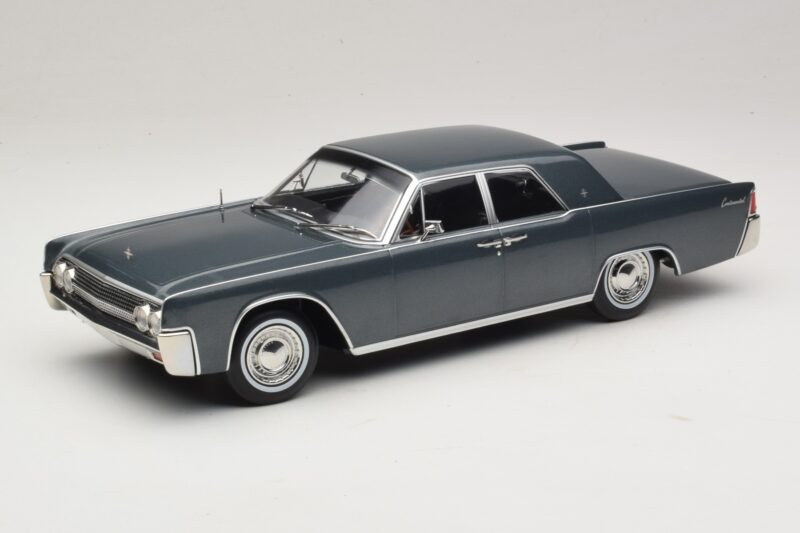
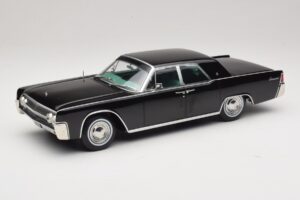
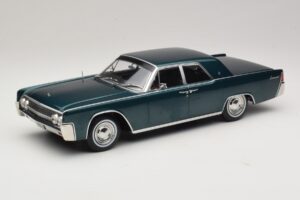
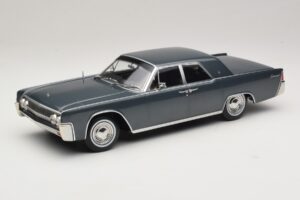
TL;DR: KK-Scale's 1:18 diecast Lincoln Continental reproduces the 1963 flagship sedan in grey metallic, Elwood Engel's slab-sided design with its signature rear-hinged doors. The sealed one-piece body keeps the focus on chrome trim, glazing fit, and stance rather than an opening door or trunk.
Elwood Engel's Continental redefined American luxury for the 1960s, trading tailfin excess for clean, slab-sided proportions and a set of rear-hinged doors that became the car's lasting signature. KK-Scale's grey metallic casting brings that flagship presence to 1:18, a quieter color choice that lets the body's architecture speak for itself.
Lincoln relaunched the Continental for 1961 with a design by Elwood Engel that broke sharply from the tailfin era, favoring crisp, unornamented bodysides and a formal, upright roofline that aged into one of the most respected American designs of the decade. By 1963, the model carried over that same architecture with minor detail changes, including a slightly revised grille, while keeping the fundamental proportions that made the car instantly recognizable on sight. The design proved influential well beyond Lincoln, pushing other American manufacturers toward cleaner, less chrome-heavy styling through the rest of the 1960s. KK-Scale's casting reproduces that specific early-1960s Continental shape rather than the later, more ornamented versions that followed.
The Continental's rear-hinged back doors, often called suicide doors, were the car's most distinctive mechanical feature and remain the detail most collectors look for first on any Continental model. On this casting they're molded into the single sealed body shell rather than functioning as separate opening panels, which is standard practice at this price point, and the shut line where the front and rear doors meet reads as one clean, consistent groove rather than a seam fighting against hinge tolerances. That construction keeps the car's slab-sided surfacing uninterrupted, which actually suits a design built around flat, unbroken panels in the first place.
Grey metallic paint suits the Continental's architectural restraint better than a louder color would, letting the body's crisp edges and flat surfacing do the visual work rather than competing with bright trim. Chrome window surrounds and the thin side spear separate cleanly from the grey body color, and the glazing sits flush in its openings, which matters enormously on a car whose entire design language depends on clean, unbroken lines from the windshield to the trunk. The grille's simple, low profile carries its chrome detail without looking flattened or oversimplified at this scale, and badge work on the trunk lid and front fenders holds its edges clearly under close inspection.
At 1:18, the Continental runs close to 27 centimeters nose to tail, among the largest American sedans a collector is likely to shelve, which matches the real car's genuinely imposing presence as Lincoln's flagship. The zinc alloy casting carries real heft leaving the box, and ride height sits correctly level rather than jacked up at the wheel arches, preserving the low, formal stance the design depended on. Paint depth under direct light shows an even, restrained gloss across the grey finish, appropriate for a car that never needed to shout to get attention. Wheel covers follow the period-correct pattern Lincoln used on the flagship trim, sized properly within the arches.
A first-generation Engel Continental sits at the top of most serious American luxury-sedan collections, the car that other manufacturers spent the rest of the decade trying to answer, and this grey metallic example gives that design its due without the more common black or dark blue most collectors already expect. It pairs naturally with a Cadillac or Imperial from the same years for a collector building a 1960s American flagship comparison, and its restrained color works as a visual palate cleanser next to louder period two-tones. At 1:18, the Continental's size demands real shelf space, but that presence is exactly the point. For a buyer assembling the serious end of American luxury history, this is a foundational piece.