Last one
Used

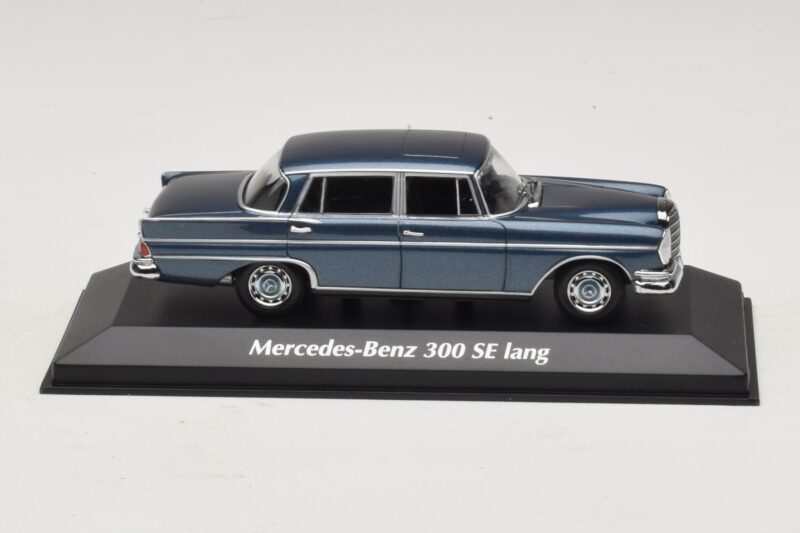
TL;DR: The Maxichamps Mercedes 300 SE W112 Lang is a 1:43 diecast fintail sedan in blue metallic, representing the 1963 long-wheelbase flagship. The body is a sealed one-piece casting, so metallic paint, stance, and brightwork carry the display. A refined 1960s luxury piece for Mercedes collectors.
Lang means long, and on the 300 SE the extra wheelbase went into rear-seat room rather than showy looks. The profile stays elegant, with the upright fintail rear and a formal greenhouse. The 300 SE was a top-tier fintail sedan, with fuel injection and air suspension as headline features. In 1:43 metallic blue it becomes a quiet, refined centerpiece.
The W112 shares the fintail body style with the lesser Mercedes sedans of the early 1960s, but the 300 SE carried more brightwork and mechanical sophistication. The long-wheelbase version stretches the body slightly, and a good casting shows that in the spacing between the doors and the length of the rear side window. When comparing it to other fintails, check that the cabin looks balanced rather than simply stretched. These small distinctions are what separate a thoughtful model from a generic fintail.
Metallic blue is a demanding finish at small scale. Flake size has to look right for 1:43, or the surface reads sparkly and toy-like instead of rich. A zinc alloy shell gives paint a hard base, so the finish should look even and deep, with highlights rolling along the roof and fender crowns. Under a downward lamp the color should shift between lighter and darker tones as you turn the model. The metal also gives satisfying heft, and diecast tolerances mean panel lines are slightly more visible than on small-batch resin, a reasonable trade at this tier.
This model has a fixed body, so nothing opens and the whole impression comes from the outside. Start at the rear: the modest fin edges and the shape of the taillamps define a fintail, and a casting that rounds them off loses the character. Then look at the chrome strips, the grille, and the bumpers, which give a flagship sedan its jewelry. The greenhouse should look tall and airy, with glazing sitting cleanly in the frames. A one-piece body keeps lines tidy and removes the loose fit that can creep into articulated pieces.
Metallic finishes show smudges, so pick the model up by the base and roof edges. Keep it away from strong sunlight, dust it with a soft brush, and store it on a stable shelf where vibration will not shift it toward the edge.
In a 1:43 Mercedes chronology, the fintail sits between the rounded Pontons and the cleaner lines of the 1970s. This long-wheelbase 300 SE is the dressy version of that era, a fine counterpoint to more modest sedans of the same decade. At about a hand's width long, it keeps the footprint small enough to build a whole decade of flagship cars on a single shelf. This is a mid-tier diecast: expect confident proportions and good paint, but not hand-built micro detail. For marque specialists, it is a natural purchase to represent 1960s Stuttgart luxury.