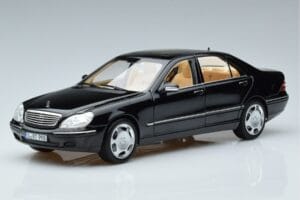
Mercedes S-Class W220 S600 Limited Edition Norev 1:18
Price:
91.00 €
This model is currently sold out. Enter your email and we'll let you know when it's back in stock.
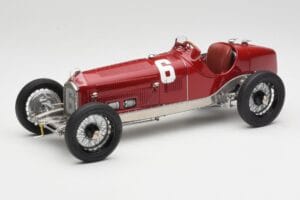
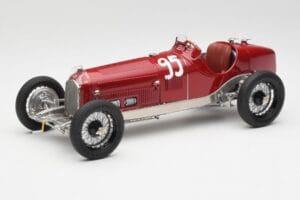
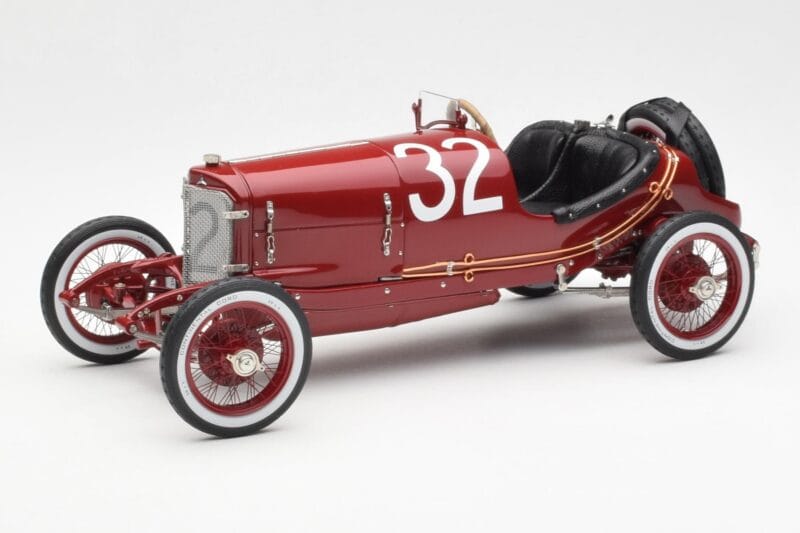
TL;DR: CMC's 1:18 diecast reproduces Mercedes #32 as driven by Lautenschlager and Traub to second place at the 1924 Targa Florio, with opening doors and hood over a detailed chassis. Used model; the box shows traces of storage, the model itself intact. A pre-war endurance racing centerpiece.
Sicily's Targa Florio ranks among motorsport's oldest endurance races, run over punishing mountain roads since 1906, and Mercedes fielded works entries there through the 1920s as part of its broader European racing program. Car #32 finished second in the 1924 running.
The metal body carries real weight, and the doors and hood open on hinges built into the casting rather than glued afterthoughts, exposing an engine and chassis finished with the same attention as the exterior. Panel gaps stay tight where the hinges meet the body, a harder trick to pull off than on a sealed shell, and the exposed spare tires and cycle fenders show crisp cast edges rather than the soft rounding cheaper diecast tends toward. As a used model, this example carries honest signs of prior ownership, and the box shows traces of storage from time off the production line. The casting itself remains unaffected.
The Targa Florio's road-course format, closed public roads climbing through Madonie mountain villages, demanded a different kind of car than smooth-track racing did: durability over raw speed, and a driver who could read terrain rather than just push a throttle. A works Mercedes finishing second in that environment in 1924 speaks to both the chassis and the crew, and CMC's choice to replicate that specific entry rather than a generic livery gives the model a documented result to point to rather than an invented paint scheme.
At 1:18, this open-cockpit racer runs close to 25cm, proportions that read as substantial without overwhelming a shelf shared with contemporary grand tourers. Pairing it with other 1920s CMC entries builds a coherent pre-war motorsport narrative rather than a scattered assortment of eras. Because the panels open, keep the model somewhere it won't be repeatedly handled, and give the exposed engine bay an occasional light dusting since open detail accumulates more than a closed body.