Last one
Used
This model is currently sold out. Enter your email and we'll let you know when it's back in stock.
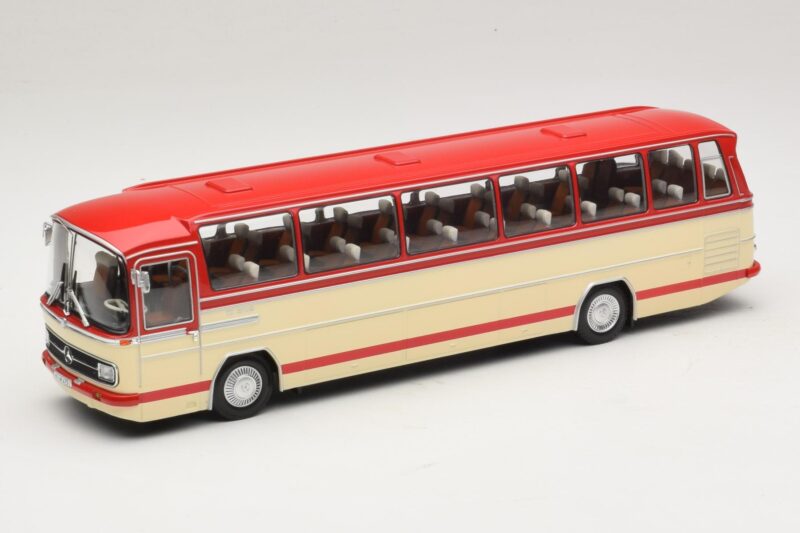
TL;DR: Minichamps' 1:43 diecast Mercedes O 302 reproduces the 1965 motor coach in a Red and Cream livery, a sealed one-piece body with crisp window surrounds and deep, even paint over the coach's long, flat-sided profile, cast in dense zinc alloy for lasting shelf presence.
Mercedes-Benz built the O 302 as a modern, purpose-designed motor coach for the mid-1960s, replacing older bus platforms with a lighter, more efficient unibody. This Red Cream example shows the livery style common to regional operators of the period.
Minichamps casts this O 302 in zinc alloy, and its weight is immediately apparent lifting it from its stand, real density across a body this long. The shell is a single sealed casting, with no opening doors or panels, and on a subject with as much continuous flat surfacing as a motor coach, that construction is a genuine advantage: the beltline and window band run in one unbroken line the full length of the vehicle without a shut-line interruption to catch the eye. The Red and Cream two-tone paint sits deep and even across that long flank, with the color break following the coach's factory-style separation cleanly rather than bleeding at the edges.
Minichamps renders the row of side windows with correctly proportioned pillars and flush glazing, a detail that separates a well-executed commercial vehicle model from a crude toy-grade casting where the windows read as one flat black band. The front fascia carries the O 302's distinctive split windshield and upright grille with fine tampo-printed badging, and the wheels sit at the correct offset beneath the coach's tall, boxy sides. Nothing on this casting opens, which for a commercial vehicle built to be viewed as a complete long-wheelbase silhouette is exactly the right trade, letting the tolerances go into keeping that beltline and window row straight rather than into hinges nobody would use on a display piece.
Mercedes-Benz introduced the O 302 in the mid-1960s as a dedicated coach and intercity bus platform, moving away from the truck-derived chassis that had underpinned earlier commercial passenger vehicles. Its unibody construction, a genuine innovation for a bus of this size at the time, saved weight and improved ride quality, while its flat-sided styling set the visual template that would define Mercedes coaches for years afterward. The O 302 found buyers across regional bus operators, tour companies, and municipal transit authorities throughout West Germany and beyond, its combination of reliability and reasonable operating costs making it a common sight on intercity routes through the late 1960s and into the 1970s.
Commercial vehicles like this rarely receive the same collector attention as sports or racing cars, but they represent a genuinely important slice of automotive history: the vehicles that actually moved people day to day, built by the same engineering culture that produced Mercedes's passenger cars and trucks. For collectors specializing in commercial vehicle history or regional transit liveries, a well-executed O 302 like this one fills a gap that road cars and race cars cannot, documenting the buses that defined ordinary travel in period West Germany rather than the exceptional machines built for speed or luxury.
At 1:43, this O 302 measures roughly 15 to 18 cm long depending on wheelbase, noticeably larger than most passenger cars at the same scale, and it commands real shelf presence as a result. Buses and coaches occupy a smaller but dedicated niche within the diecast hobby, appealing specifically to collectors tracing regional transit history rather than motorsport or luxury marques. The Red and Cream livery ties this piece to a specific period operator style, giving it documentary value beyond a generic bus silhouette. Paired with other Mercedes commercial vehicles from the same decades, it builds toward a transit-focused display that most collections built around cars and racers simply do not cover. That specificity is exactly what makes commercial vehicle collecting its own rewarding corner of the hobby.