Last one
Used
Back in stock

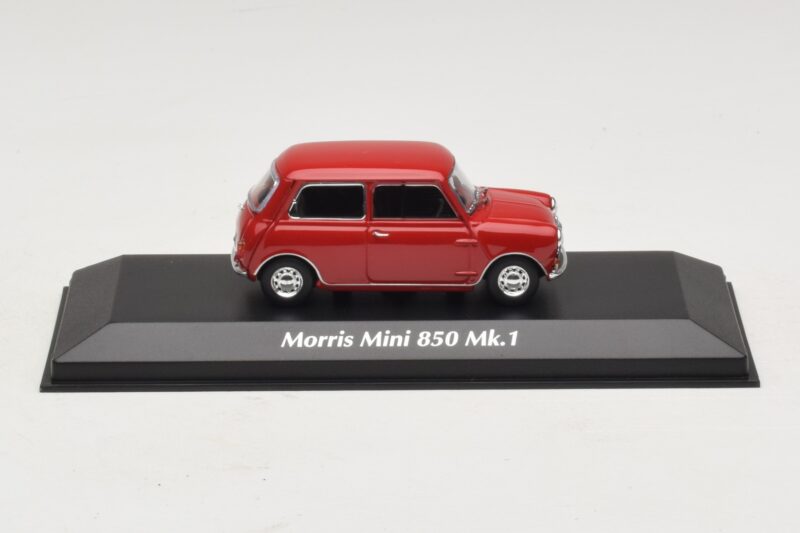
TL;DR: The Maxichamps Morris Mini 850 Mk1 1:43 in Red is a diecast replica of the 1960 small car that put a transverse engine and front-wheel drive into a body just over three meters long. The body is sealed, so chrome trim, window frames and paint carry the detail.
Seven centimeters of metal is all it takes to hold a car that reshaped small-car design. The Mk1 Mini is a study in efficient packaging, and at 1:43 this casting keeps that economy visible: wheels pushed to the corners, a short hood, and a roofline that rises quickly into a cabin far larger than the footprint suggests.
The first-series Mini has features that later cars lost: external door hinges, sliding side windows and a distinctive grille on the Morris version. Those are exterior cues, which is exactly where a sealed 1:43 diecast does its work. Check that the door cut lines run cleanly past the hinge positions, that window frames look slim and that the grille reads as a defined shape rather than a smudge of silver paint. Spotting these details is how experienced owners tell a Mk1 from a later Mini at a glance, and they decide whether this model looks right on a shelf.
A red small car lives or dies on its finish. Gloss over a rigid zinc alloy shell gives an even, deep surface across the roof and hood, and the lack of seams from opening panels keeps the color unbroken. Chrome bumpers and trim are the sparkle points: they should look thin and bright, as they did on the real car, not chunky. Pick it up and the weight is a surprise for something this small, dense and solid in the palm, with enough mass to resist a casual nudge on a crowded shelf.
Alec Issigonis designed the Mini to give maximum interior space in minimum length, mounting the engine sideways and driving the front wheels, with small 10-inch wheels pushed to the corners. It launched in 1959 as both the Morris Mini-Minor and the Austin Seven, and the 850 designation refers to the small displacement of its 848 cc engine. That packaging idea became a template for small cars for decades afterward, which is a large part of why the model rewards study even in a size this modest.
In period the Mini was an economy car, and that humble purpose is part of its charm on a shelf. Its proportions are so unusual, with a tall cabin on a tiny footprint, that even a simple 1:43 casting reads instantly. For American buyers it is an import curiosity that stands apart from the larger domestic cars of the era, and a red example is the classic color association most people carry in mind.
Because it is so compact, this Mini works as a scale-reference piece beside larger 1960s cars: line it up with a roadster or a grand tourer and the difference in size tells the story of the decade. It also anchors a Mini lineage row, with the Mk1 as the starting point and later generations following. The trade-off is simple: a sealed body means no interior access, so judgment rests on the exterior, which is the right way to value a casting at this scale. Keep it dusted and out of direct sun. Anyone looking to buy a Maxichamps classic small car for a tight display will find the Mk1 an easy choice.