Last one
Used

This model is currently sold out. Enter your email and we'll let you know when it's back in stock.
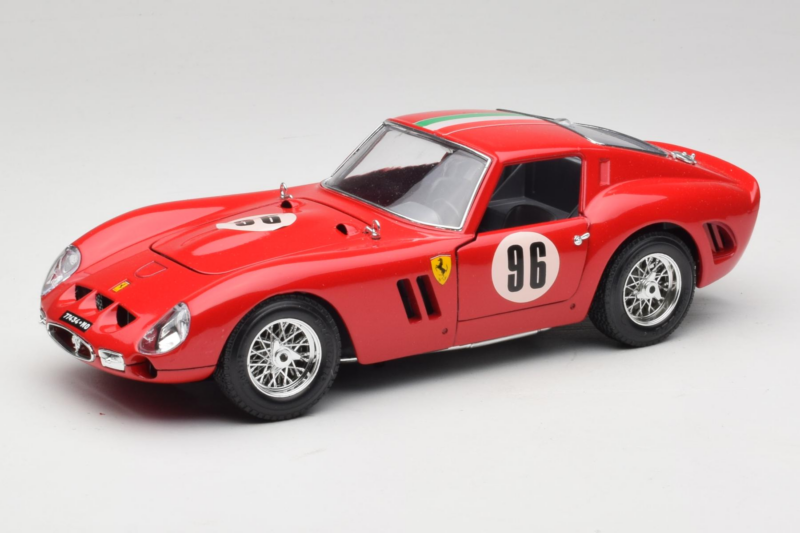
TL;DR: Bburago's 1:18 diecast Ferrari 250 GTO reproduces the 1962 competition coupe in red racing livery with opening doors and hood. Built to mass-market pricing rather than resin hand-build standards, it puts one of Ferrari's most significant GT racers within reach of collectors assembling a Historic GT display.
Few Ferraris carry more competition weight than the 250 GTO, and Bburago's diecast take makes that history approachable rather than exclusive, trading resin-level surface precision for a metal body most collectors can actually afford to own.
At 1:18, the zinc alloy body carries real heft in the hand, and the doors and hood open on working hinges, a feature sealed resin replicas of the same subject cannot offer. Panel tolerances run wider than a hand-built resin GTO from a specialist producer, and the paint sits even rather than layered, but that trade-off is the point of the segment. Bburago has built accessible exotic-car diecast for decades, and the 250 GTO benefits from that approach by reaching collectors who would otherwise never own a model of Ferrari's most valuable competition car. The GTO's shape, developed with early input from engineer Giotto Bizzarrini before Carrozzeria Scaglietti hand-formed the aluminum bodywork, translates cleanly into diecast tooling. The long nose and fastback roofline hold their proportions even at this price point.
The 250 GTO earned its reputation through three consecutive Le Mans GT class victories in the early 1960s and a production run of only 36 cars, numbers that made it the benchmark competition Ferrari of its era and, decades later, a fixture at the top of classic car auction results. This diecast doesn't chase concours accuracy to one specific chassis; it captures the red livery and race number that collectors associate with the model's competition identity, which is enough context to anchor a GT-themed shelf without pretending to match what a resin specialist would deliver. Paired with later Bburago Ferraris like the F40 or F50, this GTO works as the accessible entry point into a Maranello racing lineage, priced to let a collector build breadth before committing to a single hand-built hero piece.