Last one
New arrival
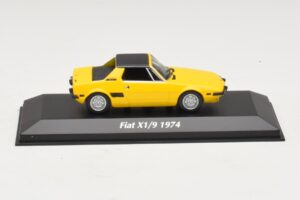
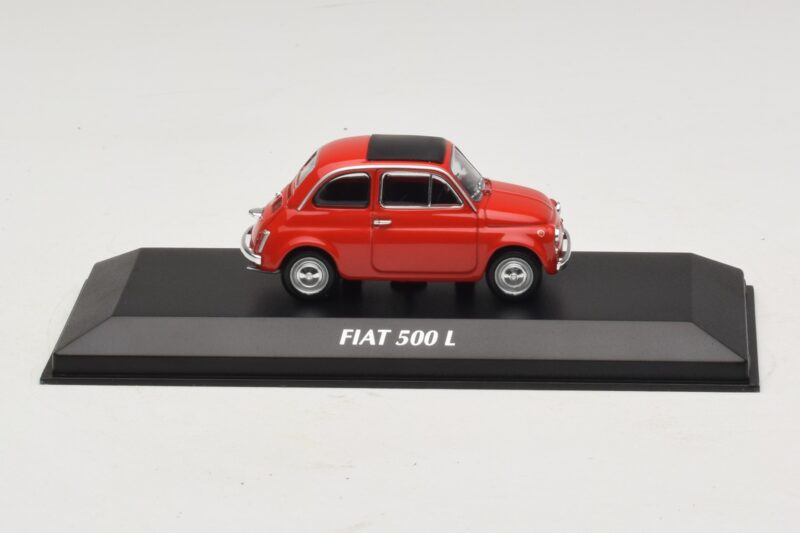
TL;DR: The Maxichamps Fiat 500 L 1:43 is a diecast model of the 1968 Italian city car in Red, built as a sealed one-piece body. The detail sits on the outside: the rounded shape, upright glazing and small wheels. A pocket-sized shelf piece for Italian classic and microcar collections.
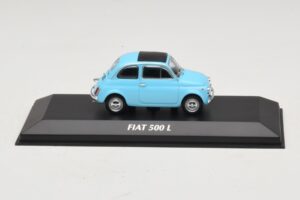
The Fiat 500 L was a car designed to be as small as a car could be and still carry a family. At 1:43 that scale shrinks it to roughly 7 cm, so the Red Maxichamps version is all about proportion: the round nose, upright cabin and short tail, locked into one sealed casting.
The first thing a handler notices is weight. A model this small feels like it should be nearly weightless, but zinc alloy gives it a compact, cool density that makes it feel like a finished object. The body is a single casting with nothing that opens, so the whole shape reads as one smooth form. That suits a car whose appeal is its simplicity: no creases, no spoilers and no sharp edges, just a rounded shell that should look friendly from every angle. At this size, small casting errors stand out, which makes consistent surfaces the key quality sign.
Red is a natural color for the 500, and on a body made of curves it picks up reflections in soft bands that follow the surface. A good finish shows those bands running smoothly, without breaks or patchy gloss. Look at the wheels as well: on a car with such small wheels, a slight error in size or position changes the whole character. The glazing should be upright and clean, filling its frames evenly. Compare it against photos of the real car, and the roof height and the nose curve will quickly show how well it was cast.
Fiat introduced the Nuova 500 in 1957, a design by engineer Dante Giacosa with a small air-cooled two-cylinder engine mounted at the rear. The car put a generation of Italians on the road. The L in the name stands for Lusso, a trim upgrade that arrived in 1968 with improved finishes over the basic car. That is the version this model represents. For collectors, the L is a useful variant because it marks a later stage in the car's story, when the 500 had moved from bare-bones transport to something slightly more comfortable.
Microcars suit small scales because the footprint stays tiny while the character stays big. In 1:43, a half-dozen city cars from different countries fit on a single shelf, and the differences in shape tell the story of postwar mobility. The 500 is the favorite of that shelf: recognizable, friendly and widely loved at car shows. A Red example adds a bright accent to a row of subdued colors, and a sealed casting keeps the lineup consistent with the other pieces.
A car this small is best displayed at the front of a shelf or on a riser, where it will not be lost. Use a clear acrylic cover if possible, since dust on a small model with many curves is hard to remove without handling. Light from the front brings out the red gloss, while overhead light highlights the roof curve. The sealed body means there is nothing to adjust or open, which makes the piece easy to live with. Anyone planning to buy a Fiat 500 in 1:43 should expect a charming, dense, simple model whose appeal lies in its shape and its history.