Last one
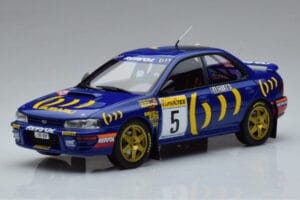
Subaru Impreza #5 C. Sainz / L. Moya 2nd Place Rally Monte Carlo 1995 Kyosho 1:18
Only 1 left
Price:
252.00 €
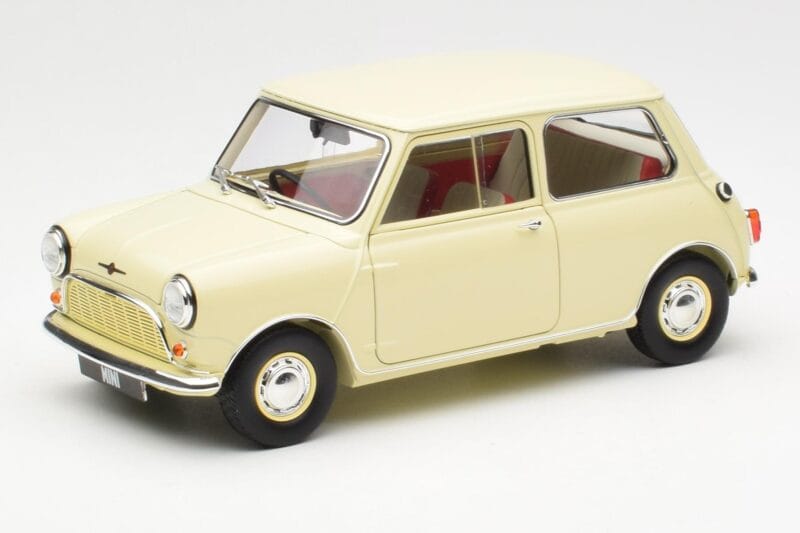
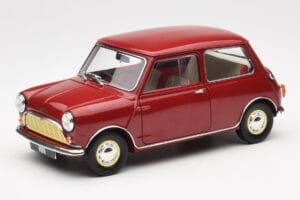
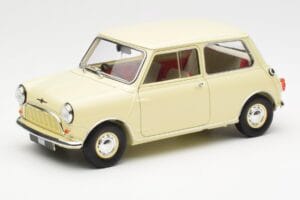
TL;DR: Kyosho's 1:18 diecast Morris Mini Minor brings the 1964 British classic to the shelf in white, with opening doors and hood on a zinc alloy body built to Alec Issigonis's space-saving layout. A compact Retro City piece that reads clean and versatile next to bolder period colors.
White does something a bright color can't on a car this small: it lets the shape do the talking instead of the paint. Kyosho's Mini leans on that shape, and the details hold up to the scrutiny a plain finish invites.
White paint has nowhere to hide inconsistent shut lines the way a darker color can, so the Mini's tight door and hood gaps matter more here than on some other finishes in the range. Kyosho's tooling holds those gaps evenly around the car's simple, boxy panels, and the hinges on the opening doors and hood settle firmly once positioned rather than swinging loose. Lifting the model off a shelf, the weight reads dense for its footprint, a reliable signal of proper zinc alloy diecast rather than a hollow, lightweight casting aimed purely at a lower price point.
Behind those doors sits a shaped cabin rather than a flat molded interior, with a dashboard and thin door cards that echo the real car's obsessive use of space, every inch of the tiny cabin pressed into service. That interior investment is a clear mid-tier marker: budget diecast at this scale frequently skips cabin shaping altogether, betting the sale entirely on exterior silhouette, while this casting rewards a closer look once the doors are open.
Alec Issigonis solved the Mini's packaging brief with a transverse-mounted engine driving the front wheels, a layout that freed up cabin space no rear-wheel-drive small car of the period could match. British Motor Corporation brought the car to market in 1959 wearing both Austin and Morris badges, a dual-brand approach typical of BMC's structure at the time, and the front-wheel-drive template Issigonis established went on to define how small cars would be built for decades afterward.
This model represents the Mini as it existed in 1964, several years into a production run that had already proven the original design correct rather than lucky. By then the car had built a following that crossed class lines in a way few British cars managed, cheap enough for practical buyers yet fashionable enough to appear outside expensive addresses, and that broad appeal is a large part of why Mini diecast continues to find buyers well outside dedicated British car specialists.
At around 17 centimeters long, this Mini asks for barely half the shelf space of a standard 1:18 sedan, easy to slot in among larger subjects without disrupting a display's rhythm. White reads as the most neutral option in the Mini lineup, pairing cleanly with bright or dark companions alike rather than competing with them for attention.