Last one
Used
This model is currently sold out. Enter your email and we'll let you know when it's back in stock.
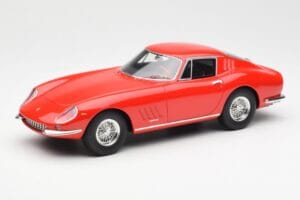
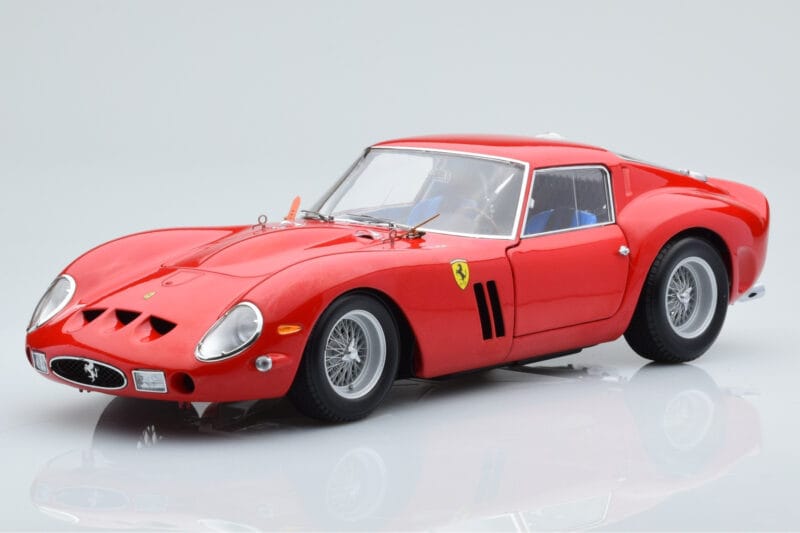
TL;DR: Kyosho's 1:18 diecast reproduces the Ferrari 250 GTO in Rosso Corsa red, the road-going side of the car that won its Le Mans GT class three years running between 1962 and 1964. Only 36 were built, making this diecast one of the more attainable ways to study the shape up close.
Few cars carry the mythology of the 250 GTO, and even a red diecast without race graphics trades on that reputation. Kyosho's version keeps things simple, a road-specification GTO in the color most associated with Ferrari's competition department.
The 250 GTO's long hood and short, tapered tail are notoriously hard to get right in miniature, since the real car's proportions came from aerodynamic testing rather than showroom styling. Kyosho holds the nose-to-cabin ratio close to correct, with the signature side strakes ahead of the rear wheels and the covered headlamps rendered with clean, consistent edges. The red paint carries genuine depth under direct light, and the panel seams around the front-hinged hood sit tight enough that the opening line barely interrupts the body's flowing surface.
Doors and the front-hinged hood open on metal hinges, exposing a V12-shaped engine bay and a cabin trimmed with the GTO's spartan, function-first interior, thin bucket seats, a simple three-spoke wheel, and exposed metal wherever period racing homologation rules skipped unnecessary trim. That bare-bones cabin treatment is historically accurate rather than a cost-saving shortcut, since the real 250 GTO carried almost nothing not needed for speed. Kyosho's diecast captures that stripped character convincingly for a mid-tier build.
Ferrari built only 36 examples of the 250 GTO between 1962 and 1964, a scarcity baked in from the start since the car existed to satisfy homologation minimums rather than volume demand. In period competition, the GTO won its GT class at Le Mans in three consecutive years, a run that, combined with the tiny production number, is a large part of why surviving originals now sit among the most valuable cars ever sold at auction.
Every 250 GTO, red road car or liveried works entry, shared the same underlying chassis and Colombo-designed V12, built from a 250 GT short-wheelbase base and reshaped with input from Ferrari's engineering and coachbuilding partners into the aerodynamic body the racing rules demanded. A red, non-liveried example like this one represents the car in its most versatile form, the specification a private owner could actually drive on the road between competition outings.
Resin specialists building the 250 GTO chase razor-sharp shut lines and deeper paint by sealing the body permanently, a method that suits a subject collectors often want purely as a static, museum-grade display piece. Kyosho's diecast trades some of that surface polish for opening doors and hood, giving a hands-on view of the engine bay and cabin that a sealed resin body keeps hidden. Neither approach is wrong: a collector chasing the sharpest possible panel lines on a shelf centerpiece may prefer a premium resin build from a specialist manufacturer, while someone who wants to actually open the model and study the mechanical layout will get more from Kyosho's diecast at a considerably more accessible price. For a car this significant, having both entry points into the market matters, since a six-figure original is obviously off the table for the vast majority of admirers.
A red, non-liveried GTO works as the foundation piece in a Ferrari GT chronology, the version to add before chasing rarer race-liveried variants of the same car. At roughly 22 centimeters, it displays comfortably alongside other early-1960s Ferraris without needing the shelf depth a 1:12 build would demand. For collectors specifically pursuing 250 GTO variants, pairing this red road version with a liveried race example, like a Le Mans entry, tells the fuller story of a car that lived a double life: usable road machine and three-time class-winning competition legend, depending on which owner drove it.