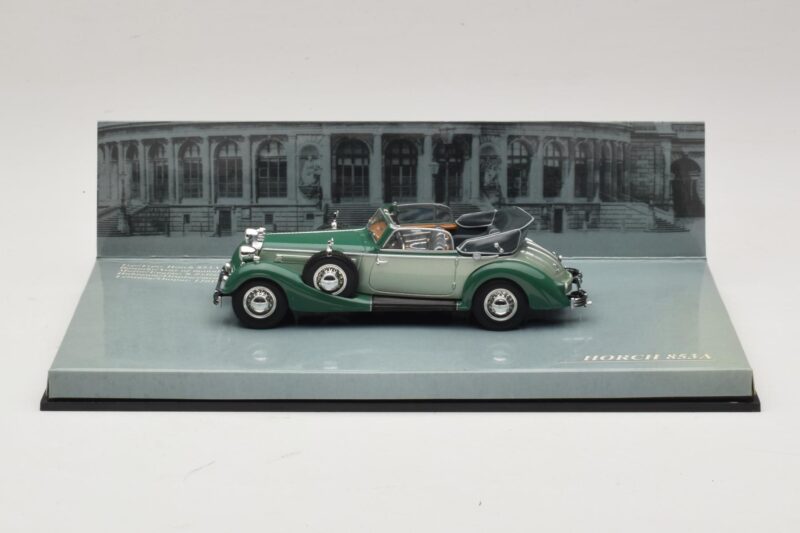
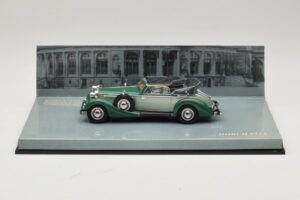
Horch 853 Cabriolet Green Minichamps 1:43
1
/
5
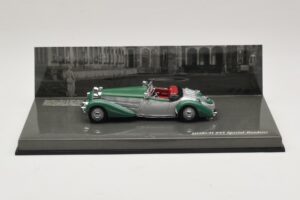
Minichamps' 1:43 diecast Horch 853 Cabriolet reproduces the straight-eight luxury cabriolet built by Auto Union's premium marque in the late 1930s, rivaling Mercedes' contemporary flagships. The sealed body holds green paint over long, formal proportions, with defined chrome trim on the grille and running boards. A pre-war centerpiece for collectors who look past the usual marques.
1 / 5
[{"index":0,"id":"1664599","thumb":"https:\/\/models118.com\/wp-content\/uploads\/2026\/09\/horch-853-cabriolet-green-minichamps-1-43-436012034-1-1-300x200.jpg","medium":"https:\/\/models118.com\/wp-content\/uploads\/2026\/09\/horch-853-cabriolet-green-minichamps-1-43-436012034-1-1-800x533.jpg","full":"https:\/\/models118.com\/wp-content\/uploads\/2026\/09\/horch-853-cabriolet-green-minichamps-1-43-436012034-1-1.jpg","srcset":"https:\/\/models118.com\/wp-content\/uploads\/2026\/09\/horch-853-cabriolet-green-minichamps-1-43-436012034-1-1-800x533.jpg 800w, https:\/\/models118.com\/wp-content\/uploads\/2026\/09\/horch-853-cabriolet-green-minichamps-1-43-436012034-1-1-300x200.jpg 300w, https:\/\/models118.com\/wp-content\/uploads\/2026\/09\/horch-853-cabriolet-green-minichamps-1-43-436012034-1-1-64x43.jpg 64w, https:\/\/models118.com\/wp-content\/uploads\/2026\/09\/horch-853-cabriolet-green-minichamps-1-43-436012034-1-1.jpg 1800w","sizes":"(max-width: 1023px) 400px, 640px","srcsetAvif":"https:\/\/models118.com\/wp-content\/uploads\/2026\/09\/horch-853-cabriolet-green-minichamps-1-43-436012034-1-1-800x533.jpg.avif 800w, https:\/\/models118.com\/wp-content\/uploads\/2026\/09\/horch-853-cabriolet-green-minichamps-1-43-436012034-1-1-300x200.jpg.avif 300w, https:\/\/models118.com\/wp-content\/uploads\/2026\/09\/horch-853-cabriolet-green-minichamps-1-43-436012034-1-1-64x43.jpg.avif 64w, https:\/\/models118.com\/wp-content\/uploads\/2026\/09\/horch-853-cabriolet-green-minichamps-1-43-436012034-1-1.jpg.avif 1800w","srcsetWebp":"https:\/\/models118.com\/wp-content\/uploads\/2026\/09\/horch-853-cabriolet-green-minichamps-1-43-436012034-1-1-800x533.jpg.webp 800w, https:\/\/models118.com\/wp-content\/uploads\/2026\/09\/horch-853-cabriolet-green-minichamps-1-43-436012034-1-1-300x200.jpg.webp 300w, https:\/\/models118.com\/wp-content\/uploads\/2026\/09\/horch-853-cabriolet-green-minichamps-1-43-436012034-1-1-64x43.jpg.webp 64w, https:\/\/models118.com\/wp-content\/uploads\/2026\/09\/horch-853-cabriolet-green-minichamps-1-43-436012034-1-1.jpg.webp 1800w","alt":"Horch 853 Cabriolet Green Minichamps 1:43 436012034 Diecast"},{"index":1,"id":1664600,"thumb":"https:\/\/models118.com\/wp-content\/uploads\/2026\/09\/horch-853-cabriolet-green-minichamps-1-43-436012034-1-300x200.jpg","medium":"https:\/\/models118.com\/wp-content\/uploads\/2026\/09\/horch-853-cabriolet-green-minichamps-1-43-436012034-1-800x533.jpg","full":"https:\/\/models118.com\/wp-content\/uploads\/2026\/09\/horch-853-cabriolet-green-minichamps-1-43-436012034-1.jpg","srcset":"https:\/\/models118.com\/wp-content\/uploads\/2026\/09\/horch-853-cabriolet-green-minichamps-1-43-436012034-1-800x533.jpg 800w, https:\/\/models118.com\/wp-content\/uploads\/2026\/09\/horch-853-cabriolet-green-minichamps-1-43-436012034-1-300x200.jpg 300w, https:\/\/models118.com\/wp-content\/uploads\/2026\/09\/horch-853-cabriolet-green-minichamps-1-43-436012034-1-64x43.jpg 64w, https:\/\/models118.com\/wp-content\/uploads\/2026\/09\/horch-853-cabriolet-green-minichamps-1-43-436012034-1.jpg 1800w","sizes":"(max-width: 1023px) 400px, 640px","srcsetAvif":"https:\/\/models118.com\/wp-content\/uploads\/2026\/09\/horch-853-cabriolet-green-minichamps-1-43-436012034-1-800x533.jpg.avif 800w, https:\/\/models118.com\/wp-content\/uploads\/2026\/09\/horch-853-cabriolet-green-minichamps-1-43-436012034-1-300x200.jpg.avif 300w, https:\/\/models118.com\/wp-content\/uploads\/2026\/09\/horch-853-cabriolet-green-minichamps-1-43-436012034-1-64x43.jpg.avif 64w, https:\/\/models118.com\/wp-content\/uploads\/2026\/09\/horch-853-cabriolet-green-minichamps-1-43-436012034-1.jpg.avif 1800w","srcsetWebp":"https:\/\/models118.com\/wp-content\/uploads\/2026\/09\/horch-853-cabriolet-green-minichamps-1-43-436012034-1-800x533.jpg.webp 800w, https:\/\/models118.com\/wp-content\/uploads\/2026\/09\/horch-853-cabriolet-green-minichamps-1-43-436012034-1-300x200.jpg.webp 300w, https:\/\/models118.com\/wp-content\/uploads\/2026\/09\/horch-853-cabriolet-green-minichamps-1-43-436012034-1-64x43.jpg.webp 64w, https:\/\/models118.com\/wp-content\/uploads\/2026\/09\/horch-853-cabriolet-green-minichamps-1-43-436012034-1.jpg.webp 1800w","alt":"Horch 853 Cabriolet Green Minichamps 1:43 436012034 Diecast - image 2 of 5"},{"index":2,"id":1664603,"thumb":"https:\/\/models118.com\/wp-content\/uploads\/2026\/09\/horch-853-cabriolet-green-minichamps-1-43-436012034-2-300x200.jpg","medium":"https:\/\/models118.com\/wp-content\/uploads\/2026\/09\/horch-853-cabriolet-green-minichamps-1-43-436012034-2-800x533.jpg","full":"https:\/\/models118.com\/wp-content\/uploads\/2026\/09\/horch-853-cabriolet-green-minichamps-1-43-436012034-2.jpg","srcset":"https:\/\/models118.com\/wp-content\/uploads\/2026\/09\/horch-853-cabriolet-green-minichamps-1-43-436012034-2-800x533.jpg 800w, https:\/\/models118.com\/wp-content\/uploads\/2026\/09\/horch-853-cabriolet-green-minichamps-1-43-436012034-2-300x200.jpg 300w, https:\/\/models118.com\/wp-content\/uploads\/2026\/09\/horch-853-cabriolet-green-minichamps-1-43-436012034-2-64x43.jpg 64w, https:\/\/models118.com\/wp-content\/uploads\/2026\/09\/horch-853-cabriolet-green-minichamps-1-43-436012034-2.jpg 1800w","sizes":"(max-width: 1023px) 400px, 640px","srcsetAvif":"https:\/\/models118.com\/wp-content\/uploads\/2026\/09\/horch-853-cabriolet-green-minichamps-1-43-436012034-2-800x533.jpg.avif 800w, https:\/\/models118.com\/wp-content\/uploads\/2026\/09\/horch-853-cabriolet-green-minichamps-1-43-436012034-2-300x200.jpg.avif 300w, https:\/\/models118.com\/wp-content\/uploads\/2026\/09\/horch-853-cabriolet-green-minichamps-1-43-436012034-2-64x43.jpg.avif 64w, https:\/\/models118.com\/wp-content\/uploads\/2026\/09\/horch-853-cabriolet-green-minichamps-1-43-436012034-2.jpg.avif 1800w","srcsetWebp":"https:\/\/models118.com\/wp-content\/uploads\/2026\/09\/horch-853-cabriolet-green-minichamps-1-43-436012034-2-800x533.jpg.webp 800w, https:\/\/models118.com\/wp-content\/uploads\/2026\/09\/horch-853-cabriolet-green-minichamps-1-43-436012034-2-300x200.jpg.webp 300w, https:\/\/models118.com\/wp-content\/uploads\/2026\/09\/horch-853-cabriolet-green-minichamps-1-43-436012034-2-64x43.jpg.webp 64w, https:\/\/models118.com\/wp-content\/uploads\/2026\/09\/horch-853-cabriolet-green-minichamps-1-43-436012034-2.jpg.webp 1800w","alt":"Horch 853 Cabriolet Green Minichamps 1:43 436012034 Diecast - image 3 of 5"},{"index":3,"id":1664605,"thumb":"https:\/\/models118.com\/wp-content\/uploads\/2026\/09\/horch-853-cabriolet-green-minichamps-1-43-436012034-3-300x200.jpg","medium":"https:\/\/models118.com\/wp-content\/uploads\/2026\/09\/horch-853-cabriolet-green-minichamps-1-43-436012034-3-800x533.jpg","full":"https:\/\/models118.com\/wp-content\/uploads\/2026\/09\/horch-853-cabriolet-green-minichamps-1-43-436012034-3.jpg","srcset":"https:\/\/models118.com\/wp-content\/uploads\/2026\/09\/horch-853-cabriolet-green-minichamps-1-43-436012034-3-800x533.jpg 800w, https:\/\/models118.com\/wp-content\/uploads\/2026\/09\/horch-853-cabriolet-green-minichamps-1-43-436012034-3-300x200.jpg 300w, https:\/\/models118.com\/wp-content\/uploads\/2026\/09\/horch-853-cabriolet-green-minichamps-1-43-436012034-3-64x43.jpg 64w, https:\/\/models118.com\/wp-content\/uploads\/2026\/09\/horch-853-cabriolet-green-minichamps-1-43-436012034-3.jpg 1800w","sizes":"(max-width: 1023px) 400px, 640px","srcsetAvif":"https:\/\/models118.com\/wp-content\/uploads\/2026\/09\/horch-853-cabriolet-green-minichamps-1-43-436012034-3-800x533.jpg.avif 800w, https:\/\/models118.com\/wp-content\/uploads\/2026\/09\/horch-853-cabriolet-green-minichamps-1-43-436012034-3-300x200.jpg.avif 300w, https:\/\/models118.com\/wp-content\/uploads\/2026\/09\/horch-853-cabriolet-green-minichamps-1-43-436012034-3-64x43.jpg.avif 64w, https:\/\/models118.com\/wp-content\/uploads\/2026\/09\/horch-853-cabriolet-green-minichamps-1-43-436012034-3.jpg.avif 1800w","srcsetWebp":"https:\/\/models118.com\/wp-content\/uploads\/2026\/09\/horch-853-cabriolet-green-minichamps-1-43-436012034-3-800x533.jpg.webp 800w, https:\/\/models118.com\/wp-content\/uploads\/2026\/09\/horch-853-cabriolet-green-minichamps-1-43-436012034-3-300x200.jpg.webp 300w, https:\/\/models118.com\/wp-content\/uploads\/2026\/09\/horch-853-cabriolet-green-minichamps-1-43-436012034-3-64x43.jpg.webp 64w, https:\/\/models118.com\/wp-content\/uploads\/2026\/09\/horch-853-cabriolet-green-minichamps-1-43-436012034-3.jpg.webp 1800w","alt":"Horch 853 Cabriolet Green Minichamps 1:43 436012034 Diecast - image 4 of 5"},{"index":4,"id":1664607,"thumb":"https:\/\/models118.com\/wp-content\/uploads\/2026\/09\/horch-853-cabriolet-green-minichamps-1-43-436012034-4-300x200.jpg","medium":"https:\/\/models118.com\/wp-content\/uploads\/2026\/09\/horch-853-cabriolet-green-minichamps-1-43-436012034-4-800x533.jpg","full":"https:\/\/models118.com\/wp-content\/uploads\/2026\/09\/horch-853-cabriolet-green-minichamps-1-43-436012034-4.jpg","srcset":"https:\/\/models118.com\/wp-content\/uploads\/2026\/09\/horch-853-cabriolet-green-minichamps-1-43-436012034-4-800x533.jpg 800w, https:\/\/models118.com\/wp-content\/uploads\/2026\/09\/horch-853-cabriolet-green-minichamps-1-43-436012034-4-300x200.jpg 300w, https:\/\/models118.com\/wp-content\/uploads\/2026\/09\/horch-853-cabriolet-green-minichamps-1-43-436012034-4-64x43.jpg 64w, https:\/\/models118.com\/wp-content\/uploads\/2026\/09\/horch-853-cabriolet-green-minichamps-1-43-436012034-4.jpg 1800w","sizes":"(max-width: 1023px) 400px, 640px","srcsetAvif":"https:\/\/models118.com\/wp-content\/uploads\/2026\/09\/horch-853-cabriolet-green-minichamps-1-43-436012034-4-800x533.jpg.avif 800w, https:\/\/models118.com\/wp-content\/uploads\/2026\/09\/horch-853-cabriolet-green-minichamps-1-43-436012034-4-300x200.jpg.avif 300w, https:\/\/models118.com\/wp-content\/uploads\/2026\/09\/horch-853-cabriolet-green-minichamps-1-43-436012034-4-64x43.jpg.avif 64w, https:\/\/models118.com\/wp-content\/uploads\/2026\/09\/horch-853-cabriolet-green-minichamps-1-43-436012034-4.jpg.avif 1800w","srcsetWebp":"https:\/\/models118.com\/wp-content\/uploads\/2026\/09\/horch-853-cabriolet-green-minichamps-1-43-436012034-4-800x533.jpg.webp 800w, https:\/\/models118.com\/wp-content\/uploads\/2026\/09\/horch-853-cabriolet-green-minichamps-1-43-436012034-4-300x200.jpg.webp 300w, https:\/\/models118.com\/wp-content\/uploads\/2026\/09\/horch-853-cabriolet-green-minichamps-1-43-436012034-4-64x43.jpg.webp 64w, https:\/\/models118.com\/wp-content\/uploads\/2026\/09\/horch-853-cabriolet-green-minichamps-1-43-436012034-4.jpg.webp 1800w","alt":"Horch 853 Cabriolet Green Minichamps 1:43 436012034 Diecast - image 5 of 5"}]
Horch 853 Cabriolet Green Minichamps 1:43
Current price:
94.00 €
Last one in stock
Estimated delivery: 20-23.10.2026
Shipping rates by country
10% discount on your first order — create a free account
Shipping to 78 countries
Worldwide delivery
Prices incl. 23% VAT
No hidden costs
Shipping rates by country
Tracked & insured
Pay in EUR €
Local currency
Specifications
- Brand
- Horch
- Manufacturer
- Minichamps
- Scale
- 1:43
- Material
- Diecast
- Model Condition
- New Model
- SKU
- 436012034
- Year
- 1938
- Era
- Pre-War
- Body Type
- Open-Top
- Vehicle Class
- Vintage Classics
- Openable Parts
- No
- Packaging Condition
- New
- Model Type
- Street Models
- EAN / GTIN
- 4012138075108
100% authentic
Direct from manufacturers
5-layer carton
Foam-filled interior
Easy returns
14 days, no questions asked
Secure payment
256-bit SSL encryption
About the Horch 853 Cabriolet Green Minichamps 1:43
TL;DR: Minichamps' 1:43 diecast Horch 853 Cabriolet reproduces the straight-eight luxury cabriolet built by Auto Union's premium marque in the late 1930s, rivaling Mercedes' contemporary flagships. The sealed body holds green paint over long, formal proportions, with chrome trim and no opening panels.
Horch doesn't carry the name recognition Mercedes or BMW hold today, yet in the 1930s it sat among Germany's most prestigious marques, part of the four-ring Auto Union alliance and the premium badge within it. This cabriolet represents that forgotten flagship status in miniature, at a scale that still commands real shelf presence.
Horch: Auto Union's Luxury Flagship
The Straight-Eight 853 Cabriolet
Horch built the 853 through the second half of the 1930s as its flagship model, powered by a smooth, long-stroke straight-eight engine and wrapped in coachwork designed to project the same kind of formal wealth and prestige that Mercedes-Benz's 500K and 540K cabriolets carried at the top of that marque's own range. The cabriolet body this model reproduces was among the most desirable variants offered, its long hood housing that eight-cylinder engine and its formal, upright grille signaling exactly the kind of status its wealthy clientele expected to display. These were genuinely expensive, low-volume cars even in their own era, built for buyers who could choose between Horch and Mercedes and often chose based on subtle personal preference rather than price.
One of Four Rings, the Premium One
Horch was one of four marques, alongside Audi, DKW, and Wanderer, united under the Auto Union banner in 1932, the same four-ring emblem that survives today as Audi's logo. Within that alliance, Horch occupied the top tier, building the largest, most expensive, and most prestigious cars while its partner brands covered more accessible segments of the German market. That structure means the Auto Union rings collectors recognize on modern Audis actually trace back to a hierarchy where Horch, not Audi, sat at the very top, a piece of automotive history that gets lost once a brand disappears the way Horch did after the war.
Minichamps' Diecast Reading of a Pre-War Cabriolet
Sealed-Body Elegance on Long Proportions
A car this formal relies on length and proportion rather than aggressive styling to communicate status, and Minichamps' fixed, one-piece casting follows the 853's long hood-to-cabin ratio and gently curved fenders without an opening door interrupting that flow. The absence of moving panels suits this subject well; the real car's elegance was always about unbroken surfaces and careful proportion rather than mechanical showmanship, and a sealed shell reproduces that visual continuity more faithfully than an articulated body would. Zinc alloy construction gives the model genuine heft, appropriate for a subject whose original was itself a substantial, weighty piece of machinery rather than anything light or sporting.
Green Paint and Period Chrome
The green finish carries real depth across the long hood and rear deck, a period-appropriate, understated color choice for a marque that favored dignified presentation over flashiness. Chrome detailing on the grille, headlight surrounds, and running boards is picked out with genuine definition, brightwork that period Horch buyers expected as a matter of course rather than as a luxury option. Under a display lamp, that combination of deep paint and defined chrome gives the model a formal presence that matches the seriousness of the original car's intended clientele.
A Pre-War Centerpiece Beyond the Usual Marques
Most pre-war German diecast collections default to Mercedes-Benz almost automatically, simply because the marque survived and remained prominent. A Horch 853 breaks that pattern, adding a genuinely prestigious marque that vanished after the war and today gets far less diecast attention than its period standing actually warranted. At 1:43, the cabriolet's substantial real-world length settles comfortably alongside other 1930s luxury cars without dominating a shelf, and its formal, upright styling provides a useful visual contrast against the lower, sportier Mercedes and Auto Union racing subjects a pre-war collection might already contain. For collectors who value historical completeness over simply chasing familiar badges, this Horch fills a gap that most collections leave unaddressed, a flagship marque remembered today mostly by those who look past the obvious names.
From the same collection
Last one
Used
Last one
Last one
Collectors also bought
Browse all 1:43
Used

Last one
Used
Used

Last one
Used
Used

Ford Fiesta RS WRC Ford Abu Dhabi #3 M. Hirvonen / J. Lehtinen Winner Rally Australia 2011 Minichamps 1:18
Only 2 left
Price:
123.00 €
Last one
Used
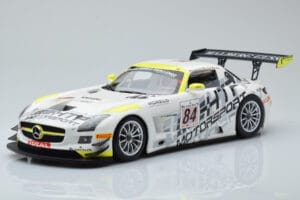
Mercedes SLS AMG GT3 HTP Motorsport Persson #84 B. Schneider / M. Buhk / M. Gotz Winners 24 Hours of Spa-Francorchamps 2013 Minichamps 1:18
Only 1 left
Price:
110.00 €
Last one
Used

Opel Commodore A Steinmetz #11 E. von Bayern / Johansson 24 Hours of Spa 1970 Minichamps 1:18
Only 1 left
Price:
109.00 €
Last one
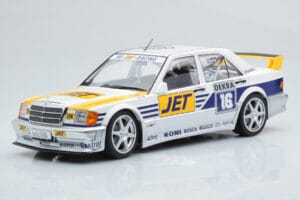
Mercedes 190E 2.5-16 W201 EVO 1 Jet #16 F. Biela Team Ms-Jet Racing DTM 1990 Minichamps 1:18
Only 1 left
Price:
88.00 €
Recently viewed
{"id":1662653,"name":"Horch 853 Cabriolet Green Minichamps 1:43","price":"94.00 €<\/span><\/bdi><\/span>","image":"https:\/\/models118.com\/wp-content\/uploads\/2026\/09\/horch-853-cabriolet-green-minichamps-1-43-436012034-1-1-400x400.jpg","permalink":"https:\/\/models118.com\/horch-853-cabriolet-green-minichamps-1-43-436012034\/","brand":"Horch"}