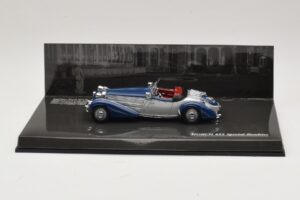
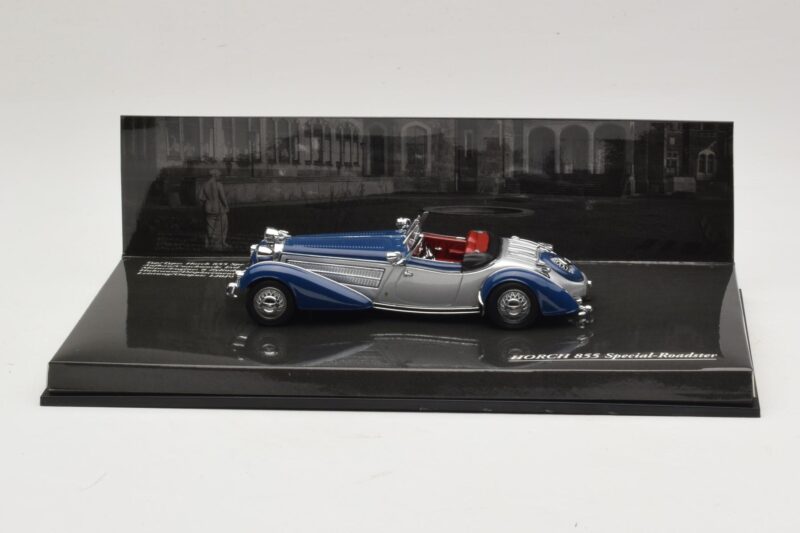
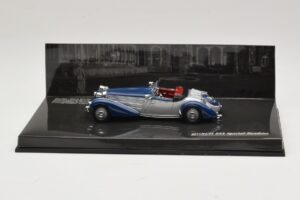
Horch 855 Special Roadster Silver Blue No Outside Box Minichamps 1:43
1
/
4
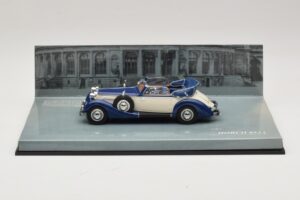
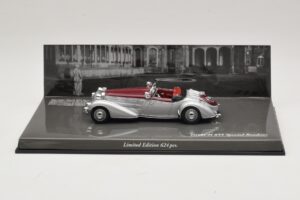
Minichamps' 1:43 diecast Horch 855 Special Roadster reproduces Auto Union's pre-war flagship in Silver Blue with a sealed zinc alloy body, deep chrome trim, and clean panel lines. The long hood-to-cabin ratio and open-top cabin capture the roadster's luxury proportions accurately at this scale. Sold without its original outer box, a condition note only, since the casting and finish remain fully intact. A discovery piece for collectors exploring 1930s German luxury beyond the usual roadster names.
1 / 4
[{"index":0,"id":"1664630","thumb":"https:\/\/models118.com\/wp-content\/uploads\/2026\/09\/horch-855-special-roadster-silver-blue-minichamps-1-43-436014202-o1-1-1-300x200.jpg","medium":"https:\/\/models118.com\/wp-content\/uploads\/2026\/09\/horch-855-special-roadster-silver-blue-minichamps-1-43-436014202-o1-1-1-800x533.jpg","full":"https:\/\/models118.com\/wp-content\/uploads\/2026\/09\/horch-855-special-roadster-silver-blue-minichamps-1-43-436014202-o1-1-1.jpg","srcset":"https:\/\/models118.com\/wp-content\/uploads\/2026\/09\/horch-855-special-roadster-silver-blue-minichamps-1-43-436014202-o1-1-1-800x533.jpg 800w, https:\/\/models118.com\/wp-content\/uploads\/2026\/09\/horch-855-special-roadster-silver-blue-minichamps-1-43-436014202-o1-1-1-300x200.jpg 300w, https:\/\/models118.com\/wp-content\/uploads\/2026\/09\/horch-855-special-roadster-silver-blue-minichamps-1-43-436014202-o1-1-1-64x43.jpg 64w, https:\/\/models118.com\/wp-content\/uploads\/2026\/09\/horch-855-special-roadster-silver-blue-minichamps-1-43-436014202-o1-1-1.jpg 1800w","sizes":"(max-width: 1023px) 400px, 640px","srcsetAvif":"https:\/\/models118.com\/wp-content\/uploads\/2026\/09\/horch-855-special-roadster-silver-blue-minichamps-1-43-436014202-o1-1-1-800x533.jpg.avif 800w, https:\/\/models118.com\/wp-content\/uploads\/2026\/09\/horch-855-special-roadster-silver-blue-minichamps-1-43-436014202-o1-1-1-300x200.jpg.avif 300w, https:\/\/models118.com\/wp-content\/uploads\/2026\/09\/horch-855-special-roadster-silver-blue-minichamps-1-43-436014202-o1-1-1-64x43.jpg.avif 64w, https:\/\/models118.com\/wp-content\/uploads\/2026\/09\/horch-855-special-roadster-silver-blue-minichamps-1-43-436014202-o1-1-1.jpg.avif 1800w","srcsetWebp":"https:\/\/models118.com\/wp-content\/uploads\/2026\/09\/horch-855-special-roadster-silver-blue-minichamps-1-43-436014202-o1-1-1-800x533.jpg.webp 800w, https:\/\/models118.com\/wp-content\/uploads\/2026\/09\/horch-855-special-roadster-silver-blue-minichamps-1-43-436014202-o1-1-1-300x200.jpg.webp 300w, https:\/\/models118.com\/wp-content\/uploads\/2026\/09\/horch-855-special-roadster-silver-blue-minichamps-1-43-436014202-o1-1-1-64x43.jpg.webp 64w, https:\/\/models118.com\/wp-content\/uploads\/2026\/09\/horch-855-special-roadster-silver-blue-minichamps-1-43-436014202-o1-1-1.jpg.webp 1800w","alt":"Horch 855 Special Roadster Silver Blue No Outside Box Minichamps 1:43 436014202-O1 Diecast"},{"index":1,"id":1664632,"thumb":"https:\/\/models118.com\/wp-content\/uploads\/2026\/09\/horch-855-special-roadster-silver-blue-minichamps-1-43-436014202-o1-1-300x200.jpg","medium":"https:\/\/models118.com\/wp-content\/uploads\/2026\/09\/horch-855-special-roadster-silver-blue-minichamps-1-43-436014202-o1-1-800x533.jpg","full":"https:\/\/models118.com\/wp-content\/uploads\/2026\/09\/horch-855-special-roadster-silver-blue-minichamps-1-43-436014202-o1-1.jpg","srcset":"https:\/\/models118.com\/wp-content\/uploads\/2026\/09\/horch-855-special-roadster-silver-blue-minichamps-1-43-436014202-o1-1-800x533.jpg 800w, https:\/\/models118.com\/wp-content\/uploads\/2026\/09\/horch-855-special-roadster-silver-blue-minichamps-1-43-436014202-o1-1-300x200.jpg 300w, https:\/\/models118.com\/wp-content\/uploads\/2026\/09\/horch-855-special-roadster-silver-blue-minichamps-1-43-436014202-o1-1-64x43.jpg 64w, https:\/\/models118.com\/wp-content\/uploads\/2026\/09\/horch-855-special-roadster-silver-blue-minichamps-1-43-436014202-o1-1.jpg 1800w","sizes":"(max-width: 1023px) 400px, 640px","srcsetAvif":"https:\/\/models118.com\/wp-content\/uploads\/2026\/09\/horch-855-special-roadster-silver-blue-minichamps-1-43-436014202-o1-1-800x533.jpg.avif 800w, https:\/\/models118.com\/wp-content\/uploads\/2026\/09\/horch-855-special-roadster-silver-blue-minichamps-1-43-436014202-o1-1-300x200.jpg.avif 300w, https:\/\/models118.com\/wp-content\/uploads\/2026\/09\/horch-855-special-roadster-silver-blue-minichamps-1-43-436014202-o1-1-64x43.jpg.avif 64w, https:\/\/models118.com\/wp-content\/uploads\/2026\/09\/horch-855-special-roadster-silver-blue-minichamps-1-43-436014202-o1-1.jpg.avif 1800w","srcsetWebp":"https:\/\/models118.com\/wp-content\/uploads\/2026\/09\/horch-855-special-roadster-silver-blue-minichamps-1-43-436014202-o1-1-800x533.jpg.webp 800w, https:\/\/models118.com\/wp-content\/uploads\/2026\/09\/horch-855-special-roadster-silver-blue-minichamps-1-43-436014202-o1-1-300x200.jpg.webp 300w, https:\/\/models118.com\/wp-content\/uploads\/2026\/09\/horch-855-special-roadster-silver-blue-minichamps-1-43-436014202-o1-1-64x43.jpg.webp 64w, https:\/\/models118.com\/wp-content\/uploads\/2026\/09\/horch-855-special-roadster-silver-blue-minichamps-1-43-436014202-o1-1.jpg.webp 1800w","alt":"Horch 855 Special Roadster Silver Blue No Outside Box Minichamps 1:43 436014202-O1 Diecast - image 2 of 4"},{"index":2,"id":1664634,"thumb":"https:\/\/models118.com\/wp-content\/uploads\/2026\/09\/horch-855-special-roadster-silver-blue-minichamps-1-43-436014202-o1-2-300x200.jpg","medium":"https:\/\/models118.com\/wp-content\/uploads\/2026\/09\/horch-855-special-roadster-silver-blue-minichamps-1-43-436014202-o1-2-800x533.jpg","full":"https:\/\/models118.com\/wp-content\/uploads\/2026\/09\/horch-855-special-roadster-silver-blue-minichamps-1-43-436014202-o1-2.jpg","srcset":"https:\/\/models118.com\/wp-content\/uploads\/2026\/09\/horch-855-special-roadster-silver-blue-minichamps-1-43-436014202-o1-2-800x533.jpg 800w, https:\/\/models118.com\/wp-content\/uploads\/2026\/09\/horch-855-special-roadster-silver-blue-minichamps-1-43-436014202-o1-2-300x200.jpg 300w, https:\/\/models118.com\/wp-content\/uploads\/2026\/09\/horch-855-special-roadster-silver-blue-minichamps-1-43-436014202-o1-2-64x43.jpg 64w, https:\/\/models118.com\/wp-content\/uploads\/2026\/09\/horch-855-special-roadster-silver-blue-minichamps-1-43-436014202-o1-2.jpg 1800w","sizes":"(max-width: 1023px) 400px, 640px","srcsetAvif":"https:\/\/models118.com\/wp-content\/uploads\/2026\/09\/horch-855-special-roadster-silver-blue-minichamps-1-43-436014202-o1-2-800x533.jpg.avif 800w, https:\/\/models118.com\/wp-content\/uploads\/2026\/09\/horch-855-special-roadster-silver-blue-minichamps-1-43-436014202-o1-2-300x200.jpg.avif 300w, https:\/\/models118.com\/wp-content\/uploads\/2026\/09\/horch-855-special-roadster-silver-blue-minichamps-1-43-436014202-o1-2-64x43.jpg.avif 64w, https:\/\/models118.com\/wp-content\/uploads\/2026\/09\/horch-855-special-roadster-silver-blue-minichamps-1-43-436014202-o1-2.jpg.avif 1800w","srcsetWebp":"https:\/\/models118.com\/wp-content\/uploads\/2026\/09\/horch-855-special-roadster-silver-blue-minichamps-1-43-436014202-o1-2-800x533.jpg.webp 800w, https:\/\/models118.com\/wp-content\/uploads\/2026\/09\/horch-855-special-roadster-silver-blue-minichamps-1-43-436014202-o1-2-300x200.jpg.webp 300w, https:\/\/models118.com\/wp-content\/uploads\/2026\/09\/horch-855-special-roadster-silver-blue-minichamps-1-43-436014202-o1-2-64x43.jpg.webp 64w, https:\/\/models118.com\/wp-content\/uploads\/2026\/09\/horch-855-special-roadster-silver-blue-minichamps-1-43-436014202-o1-2.jpg.webp 1800w","alt":"Horch 855 Special Roadster Silver Blue No Outside Box Minichamps 1:43 436014202-O1 Diecast - image 3 of 4"},{"index":3,"id":1664636,"thumb":"https:\/\/models118.com\/wp-content\/uploads\/2026\/09\/horch-855-special-roadster-silver-blue-minichamps-1-43-436014202-o1-3-300x200.jpg","medium":"https:\/\/models118.com\/wp-content\/uploads\/2026\/09\/horch-855-special-roadster-silver-blue-minichamps-1-43-436014202-o1-3-800x533.jpg","full":"https:\/\/models118.com\/wp-content\/uploads\/2026\/09\/horch-855-special-roadster-silver-blue-minichamps-1-43-436014202-o1-3.jpg","srcset":"https:\/\/models118.com\/wp-content\/uploads\/2026\/09\/horch-855-special-roadster-silver-blue-minichamps-1-43-436014202-o1-3-800x533.jpg 800w, https:\/\/models118.com\/wp-content\/uploads\/2026\/09\/horch-855-special-roadster-silver-blue-minichamps-1-43-436014202-o1-3-300x200.jpg 300w, https:\/\/models118.com\/wp-content\/uploads\/2026\/09\/horch-855-special-roadster-silver-blue-minichamps-1-43-436014202-o1-3-64x43.jpg 64w, https:\/\/models118.com\/wp-content\/uploads\/2026\/09\/horch-855-special-roadster-silver-blue-minichamps-1-43-436014202-o1-3.jpg 1800w","sizes":"(max-width: 1023px) 400px, 640px","srcsetAvif":"https:\/\/models118.com\/wp-content\/uploads\/2026\/09\/horch-855-special-roadster-silver-blue-minichamps-1-43-436014202-o1-3-800x533.jpg.avif 800w, https:\/\/models118.com\/wp-content\/uploads\/2026\/09\/horch-855-special-roadster-silver-blue-minichamps-1-43-436014202-o1-3-300x200.jpg.avif 300w, https:\/\/models118.com\/wp-content\/uploads\/2026\/09\/horch-855-special-roadster-silver-blue-minichamps-1-43-436014202-o1-3-64x43.jpg.avif 64w, https:\/\/models118.com\/wp-content\/uploads\/2026\/09\/horch-855-special-roadster-silver-blue-minichamps-1-43-436014202-o1-3.jpg.avif 1800w","srcsetWebp":"https:\/\/models118.com\/wp-content\/uploads\/2026\/09\/horch-855-special-roadster-silver-blue-minichamps-1-43-436014202-o1-3-800x533.jpg.webp 800w, https:\/\/models118.com\/wp-content\/uploads\/2026\/09\/horch-855-special-roadster-silver-blue-minichamps-1-43-436014202-o1-3-300x200.jpg.webp 300w, https:\/\/models118.com\/wp-content\/uploads\/2026\/09\/horch-855-special-roadster-silver-blue-minichamps-1-43-436014202-o1-3-64x43.jpg.webp 64w, https:\/\/models118.com\/wp-content\/uploads\/2026\/09\/horch-855-special-roadster-silver-blue-minichamps-1-43-436014202-o1-3.jpg.webp 1800w","alt":"Horch 855 Special Roadster Silver Blue No Outside Box Minichamps 1:43 436014202-O1 Diecast - image 4 of 4"}]
Horch 855 Special Roadster Silver Blue No Outside Box Minichamps 1:43
Current price:
94.00 €
Last one in stock
Estimated delivery: 20-23.10.2026
Shipping rates by country
10% discount on your first order — create a free account
Shipping to 78 countries
Worldwide delivery
Prices incl. 23% VAT
No hidden costs
Shipping rates by country
Tracked & insured
Pay in EUR €
Local currency
Specifications
- Brand
- Horch
- Manufacturer
- Minichamps
- Scale
- 1:43
- Material
- Diecast
- Model Condition
- Used Model
- SKU
- 436014202-O1
- Year
- 1938
- Era
- Pre-War
- Body Type
- Open-Top
- Vehicle Class
- Vintage Classics
- Openable Parts
- No
- Packaging Condition
- Traces of Storage
- Model Type
- Street Models
- EAN / GTIN
- —
100% authentic
5-layer carton
Foam-filled interior
Easy returns
14 days, no questions asked
Secure payment
256-bit SSL encryption
About the Horch 855 Special Roadster Silver Blue No Outside Box Minichamps 1:43
TL;DR: Minichamps' 1:43 diecast Horch 855 Special Roadster reproduces the pre-war Auto Union flagship in Silver Blue over a long, flowing body. The sealed zinc alloy casting holds deep chrome trim and clean panel lines, sold here without its original outer box, a condition note that leaves the model itself fully intact.
Horch built its reputation on cars that outclassed anything else on a German road in the 1930s, and the 855 Special Roadster sat at the top of that range. Long doors, a low windscreen, and a hood stretching well ahead of the cabin gave it presence few contemporaries could match, silver blue paintwork only adding to the effect.
Silver Blue Paintwork on a Sealed 1:43 Casting
Zamak Weight and Continuous Shutlines
Minichamps casts the 855 as a one-piece zinc alloy body, so the long doors that would swing open on the real roadster are represented here as fixed, uninterrupted panel lines. On a car this proportioned, with doors running nearly the full length of the cabin, that continuous line actually works in the model's favor, since it lets the casting hold a clean, unbroken sweep from front fender to rear rather than breaking it at a hinge. The weight in the hand is substantial for a 1:43 piece, the density that comes from metal rather than resin, and it keeps the long hood and low body sitting flat and stable on a shelf.
Chrome Trim and Paint Depth
The silver blue finish carries a deep, even gloss consistent with paint applied over a hard metal shell, and it sets off the extensive chrome across the grille, headlamp surrounds, windscreen frame, and running boards that defined a luxury car of this era. Separately finished chrome against body-color paint is one of the clearer signs of care in a pre-war casting, since it would be easy to simplify those details into a single painted surface. The open-top cabin, minus a folding roof, shows off the roadster's long hood-to-cabin ratio, the visual signature of Auto Union's flagship line.
Horch's Auto Union Pedigree and the 855 Special Roadster
Horch Within the Auto Union Four Rings
Horch was one of the four marques, alongside Audi, DKW, and Wanderer, that merged in 1932 to form Auto Union, the alliance whose four interlocked rings still form Audi's badge today. Within that group, Horch occupied the top tier, building large, expensive cars for buyers who wanted the prestige of a German luxury marque without looking abroad. The 855 Special Roadster, built on the eight-cylinder 853/855 chassis, represented the most exclusive expression of that positioning, a car aimed squarely at the same market Mercedes-Benz and Maybach competed for in the years before the Second World War.
The 855 Special Roadster's Luxury Pre-War Status
Production of cars at this level was never large even when new, and cars like the 855 Special Roadster survive today mostly in museum and serious private collections, making a well-executed scale replica the realistic way most collectors will ever study its proportions up close. The straight-eight engine under that long hood delivered smooth, effortless power rather than outright speed, in keeping with a car built to be driven in style rather than raced.
A Pre-War Classic With No Outer Box
This particular piece ships without its original outer packaging, a straightforward condition note rather than a flaw in the model itself. The casting, paint, and trim are unaffected, and for a subject this far removed from current production, buyers focused on the car rather than the box will find the value entirely intact. Pre-war German luxury cars occupy a specific, smaller corner of the hobby compared with post-war sports and racing subjects, which makes a piece like this one a discovery for collectors branching out from more common territory. Paired with other Auto Union-era subjects or set apart as a standalone statement of 1930s design, the 855 Special Roadster rewards a collector willing to look further back than the usual diecast starting points.
From the same collection
Last one
Last one
Last one
Collectors also bought
Browse all 1:43
Used

Last one
Used
Used
Last one
Used
Used

Ford Fiesta RS WRC Ford Abu Dhabi #3 M. Hirvonen / J. Lehtinen Winner Rally Australia 2011 Minichamps 1:18
Only 2 left
Price:
123.00 €
Last one
Used
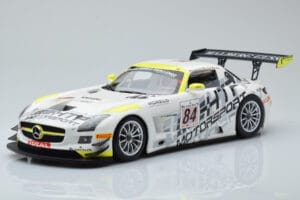
Mercedes SLS AMG GT3 HTP Motorsport Persson #84 B. Schneider / M. Buhk / M. Gotz Winners 24 Hours of Spa-Francorchamps 2013 Minichamps 1:18
Only 1 left
Price:
110.00 €
Last one
Used

Opel Commodore A Steinmetz #11 E. von Bayern / Johansson 24 Hours of Spa 1970 Minichamps 1:18
Only 1 left
Price:
109.00 €
Recently viewed
{"id":1662634,"name":"Horch 855 Special Roadster Silver Blue No Outside Box Minichamps 1:43","price":"94.00 €<\/span><\/bdi><\/span>","image":"https:\/\/models118.com\/wp-content\/uploads\/2026\/09\/horch-855-special-roadster-silver-blue-minichamps-1-43-436014202-o1-1-1-400x400.jpg","permalink":"https:\/\/models118.com\/horch-855-special-roadster-silver-blue-minichamps-1-43-436014202-o1\/","brand":"Horch"}