Last one
Used
This model is currently sold out. Enter your email and we'll let you know when it's back in stock.
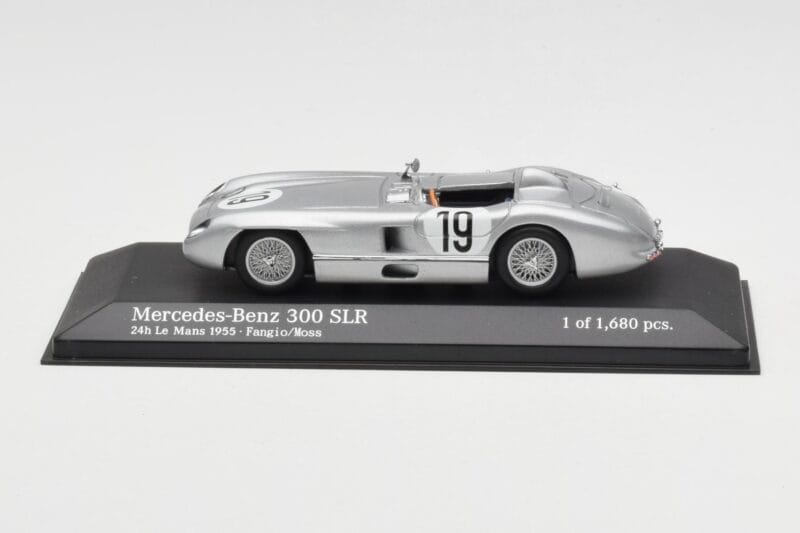
TL;DR: This Minichamps 1:43 diecast reproduces the Mercedes 300 SLR #19, driven by Pierre Levegh and John Fitch at the 1955 24 Hours of Le Mans, the race remembered for the catastrophic accident involving this very entry. The body is sealed; this is a used model with a box showing traces of storage.
The 1955 Le Mans race is one of motorsport's most sobering chapters, and the #19 300 SLR is central to it: Levegh's car was involved in the crash that killed over 80 spectators, a disaster that led Mercedes-Benz to withdraw from racing for decades.
Minichamps builds this 300 SLR as a fixed one-piece body, so the model's authority comes from its exterior: the long, low bonnet, the distinctive air-brake panel behind the cockpit, and the period racing number applied with clean tampo printing. Zinc-alloy construction gives even a 1:43 casting real heft compared to plastic alternatives, and the panel lines are scribed cleanly into the metal rather than left as visible seams. Paint depth under a display light picks out the silver body's subtle metallic finish, characteristic of the Mercedes racing livery of the period. As a used model, some handling marks are ordinary; the box shows traces of storage separate from the casting's own condition, and buyers should check listing photos for the specific wear present.
Models tied to the 1955 disaster occupy an unusual place in collecting: they are historically significant precisely because of tragedy, not triumph, and serious collectors of Mercedes racing history or Le Mans chronicles tend to seek them out for that reason rather than avoid them. Displayed alongside the sister #21 car driven by Kling and Simon, this piece completes a meaningful pairing from that same 1955 entry list. At 1:43, it sits comfortably within a broader Le Mans or sports-racing theme without demanding the shelf space a larger scale would require, making it a considered addition for anyone building out pre-1960s endurance racing history.